Andrew Portuguese, MD, on Multiple Myeloma: Real-World Outcomes With Elranatamab
Andrew Portuguese, MD, of Fred Hutchinson Cancer Center, discusses findings from a multicenter analysis from the U.S. Multiple Myeloma Immunotherapy Consortium looking at the real-world safety and efficacy of the BCMA-CD3 bispecific antibody elranatamab (Abstract 136).
Alexander Lesokhin, MD: Can Patients With Relapsed/Refractory Multiple Myeloma Successfully Pause or Discontinue Elranatamab?
Alexander Lesokhin, MD, of Memorial Sloan Kettering Cancer Center, discusses results of a retrospective analysis from the phase II MagnetisMM-3 trial. A post hoc analysis was conducted of the subgroup of patients enrolled in the study who had a prolonged treatment interruption or who permanently discontinued elranatamab and maintained their responses for 6 months or longer (Abstract 2269).
Karthik Ramasamy, MBBS, FRCP, FRCPath, PhD, on Ultra–High-Risk Multiple Myeloma: RADAR Trial in Newly Diagnosed Transplant-Eligible Patients
Karthik Ramasamy, MBBS, FRCP, FRCPath, PhD, of the University of Oxford, discusses initial results of the phase II/III UK-based RADAR trial. The study evaluated isatuximab, bortezomib, lenalidomide, dexamethasone, and cyclophosphamide induction, followed by single autologous stem cell transplant, consolidation with isatuximab plus bortezomib, lenalidomide, and dexamethasone, and isatuximab plus lenalidomide maintenance, in patients with double-hit multiple myeloma (Abstract 98).
Shahzad Raza, MD, on Relapsed/Refractory Multiple Myeloma: Novel Doublet in Patients With Extramedullary Disease
Shahzad Raza, MD, of Cleveland Clinic, presents updated phase II results of the RedirecTT-1 trial, focusing on the efficacy and safety of talquetamab combined with teclistamab in patients with relapsed/refractory multiple myeloma and extramedullary disease (Abstract 698). The study also received simultaneous publication in The New England Journal of Medicine.
Dory Abelman, PhD(c), HBHSc, on Newly Diagnosed Multiple Myeloma: Ultradeep Whole-Genome Sequencing of cfDNA
Dory Abelman, PhD(c), HBHSc, of the University of Toronto, discusses findings that support the feasibility of ultradeep cell-free DNA whole-genome sequencing for comprehensive genomic profiling in patients with multiple myeloma, which may be a less invasive alternative to bone marrow biopsy (Abstract 495).
Benjamin Diamond, MD, on a Novel Quadruplet for Relapsed/Refractory Multiple Myeloma
Benjamin Diamond, MD, of the University of Miami, describes findings from the single-center phase II REKINDLE trial, which looked at the combination regimen of iberdomide, carfilzomib, daratumumab, and dexamethasone in patients with early relapsed/refractory multiple myeloma (Abstract 251).
Krina Patel, MD, MSc, on Anitocabtagene Autoleucel for Relapsed/Refractory Multiple Myeloma
Krina Patel, MD, MSc, of The University of Texas MD Anderson Cancer Center, provides updated results from the fully enrolled, ongoing iMMagine-1 phase II registrational trial of anitocabtagene autoleucel, an autologous anti-BCMA CAR T-cell therapy with a novel D-domain binder. The agent is under development for patients with relapsed and/or refractory multiple myeloma (Abstract 256).
Jack Khouri, MD, on Multiple Myeloma: Burixafor and Propranolol With G-CSF Before Transplant
Jack Khouri, MD, of Cleveland Clinic, describes the findings of a phase II trial which investigated the safety and efficacy of burixafor (GPC-100), a potent and selective small -molecule antagonist of CXCR4, and propranolol with granulocyte colony-stimulating factor (G-CSF) for the mobilization of hematopoietic progenitor cells (HPC) in patients with multiple myeloma. Researchers aimed to boost the bone marrow HPC niche and optimize mobilization in patients with multiple myeloma eligible for autologous hematopoietic cell transplant (Abstract 1050).
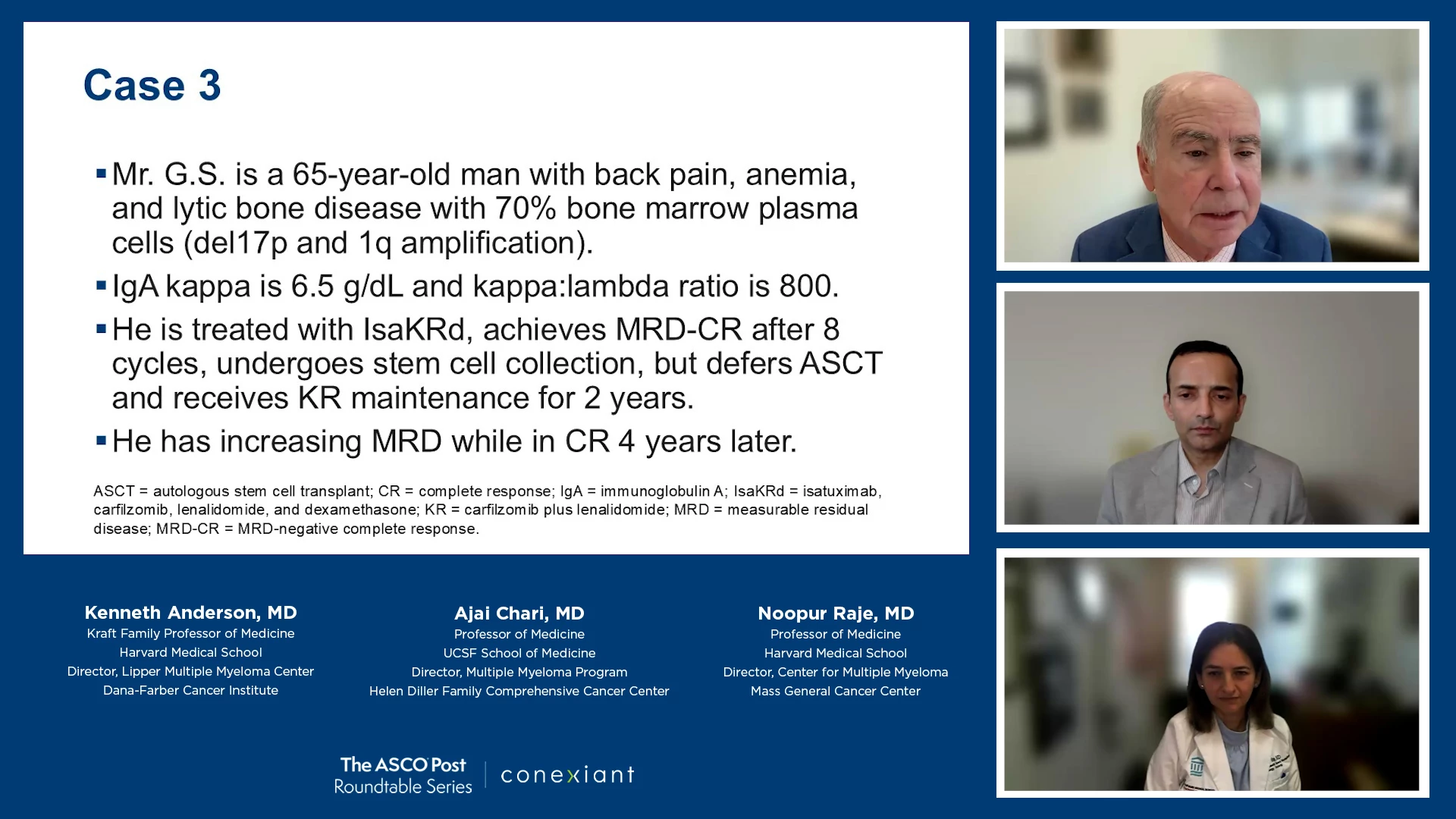
Case 3: Optimal Sequencing of T-Cell–Redirected Therapies
This is Part 3 of Navigating the T-Cell Therapy Landscape in Multiple Myeloma, a three-part video roundtable series. Scroll down to watch the other videos from this roundtable. In this video, Drs. Kenneth Anderson, Ajai Chari, and Noopur Raje discuss the treatment of a patient with high-risk multiple myeloma that is progressing following maintenance therapy. The patient is a 65-year-old man with back pain, anemia, and lytic bone disease with 70% bone marrow plasma cells (deletion 17p and 1q amplification) His IgA kappa is 6.5 g/dL, and his kappa:lambda ratio is 800. He is treated with isatuximab, carfilzomib, lenalidomide, and dexamethasone, achieving a measurable residual disease (MRD)-negative complete response after eight cycles. He undergoes stem cell collection, but defers autologous stem cell transplant and receives carfilzomib plus lenalidomide maintenance for 2 years. Four years later, he has increasing MRD while in complete response. In the conversation that follows, the faculty discuss how increasing MRD informs treatment decisions, the clinical data supporting the use of the chimeric antigen receptor (CAR) T-cell therapy ciltacabtagene autoleucel, and considerations when sequencing CAR T-cell therapies and bispecific T-cell engagers.
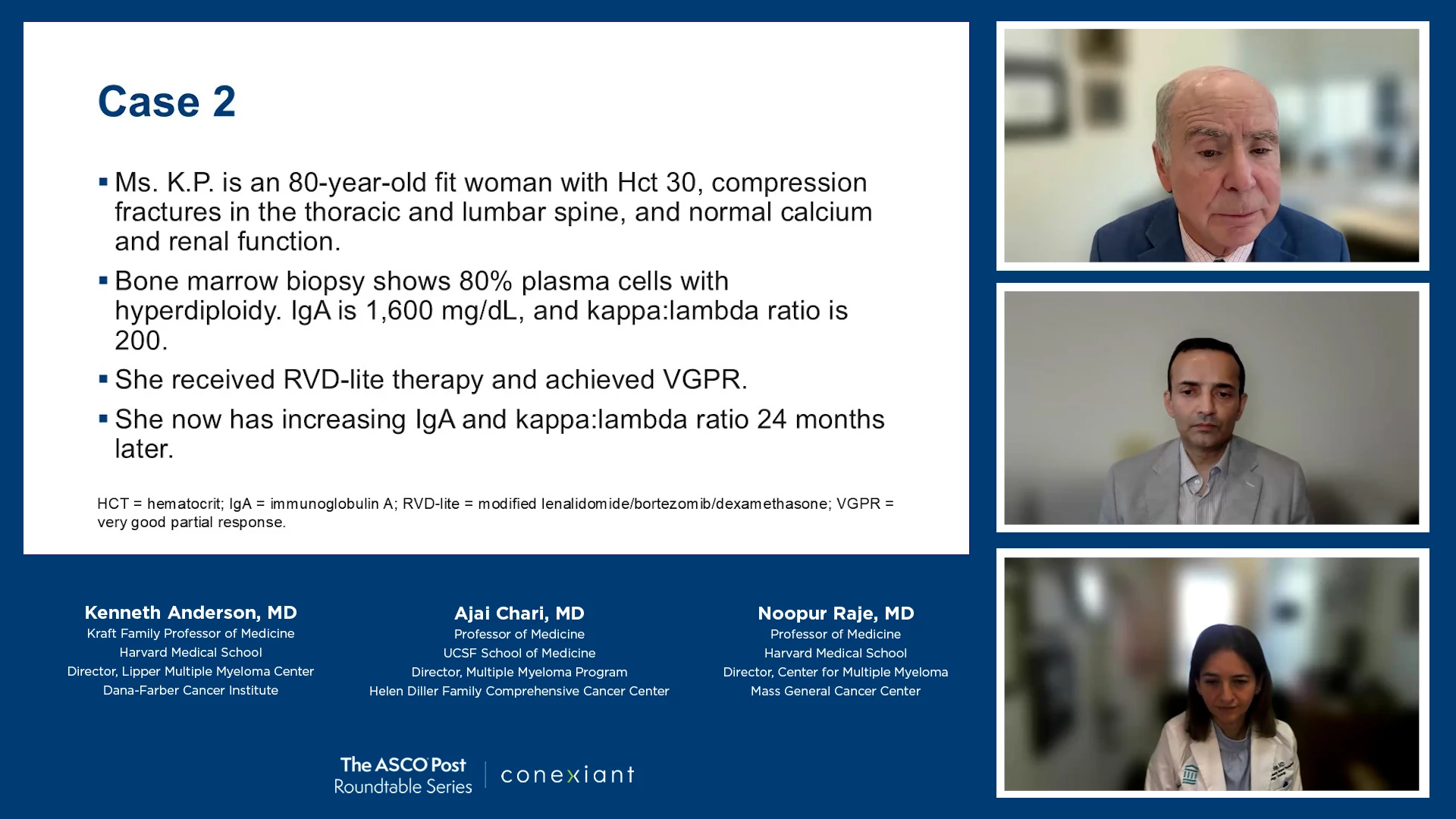
Case 2: Role of T-Cell–Redirected Therapies in Elderly Patients With Relapsed/Refractory Multiple Myeloma
This is Part 2 of Navigating the T-Cell Therapy Landscape in Multiple Myeloma, a three-part video roundtable series. Scroll down to watch the other videos from this roundtable. In this video, Drs. Kenneth Anderson, Ajai Chari, and Noopur Raje discuss the treatment of a patient with relapsed multiple myeloma. The patient is an 80-year-old woman with hematocrit of 30, compression fractures in the thoracic and lumbar spine, and normal calcium and renal function. A bone marrow biopsy shows 80% plasma cells with hyperdiploidy; her IgA is 1,600 mg/dL, and the kappa:lambda ratio is 200. She receives RVD-lite, achieving a very good partial response. However, 2 years later, her IgA and kappa:lambda ratio are found to be increasing. In the conversation that follows, the faculty discuss the optimal salvage therapy for this patient, the role that chimeric antigen receptor T-cell therapies play at first relapse, and the impact of frailty status on choice of therapy.
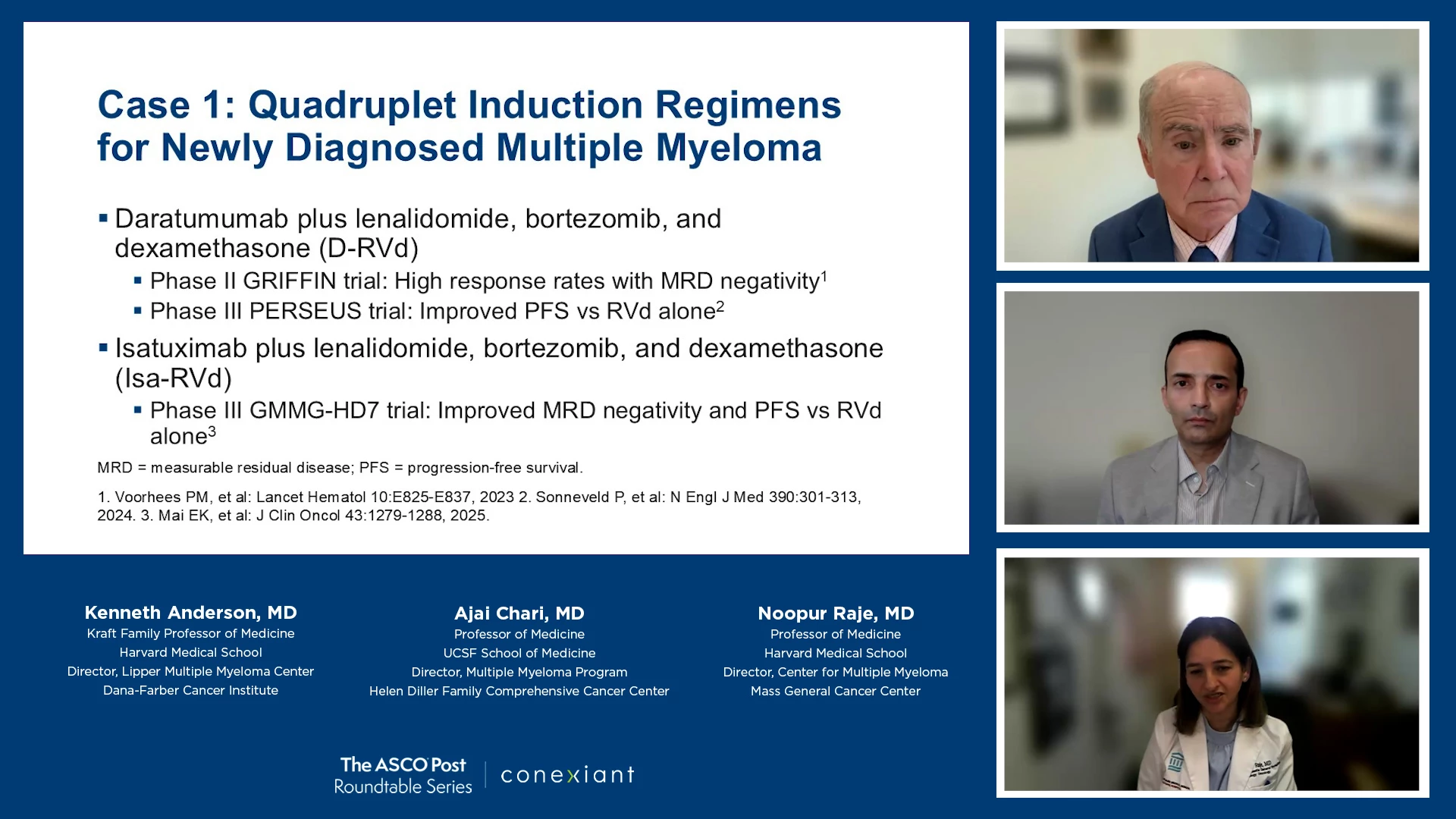
Case 1: Role of ASCT in the Era of Quadruplet Induction and T-Cell–Redirected Therapies
This is Part 1 of Navigating the T-Cell Therapy Landscape in Multiple Myeloma, a three-part video roundtable series. Scroll down to watch the other videos from this roundtable. In this video, Drs. Kenneth Anderson, Ajai Chari, and Noopur Raje discuss the treatment of a patient with newly diagnosed multiple myeloma. The patient is a 65-year-old man who presents with back pain. He is found to have IgG kappa 4.5 g/dL, kappa:lambda ratio of 250, and 70% bone marrow plasma cells with 1q amplification and t(4:14). His calcium and renal function are normal, but he is found to have diffuse bone disease. In the conversation that follows, the faculty discuss the many quadruplet induction therapies that may be an option for this patient, the role that measurable residual disease plays in determining the best course of therapy, whether autologous stem cell transplant is still necessary, and how they are incorporating CAR T-cell therapy and bispecific T-cell engagers into the initial management of newly diagnosed multiple myeloma.
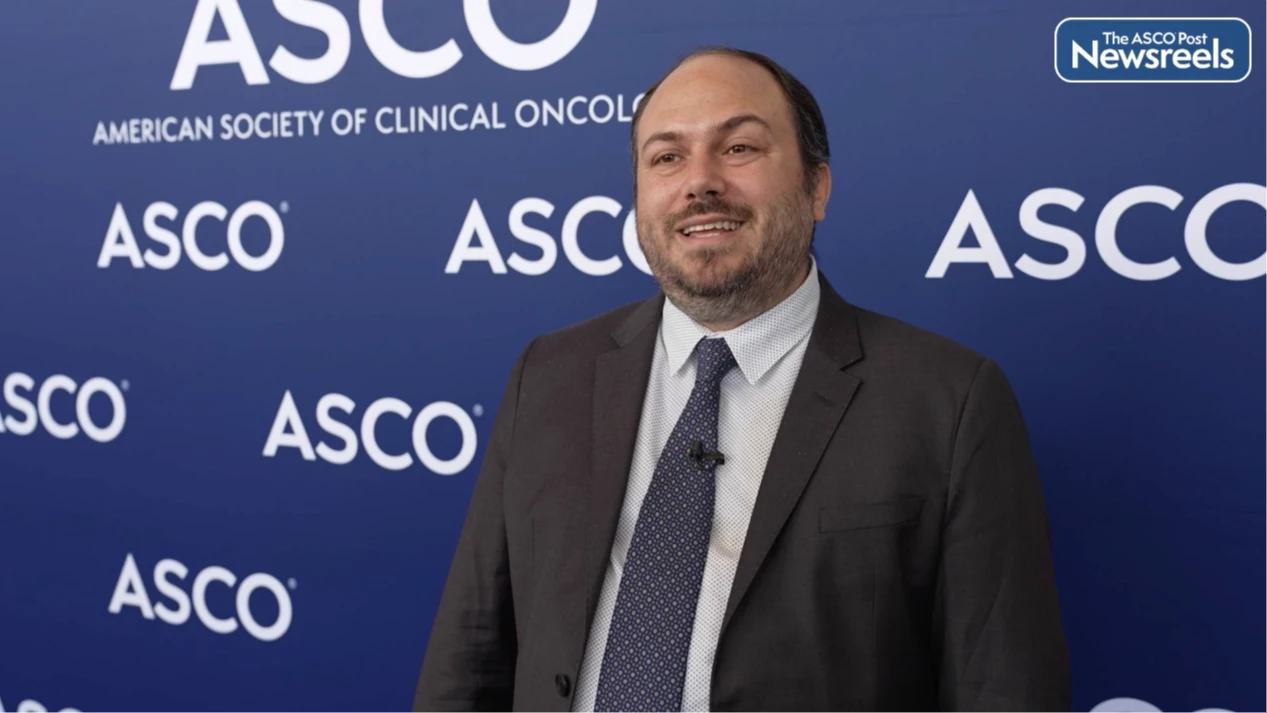
Claudio Cerchione, MD, PhD, on Staging Multiple Myeloma: New Findings on FDG PET/CT Scans and Whole-Body MRI
Claudio Cerchione, MD, PhD, of Italy’s Istituto Scientifico Romagnolo per lo Studio e la Cura dei Tumori, discusses preliminary findings from a prospective trial suggesting that by adding whole-body MRI to fludeoxyglucose-18 (FDG) PET/CT scans, clinicians may detect bone lesions earlier and more accurately in patients with either newly diagnosed or relapsed multiple myeloma, thus translating into potentially better outcomes (Abstract 7512).
Paula Rodríguez-Otero, MD, PhD, and Amrita Y. Krishnan, MD, on Multiple Myeloma: Moving BCMA-Directed Therapies to Earlier Use
Paula Rodríguez-Otero, MD, PhD, of Spain’s Cancer Center Clínica Universidad de Navarra, and Amrita Y. Krishnan, MD, of the City of Hope Cancer Center, discuss two key studies on B-cell maturation antigen (BCMA)-directed therapies: CARTITUDE-4 on ciltacabtagene autoleucel in patients with functional high-risk multiple myeloma; and DREAMM-7 on belantamab mafodotin-blmf plus bortezomib and dexamethasone vs daratumumab, bortezomib, and dexamethasone in patients with relapsed or refractory disease.
Amrita Y. Krishnan, MD, and Paula Rodríguez-Otero, MD, PhD, on Multiple Myeloma: Findings From the PERSEUS Trial on a Regimen for Transplant-Eligible Patients
Amrita Y. Krishnan, MD, of the City of Hope Cancer Center, and Paula Rodríguez-Otero, MD, PhD, of Spain’s Cancer Center Clínica Universidad de Navarra, discuss data that appear to further support daratumumab plus bortezomib, lenalidomide, and dexamethasone as a new standard of care for transplant-eligible patients with newly diagnosed multiple myeloma (Abstract 7502).

Thierry Facon, MD, on Multiple Myeloma: Results From the IMROZ Study on Isatuximab, Bortezomib, Lenalidomide, and Dexamethasone
Thierry Facon, MD, of the University of Lille and Lille University Hospital, discusses phase III findings showing for the first time that isatuximab, an anti-CD38 monoclonal antibody, when given with the standard of care (bortezomib, lenalidomide, dexamethasone, or VRd) to patients with newly diagnosed multiple myeloma who are transplant-ineligible, may reduce the risk of disease progression or death by 40.4% vs VRd alone (Abstract 7500).

Luciano J. Costa, MD, PhD, on Multiple Myeloma: Subgroup Analysis of CARTITUDE-4 on Ciltacabtagene Autoleucel
Luciano J. Costa, MD, PhD, of the University of Alabama at Birmingham, discusses recent findings from the CARTITUDE-4 trial showing that, in patients with lenalidomide-refractory functional high-risk multiple myeloma after one prior line of treatment, ciltacabtagene autoleucel improved outcomes vs the standard of care (Abstract 7504).

Suzanne Trudel, MD, on Multiple Myeloma: Results From the DREAMM-8 Study of Treatments After Relapse
Suzanne Trudel, MD, of Canada’s Princess Margaret Cancer Centre, discusses phase III findings showing that, in patients with relapsed or refractory multiple myeloma who had one or more prior lines of treatment, belantamab mafodotin-blmf plus pomalidomide and dexamethasone improved progression-free survival and showed a favorable overall survival trend compared with pomalidomide plus bortezomib and dexamethasone.
Xavier P. Leleu, MD, PhD, on Multiple Myeloma: Update on Isatuximab, Lenalidomide, Dexamethasone, and Bortezomib
Xavier P. Leleu, MD, PhD, of France’s Université de Poitiers and Centre Hospitalier Universitaire de Poitiers, discusses phase III findings showing that isatuximab in combination with bortezomib, lenalidomide, and dexamethasone deepened responses and increased the rate of measurable residual disease negativity vs isatuximab with lenalidomide and dexamethasone in patients with newly diagnosed transplant-ineligible multiple myeloma (Abstract 7501).

Natalie S. Callander, MD, on Multiple Myeloma: Management Updates
Natalie S. Callander, MD, of the University of Wisconsin Carbone Cancer Center, discusses advances in the treatment of patients with multiple myeloma, including her commentary on smoldering disease, the early use of CAR T-cell therapy, quadruplet therapy, and the use of multiple lines of treatment over the disease course.
Darren Denjay Pan, MD, on Multiple Myeloma: Inflammatory Biomarkers and Outcomes After CAR T-Cell Therapy
Darren Denjay Pan, MD, of Tisch Cancer Institute and the Icahn School of Medicine at Mount Sinai, discusses his findings on risk assessment of CAR T-cell therapy for patients with multiple myeloma. Higher fibrinogen and ferritin values at baseline were associated with inferior overall survival after CAR T-cell therapy, even after controlling for tumor burden. Higher baseline absolute lymphocyte count was also associated with higher risk and grade of immune effector cell–associated neurotoxicity syndrome, an important toxicity to consider for patients receiving CAR T (Abstract 92).
Pieter Sonneveld, MD, PhD, on Newly Diagnosed Multiple Myeloma: Phase III Findings on Daratumumab Plus Bortezomib, Lenalidomide, and Dexamethasone
Pieter Sonneveld, MD, PhD, of the Netherland’s Erasmus MC Cancer Institute, discusses primary results from the Perseus trial, showing that for patients with newly diagnosed multiple myeloma who are eligible for transplantation, the combination of daratumumab plus bortezomib, lenalidomide, and dexamethasone, followed by daratumumab and lenalidomide maintenance, may be a new standard of care (Abstract LBA1).
Danai Dima, MD, on Multiple Myeloma: Update on Safety and Efficacy of Teclistamab
Danai Dima, MD, of the Taussig Cancer Institute, Cleveland Clinic, discusses teclistamab-cqyv, a B-cell maturation antigen approved in October 2022 for patients with relapsed or refractory multiple myeloma who have received at least four prior lines of therapy. Dr. Dima and her team evaluated the real-world safety and efficacy of this agent and found encouraging evidence of efficacy in a real-world setting (Abstract 91).
Nikhil Munshi, MD, on Multiple Myeloma: Data From the CARTITUDE-1 Study of Ciltacabtagene Autoleucel
Nikhil Munshi, MD, of Dana-Farber Cancer Institute, discusses the final safety and efficacy results from the phase Ib/II CARTITUDE-1 trial of ciltacabtagene autoleucel. This CAR T-cell therapy targets B-cell maturation antigen in patients with relapsed or refractory multiple myeloma. Longer median progression-free survival was observed after a single infusion of this agent than any previously reported therapy in heavily pretreated patients (Abstract S202).
Paul G. Richardson, MD, on Multiple Myeloma: Mezigdomide Plus Dexamethasone in Relapsed and Refractory Disease
Paul G. Richardson, MD, of the Dana-Farber Cancer Institute, discusses preliminary results from the dose-expansion phase of the CC-92480-MM-001 Trial, which showed promising efficacy in patients with relapsed and refractory multiple myeloma, including those with prior BCMA-targeted therapies. Patients in these two groups had an overall response rate of 40% and 50%, respectively. The results support the development of mezigdomide, currently being evaluated in combination with standard therapies in multiple myeloma as part of a large, ongoing phase I/II trial (NCT03989414) and planned phase III studies (Abstract 568).
Jiye Liu, PhD, on Multiple Myeloma: Genome-Wide CRISPR-Cas9 Screening Identifies KDM6A as a Modulator of Daratumumab Sensitivity
Jiye Liu, PhD, of Dana-Farber Cancer Institute, discusses study findings that demonstrate KDM6A regulates CD38 and CD48 expression in multiple myeloma. Dr. Liu’s team validated combination treatment with an FDA-approved EZH2 inhibitor plus daratumumab, which can overcome daratumumab resistance in preclinical multiple myeloma models, providing the rationale for combination clinical trials to improve patient outcome (Abstract 148).
Francesco Maura, MD, on Genomic Determinants of Resistance in Newly Diagnosed Multiple Myeloma Treated With Targeted Immunotherapy
Francesco Maura, MD, of the University of Miami, Sylvester Comprehensive Cancer Center, discusses his team’s findings in which they defined a comprehensive catalogue of genomic determinants of response to DKRd (carfilzomib, lenalidomide, dexamethasone) in newly diagnosed multiple myeloma. The researchers have identified a number of new genomic alterations that explain resistance to the agents currently used in combination regimens (Abstract 470).
Eileen M. Boyle, MD, PhD, on Multiple Myeloma: Sustained MRD Negativity in Newly Diagnosed Disease Treated with Immunotherapy Regimens
Eileen M. Boyle, MD, PhD, of the Perlmutter Cancer Center, NYU Langone Health, discusses Fc-mediated antibody effector function, inflammation resolution, and oligoclonality and their role in predicting sustained measurable residual disease negativity in patients with newly diagnosed multiple myeloma who were treated with immunotherapy regimens. For the first time, an analysis of T-cell receptors shows that oligoclonal profiles seen on treatment may influence the fitness of the immune response (Abstract 100).
Julie Côté, MD, on Multiple Myeloma: Real-World Results of Autologous Stem Cell Transplantation in Newly Diagnosed Patients
Julie Côté, MD, of CHU de Québec–Université Laval, discusses findings from the Canadian Myeloma Research Group database, which showed that integrating bortezomib and lenalidomide into the autologous stem cell transplant (ASCT) sequence produces a median overall survival rate ≥ 10 years in most patients with newly diagnosed multiple myeloma. These observations highlight the contribution of post-ASCT maintenance, particularly lenalidomide given until disease progression, when used in multiple patient groups including those with and without high risk, as well as those requiring a second induction regimen (Abstract 117).
Paul G. Richardson, MD, on Multiple Myeloma: New Data on Lenalidomide, Bortezomib, and Dexamethasone, With or Without ASCT
Paul G. Richardson, MD, of Dana-Farber Cancer Institute, discusses phase III findings from the DETERMINATION trial, which showed that, for patients with newly diagnosed multiple myeloma, lenalidomide, bortezomib, and dexamethasone (RVd) with or without autologous stem cell transplant (ASCT) and lenalidomide maintenance to disease progression resulted in the longest median progression-free survival reported for each approach, and a highly significant difference in progression-free survival in favor of early transplant. While overall response rates were similar, rates of MRD favored early transplant also, but toxicity was greater and quality of life was transiently but significantly diminished. No overall survival advantage has been observed to date (Abstract LBA4).
Romanos Sklavenitis-Pistofidis, MD, on Smoldering Myeloma: Identifying Biomarkers of Response to Immunotherapy
Romanos Sklavenitis-Pistofidis, MD, of Dana-Farber Cancer Institute, discusses study findings on a next generation of clinical assays to assess both tumor biology and immune state, as well as common clinical biomarkers in the marrow or blood. These biomarkers may accurately predict which patients with smoldering multiple myeloma might benefit from early treatment, monitor response to immunotherapy, and improve patient outcomes (Abstract 330).
Anil Aktas-Samur, PhD, on Identifying Low-Risk Smoldering Multiple Myeloma
Anil Aktas-Samur, PhD, of Dana-Farber Cancer Institute, discusses study findings on the genomic characterization of non-progressor smoldering multiple myeloma, results that may provide a molecular definition of the disease as well as its risk-driving features. Combining this low-risk model with current high-risk models may possibly improve clinical trials for patients with this early precursor to myeloma (Abstract 545).
Nikhil C. Munshi, MD, PhD, on COVID-19 Vaccine Effectiveness in Patients With Multiple Myeloma
Nikhil C. Munshi, MD, PhD, of Dana-Farber Cancer Institute, discusses the findings from a large nationwide Veterans Affairs study, which showed that, for patients with multiple myeloma, the effectiveness of the COVID-19 vaccine is reduced, likely due to patients’ immunosuppression. Dr. Munshi describes what next steps should be taken (Abstract 400).
Tarek H. Mouhieddine, MD, on Relapsed/Refractory Multiple Myeloma and Bispecific Antibodies
Tarek H. Mouhieddine, MD, of The Mount Sinai Hospital and The Icahn School of Medicine at Mount Sinai, discusses data that suggest patients with heavily pretreated, predominantly triple-class refractory multiple myeloma who relapse after treatment with bispecific antibodies may still have good outcomes when sequentially treating with other immunologic treatments (Abstract 821).
Shaji K. Kumar, MD, on Newly Diagnosed Multiple Myeloma: How Many Drugs Are Enough?
Shaji K. Kumar, MD, of the Mayo Clinic Cancer Center, discusses the evolving treatment paradigm for patients with newly diagnosed multiple myeloma in which clinical trials are suggesting the addition of a fourth drug to induction treatment regimens and new drug classes are improving treatment for those not eligible for transplantation.
Saad Z. Usmani, MBA, MD, on Multiple Myeloma: Updated Results From the CARTITUDE-1 Study of Ciltacabtagene Autoleucel
Saad Z. Usmani, MBA, MD, of the Levine Cancer Institute, discusses new data on the CAR T-cell therapy ciltacabtagene autoleucel, a single infusion of which yielded early, deep, and durable responses in heavily pretreated patients with relapsed or refractory multiple myeloma (Oral Abstract MM-119).
Muhamed Baljevic, MD, on Multiple Myeloma: Review of Novel Management Strategies
Muhamed Baljevic, MD, of the University of Nebraska Medical Center, reviews the outlook for treating patients with relapsed and refractory multiple myeloma, the rapidly expanding array of therapeutic options with novel mechanisms of action, and the challenges of sequencing treatments.
Muhamed Baljevic, MD, on Multiple Myeloma: Review of Novel Management Strategies
Muhamed Baljevic, MD, of the University of Nebraska Medical Center, reviews the outlook for treating patients with relapsed and refractory multiple myeloma, the rapidly expanding array of therapeutic options with novel mechanisms of action, and the challenges of sequencing treatments.
Nina Shah, MD, on Newly Diagnosed Multiple Myeloma: Novel Combination Therapies
Nina Shah, MD, of the University of California, San Francisco, discusses triplet drug combinations that are the current standard of care for transplant-eligible and -ineligible patients with multiple myeloma, as well as quadruplet therapies that demonstrate depth of response in newly diagnosed cases, where they may become the standard of care along with transplantation and maintenance treatments.
S. Vincent Rajkumar, MD, on Multiple Myeloma: Defining Cure
S. Vincent Rajkumar, MD, of the Mayo Clinic, talks about how, in light of the fact that multiple myeloma has been turned into a chronic disease for many people, what it means to “cure” patients; the difference between curable and cured in multiple myeloma; and key studies he is involved in that could help determine whether using the best possible treatments early in the course of the disease can lead to cures.
Paul G. Richardson, MD, on Multiple Myeloma and COVID-19: An Update
Paul G. Richardson, MD, of Dana-Farber Cancer Institute, discusses challenges patients with multiple myeloma have faced as a result of the COVID-19 pandemic and the research he and his international colleagues are conducting to better understand these difficulties and improve patient care.
Cristina Gasparetto, MD, on Multiple Myeloma: Selinexor, Carfilzomib, and Dexamethasone in Carfilzomib-Nonrefractory Patients
Cristina Gasparetto, MD, of Duke University, discusses findings from a study that suggests patients with heavily pretreated multiple myeloma benefit from weekly selinexor, carfilzomib, and dexamethasone, which was reported to be active, with an overall response rate of 78% and an overall progression-free survival of 23 months (Abstract S188).
Philippe Moreau, MD, on Newly Diagnosed Multiple Myeloma: Daratumumab Maintenance vs Observation
Philippe Moreau, MD, of University Hospital Hôtel-Dieu, discusses findings from the CASSIOPEIA trial, Part 1, on daratumumab maintenance vs observation in patients with newly diagnosed multiple myeloma who have been treated with bortezomib, thalidomide, and dexamethasone, with or without daratumumab, and autologous stem cell transplantation (Abstract S180).

Martin Kaiser, MD, on Myeloma and Plasma Cell Leukemia: Transplantation Plus Daratumumab/CVRD Therapy
Martin Kaiser, MD, of The Institute of Cancer Research and Royal Marsden Hospital, discusses findings from the UK OPTIMUM/MUKNINE trial on the depth of response and minimal residual disease status in patients with ultra-high–risk newly diagnosed multiple myeloma and plasma cell leukemia who were treated with augmented autologous transplant and daratumumab plus cyclophosphamide, bortezomib, lenalidomide, and dexamethasone (Abstract S181).
Taiga Nishihori, MD, on Multiple Myeloma: Maintenance Ixazomib After Transplant
Taiga Nishihori, MD, of the H. Lee Moffitt Cancer Center and Research Institute, discusses the outcome of a trial that explored maintenance therapy with ixazomib after allogeneic hematopoietic cell transplantation in patients with high-risk multiple myeloma. Toxicities unrelated to the maintenance treatment forced the trial to close prematurely (Abstract 7003).

Shaji K. Kumar, MD, on Multiple Myeloma: NCCN Guidelines Update
Shaji K. Kumar, MD, of the Mayo Clinic Cancer Center, discusses the latest data on treating patients with multiple myeloma, including standard-of-care induction before stem cell transplant; the role of quadruplet induction; long-term results with the combination of daratumumab, lenalidomide, and dexamethasone in those who are ineligible for stem cell transplant; CAR T-cell engagers; and the need for more research on how immunotherapy fits in the sequence of treatments.
Lena E. Winestone, MD, MSHP, on Health-Care Disparities in Hematologic Cancers: Real-World Data
Lena E. Winestone, MD, MSHP, of the University of California, San Francisco and Benioff Children’s Hospital, reviews different aspects of bias in treatment delivery, including patient selection for clinical trials; racial and ethnic disparities in survival for indolent non-Hodgkin diffuse large B-cell lymphomas; and end-of-life hospitalization of patients with multiple myeloma, as well as outcome disparities (Abstracts 207-212).
Meletios A. Dimopoulos, MD, on Multiple Myeloma: Daratumumab, Pomalidomide, and Dexamethasone
Meletios A. Dimopoulos, MD, of the University of Athens, discusses data from the phase III APOLLO study, which evaluated the use of subcutaneous daratumumab plus pomalidomide and dexamethasone, vs pomalidomide and dexamethasone alone, in patients with relapsed or refractory multiple myeloma (Abstract 412).
Paul G. Richardson, MD, on Multiple Myeloma: Roundup of Three Key Studies
Paul G. Richardson, MD, of Dana-Farber Cancer Institute, gives his expert perspective on three important studies in multiple myeloma: long-term results from the IFM 2009 trial on early vs late autologous stem cell transplant in patients with newly diagnosed disease; the effect of high-dose melphalan on mutational burden in relapsed disease; and daratumumab plus lenalidomide, bortezomib, and dexamethasone in transplant-eligible patients with newly diagnosed disease (Abstracts 143, 61, and 549).
Sagar Lonial, MD, on CAR T-Cell Therapies for Myeloma: Novel Approaches and Longer-Term Follow-up Data
Sagar Lonial, MD, of the Emory University School of Medicine, summarizes key papers presented in a session he co-moderated on how second-generation CAR T cells can be used to treat patients with multiple myeloma (Session 653).
