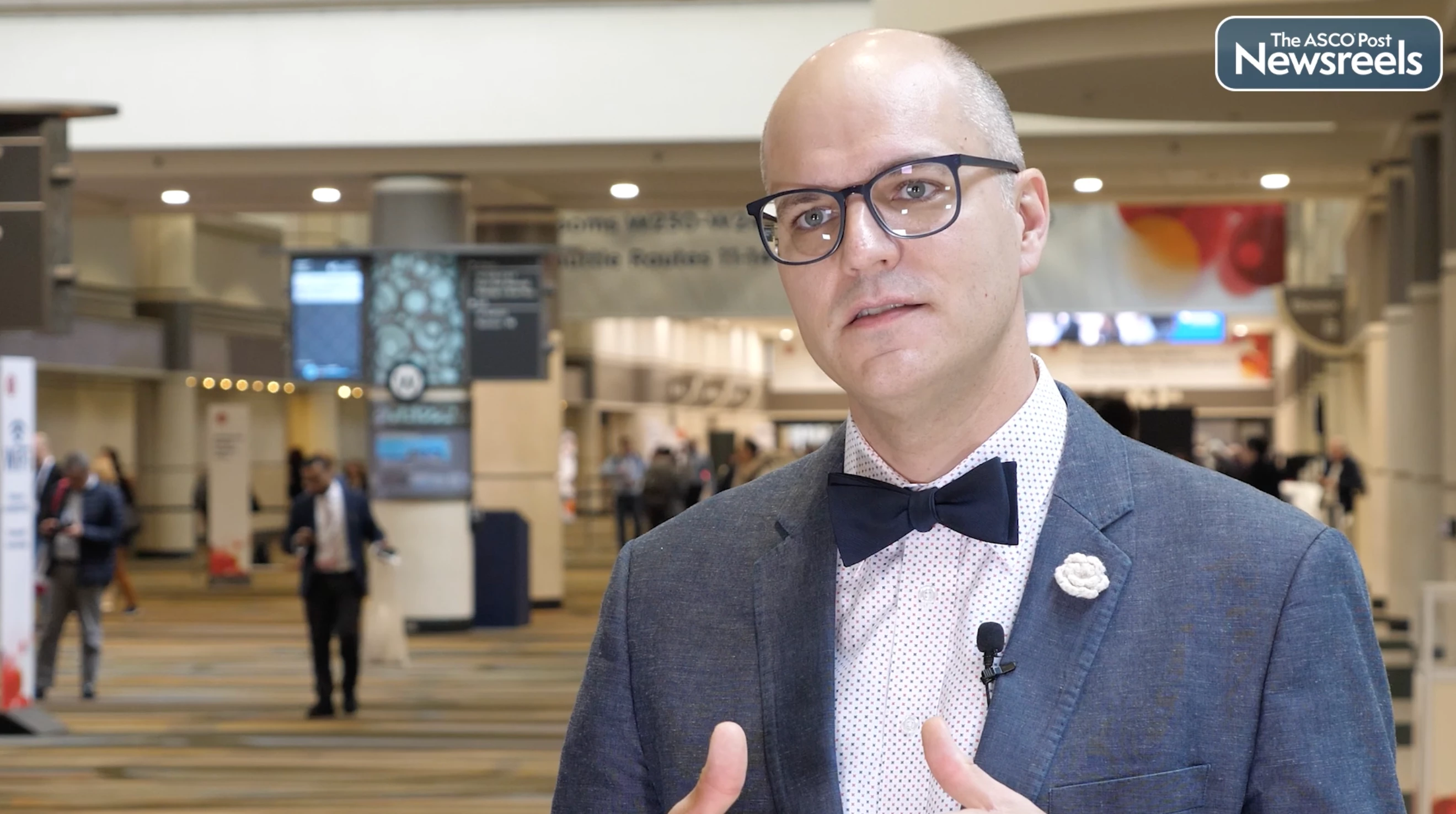
Benjamin Diamond, MD, on a Novel Quadruplet for Relapsed/Refractory Multiple Myeloma
ASH 2025
Benjamin Diamond, MD, of the University of Miami, describes findings from the single-center phase II REKINDLE trial, which looked at the combination regimen of iberdomide, carfilzomib, daratumumab, and dexamethasone in patients with early relapsed/refractory multiple myeloma (Abstract 251).
The ASCO Post Staff
Jayastu Senapati, MBBS, of The University of Texas MD Anderson Cancer Center, presents initial results from a phase II trial of brexucabtagene autoleucel as consolidation therapy in front-line high-risk B-cell acute lymphoblastic leukemia (B-ALL) or relapsed/refractory B-ALL after cytoreduction (Abstract 1573).
The ASCO Post Staff
Karthik Ramasamy, MBBS, FRCP, FRCPath, PhD, of the University of Oxford, discusses initial results of the phase II/III UK-based RADAR trial. The study evaluated isatuximab, bortezomib, lenalidomide, dexamethasone, and cyclophosphamide induction, followed by single autologous stem cell transplant, consolidation with isatuximab plus bortezomib, lenalidomide, and dexamethasone, and isatuximab plus lenalidomide maintenance, in patients with double-hit multiple myeloma (Abstract 98).
The ASCO Post Staff
Andrew Portuguese, MD, of Fred Hutchinson Cancer Center, discusses findings from a multicenter analysis from the U.S. Multiple Myeloma Immunotherapy Consortium looking at the real-world safety and efficacy of the BCMA-CD3 bispecific antibody elranatamab (Abstract 136).
The ASCO Post Staff
Anand Patel, MD, of the University of Chicago, discusses results from a phase II trial that showed tyrosine kinase inhibitor plus inotuzumab ozogamicin–based therapy resulted in major molecular response in patients newly diagnosed with Philadelphia chromosome (Ph)-positive acute lymphoblastic leukemia (ALL) (Abstract 441).
The ASCO Post Staff
Aaron Gerds, MD, of Cleveland Clinic, reviews results of an evaluation of Synapsis AI, a medically trained, large language model–based end-to-end system, focusing on its accuracy and efficiency in identifying eligible patients for an active phase III polycythemia vera clinical trial (Abstract 4340).