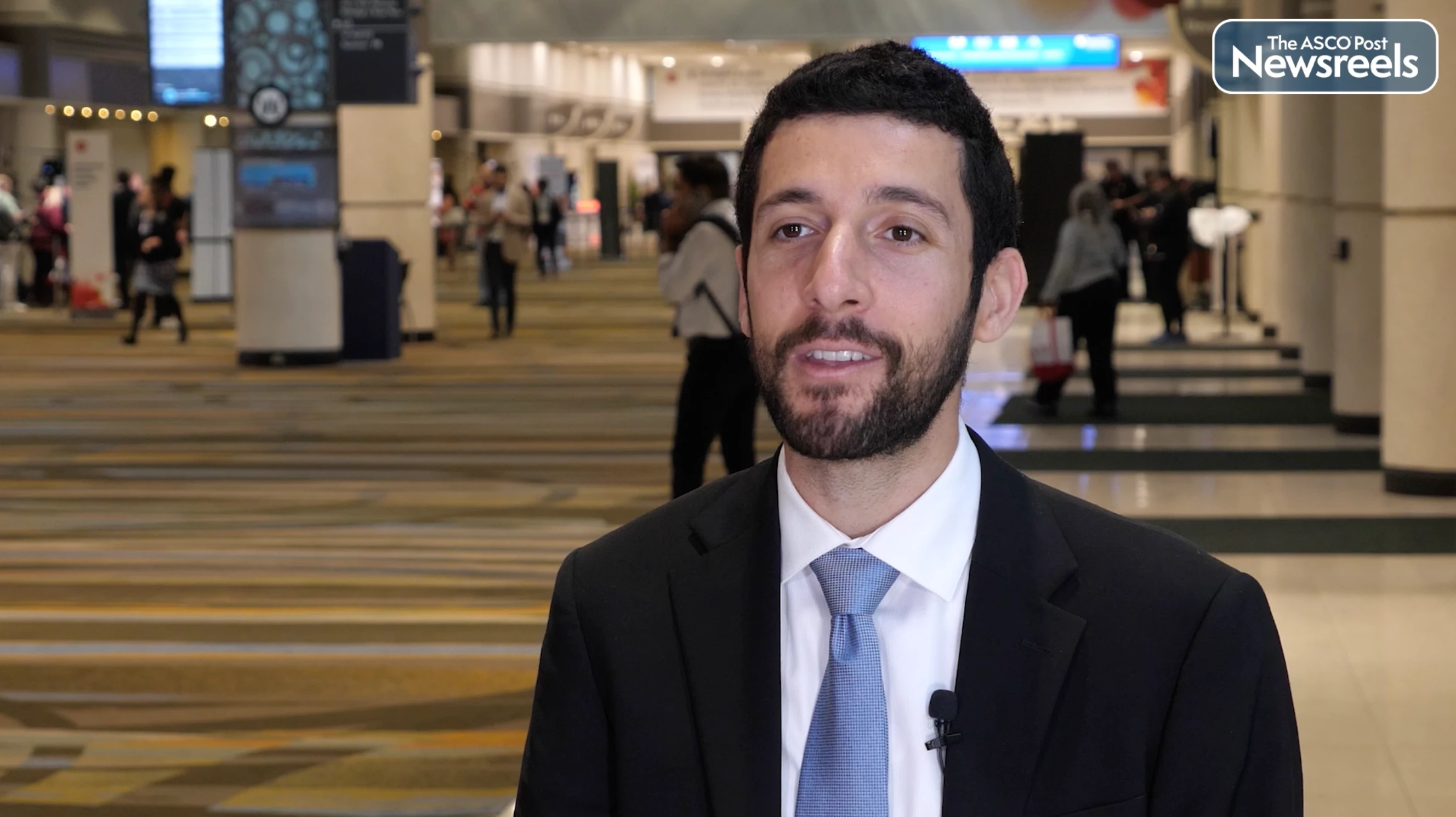
Jack Khouri, MD, on Multiple Myeloma: Burixafor and Propranolol With G-CSF Before Transplant
ASH 2025
Jack Khouri, MD, of Cleveland Clinic, describes the findings of a phase II trial which investigated the safety and efficacy of burixafor (GPC-100), a potent and selective small -molecule antagonist of CXCR4, and propranolol with granulocyte colony-stimulating factor (G-CSF) for the mobilization of hematopoietic progenitor cells (HPC) in patients with multiple myeloma. Researchers aimed to boost the bone marrow HPC niche and optimize mobilization in patients with multiple myeloma eligible for autologous hematopoietic cell transplant (Abstract 1050).
The ASCO Post Staff
Shahzad Raza, MD, of Cleveland Clinic, presents updated phase II results of the RedirecTT-1 trial, focusing on the efficacy and safety of talquetamab combined with teclistamab in patients with relapsed/refractory multiple myeloma and extramedullary disease (Abstract 698). The study also received simultaneous publication in The New England Journal of Medicine.
The ASCO Post Staff
Brian Ball, MD, of City of Hope, presents updated results from the phase I/II BEXMAB study. They showed that the doublet had encouraging activity in patients with TP53-mutant, higher-risk MDS; translational data support the combination regimen’s potential for altering immune dysregulation in this subtype (Abstract 236).
The ASCO Post Staff
Aaron Gerds, MD, of Cleveland Clinic, reviews results of an evaluation of Synapsis AI, a medically trained, large language model–based end-to-end system, focusing on its accuracy and efficiency in identifying eligible patients for an active phase III polycythemia vera clinical trial (Abstract 4340).
The ASCO Post Staff
Jennifer Woyach, MD, of The Ohio State University Comprehensive Cancer Center, discusses results from the first head-to-head comparison of pirtobrutinib vs ibrutinib in treatment-naive patients and patients with covalent Bruton tyrosine kinase inhibitor–naive relapsed/refractory chronic lymphocytic leukemia/small lymphocytic lymphoma (CLL/SLL) (Abstract 683).
The ASCO Post Staff
Dory Abelman, PhD(c), HBHSc, of the University of Toronto, discusses findings that support the feasibility of ultradeep cell-free DNA whole-genome sequencing for comprehensive genomic profiling in patients with multiple myeloma, which may be a less invasive alternative to bone marrow biopsy (Abstract 495).