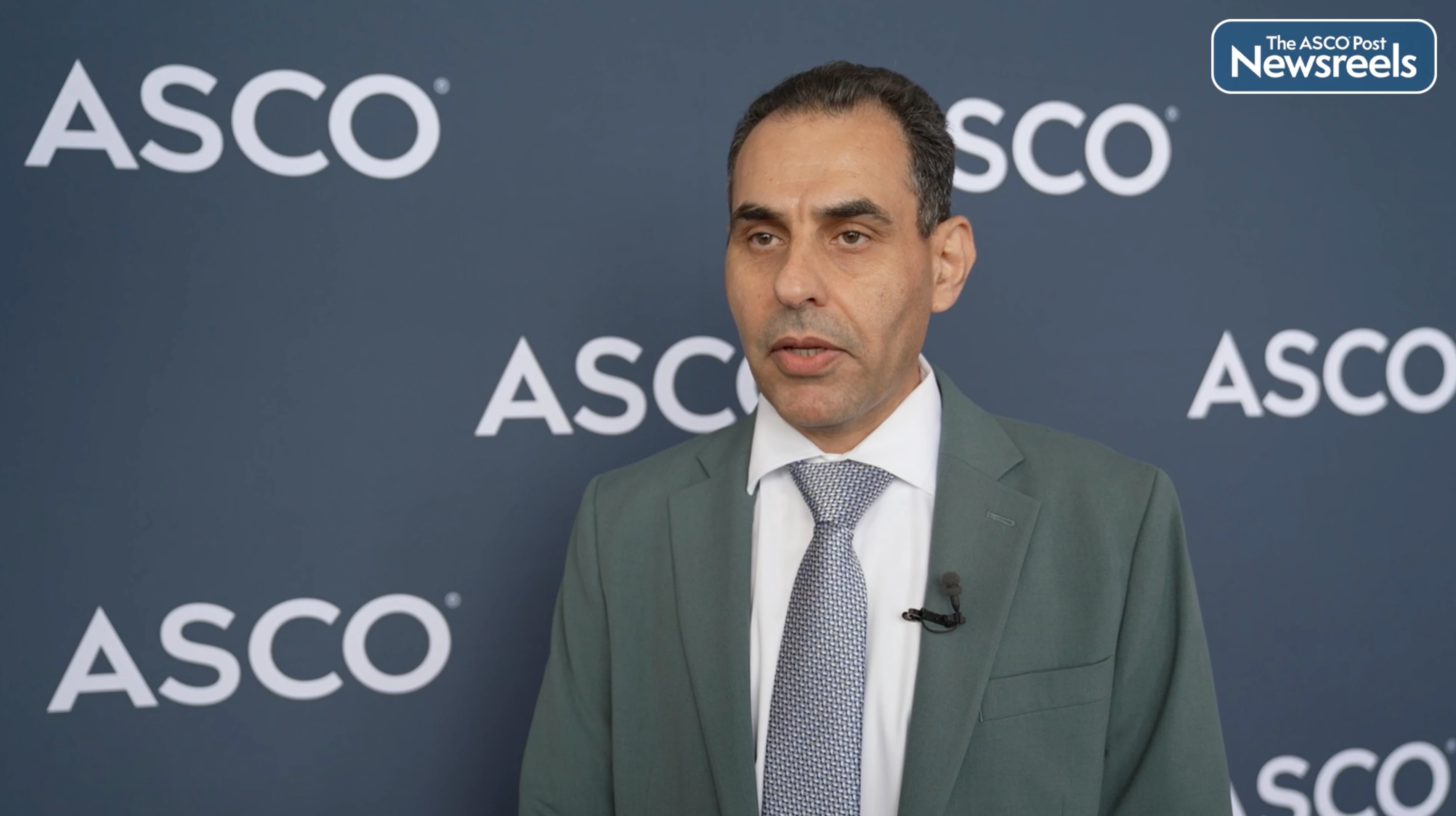
Jamie E. Chaft, MD, FASCO, on Nivolumab After Surgery and Adjuvant Chemotherapy in NSCLC
ASCO 2026
Jamie E. Chaft, MD, FASCO, of Memorial Sloan Kettering Cancer Center, discusses findings from ECOG-ACRIN EA5142/ALCHEMIST, a phase III randomized trial that evaluated the efficacy of adjuvant nivolumab after standard-of-care adjuvant therapy in patients with resected lung adenocarcinoma without sensitizing EGFR and ALK alterations and squamous cell carcinoma (Abstract 8000).
Elizabeth Smyth, MD, of Oxford NIHR Biomedical Research Centre, Churchill Hospital, discusses three major studies presented at this year’s meeting: the antibody-drug conjugate izalontamab brengitecan in recurrent or metasatic esophageal squamous cell carcinoma (Abstract 4008); the ATTRACTION-6 study of chemoimmunotherapy in HER2-negative advanced gastric/gastroesophageal junction (GEJ) cancer (Abstract 4006); and an investigational EP4 antagonist in combination with chemoimmunotherapy as a first-line strategy for HER2-negative gastric/GEJ cancer (Abstract 4007).
Lucy Gilbert, MD, of McGill University Health Centre, discusses subgroup analyses from the ROSELLA study. Relacorilant plus nab-paclitaxel demonstrated a statistically and clinically significant overall survival benefit in patients with platinum-resistant ovarian cancer compared to a weekly taxane; subgroup analyses for overall survival showed a consistent benefit favoring the addition of relacorilant to nab-paclitaxel irrespective of prior taxane use (Abstract 5503).
Gopa Iyer, MD, of Memorial Sloan Kettering Cancer Center, presents initial results from the phase I NEXUS-01 study, which evaluated LY4052031, an antibody-drug conjugate targeting Nectin-4, in patients with advanced or metastatic urothelial carcinoma (Abstract 4508).
The ASCO Post Staff
Shilpa Gupta, MD, of Taussig Cancer Institute, discusses findings from the phase III MAIN-CAV study (Alliance A032001) of maintenance cabozantinib and avelumab vs avelumab after first-line platinum-based chemotherapy in patients with locally advanced/metastatic urothelial cancer (Abstract 4514).
Mohammed Al-Jumayli, MD, of H. Lee Moffitt Cancer Center and Research Institute, discusses the effects of the use of a multimodal, digitally supported prehabilitation program among adults aged 65 years and older undergoing surgery for hepatobiliary cancer; the model was associated with favorable short-term functional performance signals and high levels of engagement (Abstract 12039).