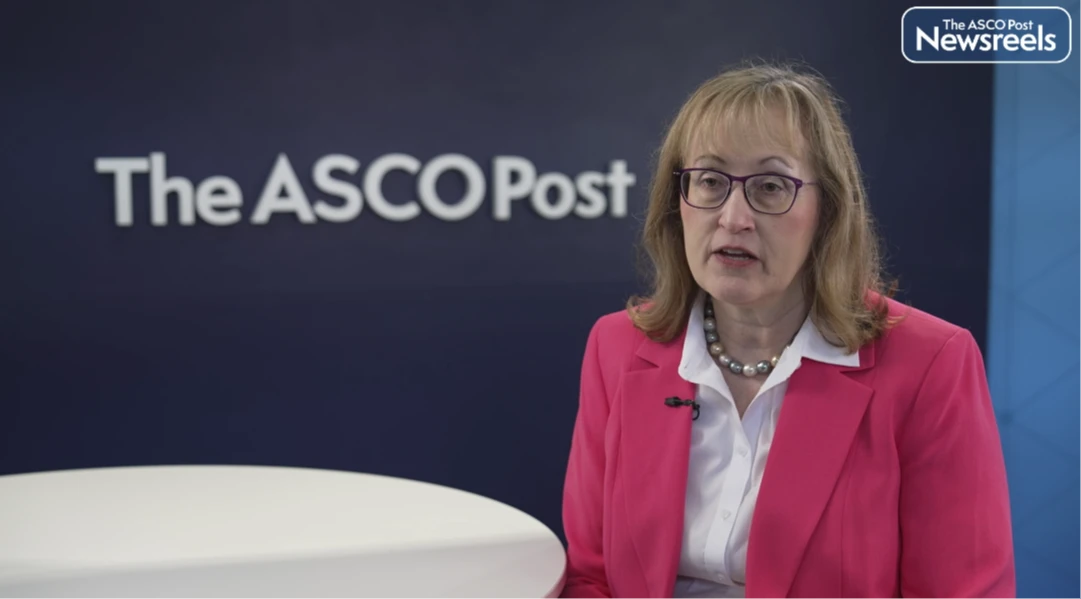
Laura Alder, MD, on New Data on Combination Therapy, Immunotherapy, and ADCs in Small Cell Lung Cancer
ASCO 2026
Laura Alder, MD, of Duke University Medical Center, highlights emerging data discussed in the meeting’s oral abstract session on small cell lung cancer, including increased toxicity without efficacy benefit from concurrent chemoradiation and immunotherapy, the intracranial activity of tarlatamab-dlle, and early data for a SEZ6-targeting antibody-drug conjugate.
The ASCO Post Staff
Marlana M. Orloff, MD, of Thomas Jefferson University Hospital, reviews primary results from the OptimUM-02 trial, which investigated the doublet of darovasertib plus crizotinib vs investgator’s choice for first-line therapy among patients with HLA-A2–negative metastatic uveal melanoma (Abstract LBA9503).
The ASCO Post Staff
Peter Schmid, MD, PhD, FRCP, of Queen Mary University of London, shares more data from the phase III lidERA BC clinical trial. This analysis focused on the efficacy and safety of giredestrant in patients with estrogen receptor (ER)-positive, HER2-negative early breast cancer, looking at both premenopausal and postmenopausal populations (Abstract 502).
The ASCO Post Staff
Alicia K. Morgans, MD, FASCO, of Dana-Farber Cancer Institute, discusses data from the phase II ARACOG (AFT-47) randomized clinical trial, which compared the two androgen receptor pathway inhibitors’ effects on cognitive function in patients with advanced prostate cancer (Abstract 5005).
The ASCO Post Staff
Adam Kibel, MD, of Brigham and Women's Hospital, discusses findings from the phase III PROTEUS trial, which evaluated perioperative (neoadjuvant and adjuvant) apalutamide and androgen deprivation therapy vs placebo and ADT with radical prostatectomy in patients with high-risk localized or locally advanced prostate cancer. Dr. Kibel talks about how the regimen of apalutamide and ADT affects both the surgical procedure itself as well as patient outcomes postprocedure (Abstract LBA1).
The ASCO Post Staff
Julie R. Brahmer, MD, FASCO, of the Bloomberg–Kimmel Institute for Cancer Immunotherapy, Sidney Kimmel Comprehensive Cancer Center at Johns Hopkins University School of Medicine, provides expert commentary on the overall survival results from the phase III HARMONi-6 trial presented in this year’s Plenary Session. The study compared ivonescimab plus chemotherapy vs tislelizumab plus chemotherapy in previously untreated patients with advanced squamous non–small cell lung cancer (NSCLC) (Abstract LBA4).