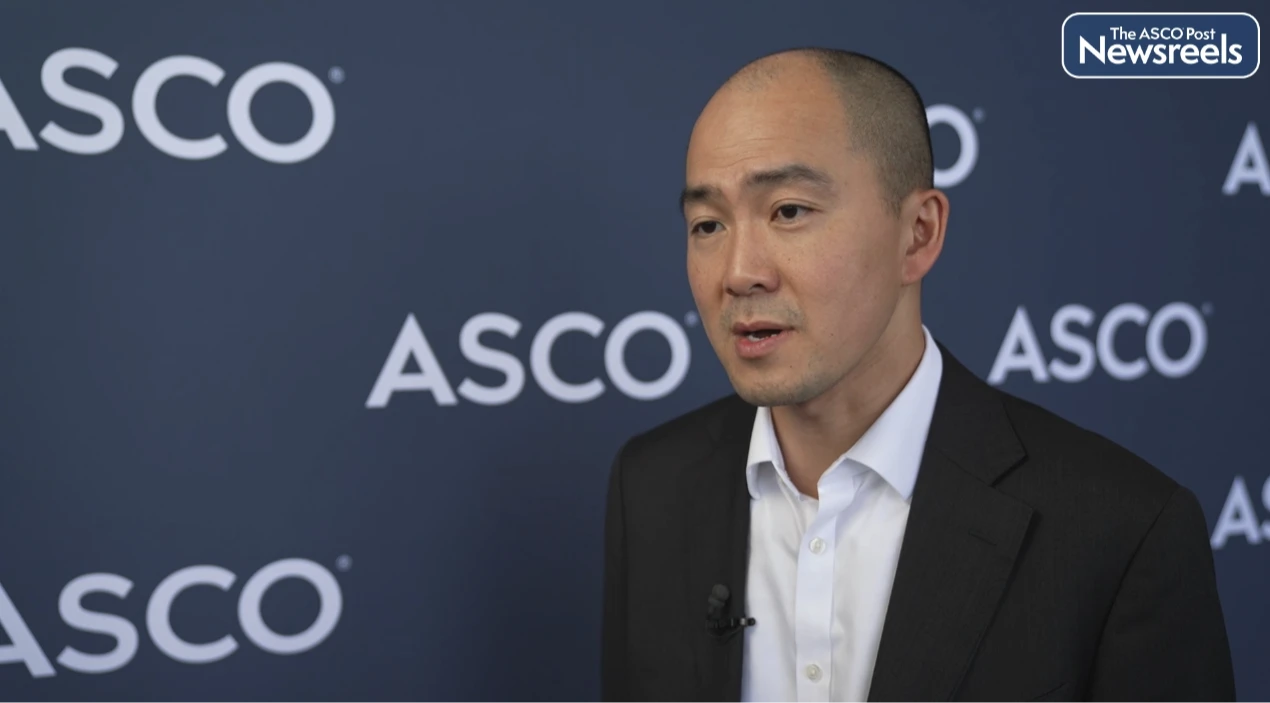
Brendan Heiden, MD, on Lung Cancer Screening Eligibility: Smoking Duration vs Pack-Years
ASCO 2026
Brendan Heiden, MD, of Washington University School of Medicine, discusses data from a unique real-world cohort of nearly 1 million patients in the Veterans Health Administration; researchers evaluated whether tobacco smoking duration improves lung cancer risk prediction compared with tobacco pack-years (Abstract 8004).
The ASCO Post Staff
Misty Dawn Shields, MD, PhD, of Indiana University Melvin and Bren Simon Comprehensive Cancer Center, shares her perspective on two small cell lung cancer (SCLC) abstracts presented at this year’s meeting. The first focuses on a post hoc analysis of the phase III DeLLphi-304 trial (Abstract 8006), which looked at the intracranial efficacy of tarlatamab in the second line; the second evaluated concurrent thoracic radiotherapy, chemotherapy, and durvalumab in extensive-stage disease (Abstract LBA8005).
The ASCO Post Staff
Jame Abraham, MD, FACP, of Cleveland Clinic, provides an update on the DESTINY-Breast05 trial, which is an ongoing phase III trial investigating postneoadjuvant trastuzumab deruxtecan (T-DXd) as compared with trastuzumab emtansine (T-DM1) in patients with HER2-positive breast cancer with residual invasive disease and node-positive disease at surgery or inoperable disease at diagnosis. Dr. Abraham makes special note of rates of interstitial lung disease seen in the trial and methods of management.
The ASCO Post Staff
Atish Choudhury, MD, PhD, of Dana-Farber Cancer Institute, talks about findings from the phase II A-DREAM/Alliance A032101 trial, which explored the possibility of androgen-deprivation (ADT) interruption in patients with metastatic hormone-sensitive prostate cancer who had an exceptional response to androgen receptor pathway inhibitors (ARPIs) (Abstract 5004).
The ASCO Post Staff
Adam Kibel, MD, of Brigham and Women's Hospital, discusses findings from the phase III PROTEUS trial, which evaluated perioperative (neoadjuvant and adjuvant) apalutamide and androgen deprivation therapy vs placebo and ADT with radical prostatectomy in patients with high-risk localized or locally advanced prostate cancer. Dr. Kibel talks about how the regimen of apalutamide and ADT affects both the surgical procedure itself as well as patient outcomes postprocedure (Abstract LBA1).
The ASCO Post Staff
Xin Gao, MD, of Massachusetts General Hospital and Harvard Medical School, discusses initial results from the phase I EXCEED trial of LY4101174, a Nectin-4–targeting antibody-drug conjugate, for patients with advanced or metastatic urothelial carcinoma (Abstract 4517).