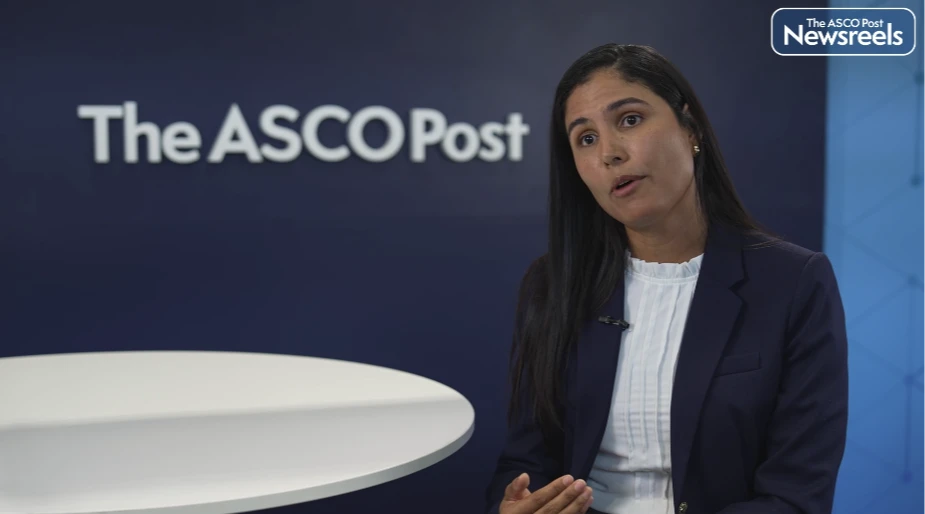
Marlana M. Orloff, MD, on Metastatic Uveal Melanoma: First-Line Therapy for HLA-A2–Negative Disease
ASCO 2026
Marlana M. Orloff, MD, of Thomas Jefferson University Hospital, reviews primary results from the OptimUM-02 trial, which investigated the doublet of darovasertib plus crizotinib vs investgator’s choice for first-line therapy among patients with HLA-A2–negative metastatic uveal melanoma (Abstract LBA9503).
Laura Alder, MD, of Duke University Medical Center, highlights emerging data discussed in the meeting’s oral abstract session on small cell lung cancer, including increased toxicity without efficacy benefit from concurrent chemoradiation and immunotherapy, the intracranial activity of tarlatamab-dlle, and early data for a SEZ6-targeting antibody-drug conjugate.
William G. Wierda, MD, PhD, of The University of Texas MD Anderson Cancer Center, presents pooled results from the BRUIN CLL-313 and BRUIN CLL-314 trials. BRUIN CLL-313 is comparing pirtobrutinib to bendamustine plus rituximab in treatment-naive patients with chronic lymphocytic leukemia/small lymphocytic lymphoma (CLL/SLL); BRUIN CLL-314 is comparing pirtobrutinib to ibrutinib in the same patient population (Abstract 7044).
The ASCO Post Staff
Shilpa Gupta, MD, of Taussig Cancer Institute, discusses findings from the phase III MAIN-CAV study (Alliance A032001) of maintenance cabozantinib and avelumab vs avelumab after first-line platinum-based chemotherapy in patients with locally advanced/metastatic urothelial cancer (Abstract 4514).
Mohammed Al-Jumayli, MD, of H. Lee Moffitt Cancer Center and Research Institute, discusses the effects of the use of a multimodal, digitally supported prehabilitation program among adults aged 65 years and older undergoing surgery for hepatobiliary cancer; the model was associated with favorable short-term functional performance signals and high levels of engagement (Abstract 12039).
The ASCO Post Staff
Angimar Uriepero-Palma, MD, of Jefferson Einstein Philadelphia Hospital, discusses a study that showed use of sodium-glucose cotransporter 2 (SGLT2) inhibitors was associated with longer 3-year overall survival and a lower risk of cytopenias and infections among diabetic patients with chronic lymphocytic leukemia (CLL) receiving Bruton’s tyrosine kinase inhibitors (Abstract 7051).