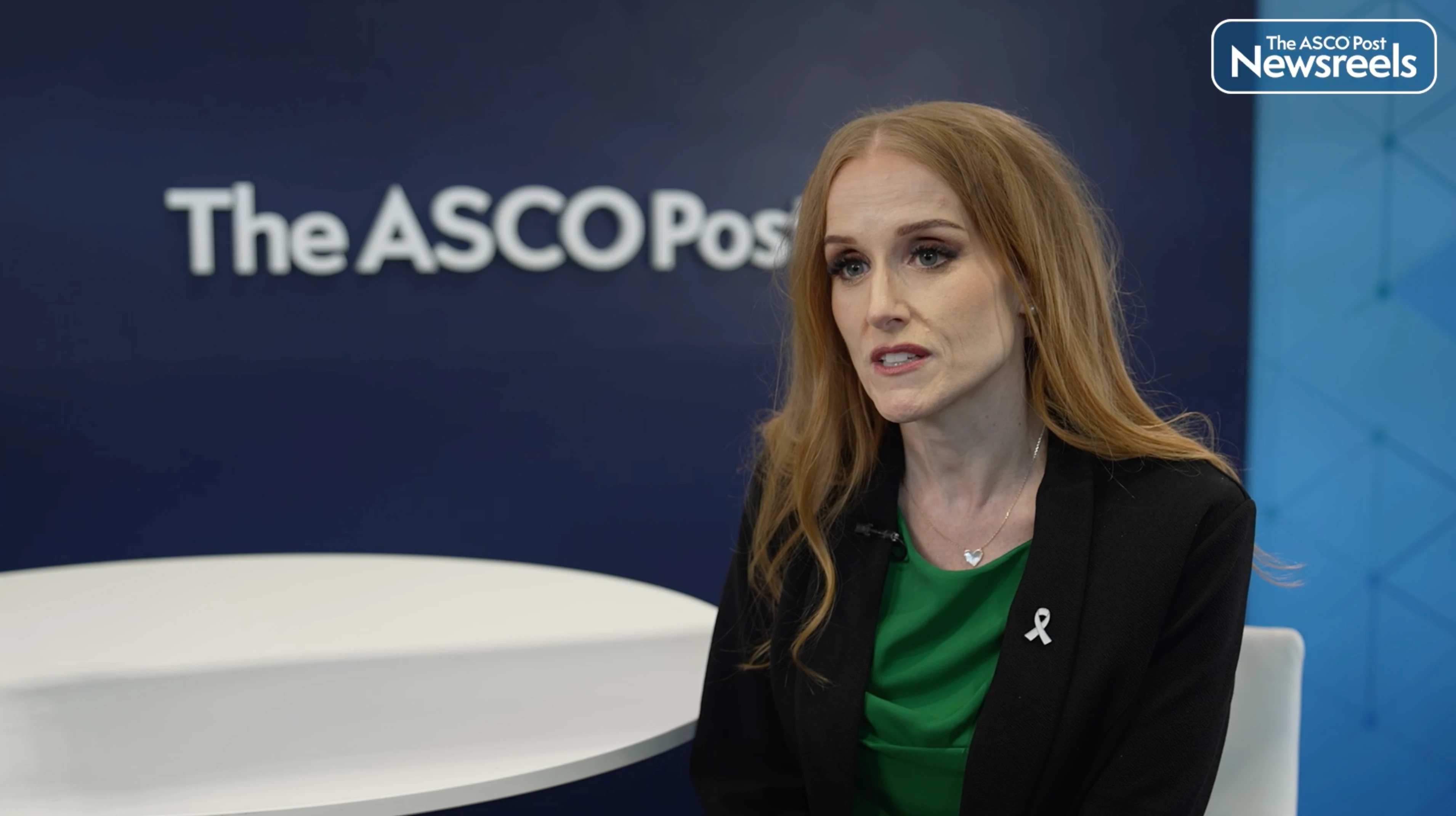
Daniel A. Ermann, MD, on First-Line Therapy for CLL: Real-World Outcomes Among Medicare Beneficiaries
ASCO 2026
Daniel A. Ermann, MD, of Huntsman Cancer Institute, University of Utah School of Medicine, presents findings from a retrospective cohort study which used a large U.S. database to evaluate clinical outcomes among Medicare beneficiaries treated with first-line therapy for chronic lymphocytic leukemia (CLL) (Abstract 7047).
To learn more about this data, read a related article in Oncology and Therapy.
The ASCO Post Staff
Adam Kibel, MD, of Brigham and Women's Hospital, discusses findings from the phase III PROTEUS trial, which evaluated perioperative (neoadjuvant and adjuvant) apalutamide and androgen deprivation therapy vs placebo and ADT with radical prostatectomy in patients with high-risk localized or locally advanced prostate cancer. Dr. Kibel talks about how the regimen of apalutamide and ADT affects both the surgical procedure itself as well as patient outcomes postprocedure (Abstract LBA1).
The ASCO Post Staff
Shilpa Gupta, MD, of Taussig Cancer Institute, discusses findings from the phase III MAIN-CAV study (Alliance A032001) of maintenance cabozantinib and avelumab vs avelumab after first-line platinum-based chemotherapy in patients with locally advanced/metastatic urothelial cancer (Abstract 4514).
The ASCO Post Staff
Yelena Y. Janjigian, MD, FASCO, of Memorial Sloan Kettering Cancer Center, discusses safety results for DESTINY-Gastric03 Part 2 (arms D and F) and Part 4. The trial evaluated first-line fam-trastuzumab deruxtecan-nxki–based regimens in advanced HER2-expressing gastric cancer, gastroesophageal adenocarcinoma, and esophageal carcinoma (Abstract 4002).
Rami Manochakian, MD, FASCO, of Mayo Clinic Florida, summarizes an educational session at ASCO that reviewed the state of the field of small cell lung cancer (SCLC) treatment. After decades of limited treatment progress, advances are being seen in immunotherapies, radiation therapy, bispecific T-cell engagers, antibody-drug conjugates, and radionuclide therapies.
The ASCO Post Staff
Christine Lovly, MD, PhD, FASCO, of City of Hope, offers her thoughs on the findings of the LIBRETTO-432 trial, which found improved event-free survival with adjuvant selpercatinib after definitive therapy for patients with early-stage RET fusion–positive non–small cell lung cancer (NSCLC) (Abstract LBA3).