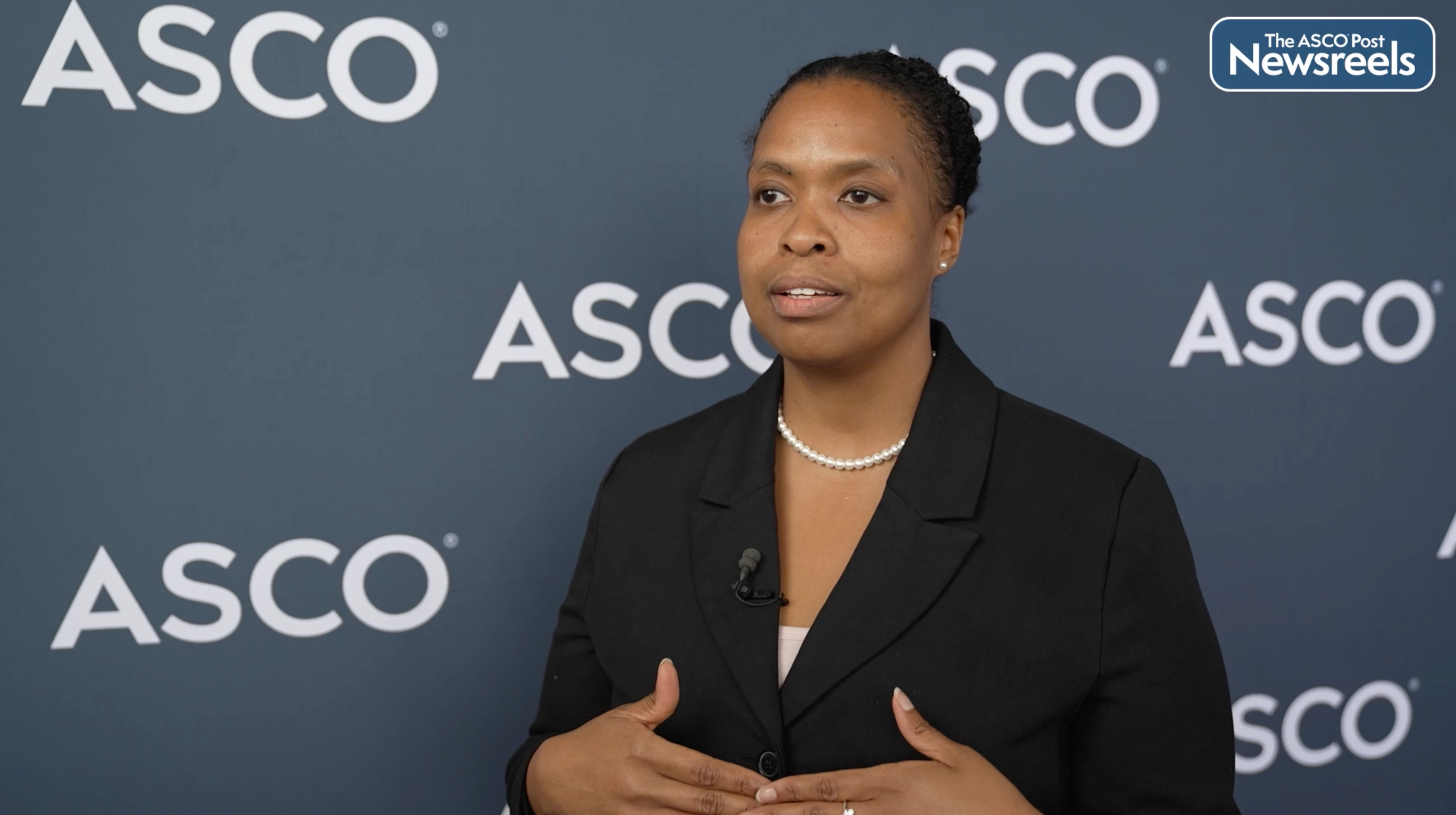
Robert C. Stein, PhD, MBBChir, FRCP, on ER-Positive HER2-Negative Early Breast Cancer: Test-Directed Chemotherapy
ASCO 2026
Robert C. Stein, PhD, MBBChir, FRCP, of the National Institute for Health Research University College London Hospitals Biomedical Research Centre, discusses the first results from the phase III randomized OPTIMA trial, which is comparing chemotherapy decisions made with the Prosigna (PAM50) gene expression test with standard treatment with estrogen receptor (ER)-positive, HER2-negative early breast cancer (Abstract 500).
The ASCO Post Staff
Krishnan R. Patel, MD, of the National Cancer Institute, discusses a combined analysis of the NRG/RTOG 9202, 9413, 9902, and 0521 trials that looked at using clinico-transcriptomic risk stratification to guide abiraterone treatment intensification among patients with high-risk prostate cancer (Abstract 5000).
Wassim McHayleh, MD, FACP, MBA, of AdventHealth Cancer Institute, provides an update from the phase Ib/II ELEVATE trial, an open-label umbrella study. This report focuses on updated safety and preliminary efficacy for elacestrant and capivasertib for patients with estrogen receptor (ER)-positive/HER2-negative advanced breast cancer who experienced disease progression on first-line endocrine therapy plus CDK4/6 inhibition (Abstract 1098).
Gerneiva Parkinson, MD, of Stanford Cancer Institute, discusses time on treatment for systemic therapies among women with hormone receptor (HR)-positive breast cancer and a pathogenic variant in BRCA1, BRCA2, or PALB2 (Abstract 1096).
The ASCO Post Staff
Noelle Cloven, MD, of Texas Oncology, discusses the actively recruiting RAINFOL-03 (ENGOT-EN-31/GOG-3128) study, a global, phase III, open-label, randomized study of rinatabart sesutecan vs investigator’s choice of chemotherapy in patients with endometrial cancer after receipt of platinum-based chemotherapy and PD-L1 inhibition (Abstract TPS5646).
The ASCO Post Staff
Shailender Bhatia, MD, of the University of Washington and Fred Hutchinson Cancer Center, presents data from the phase III ADAM trial, a multicenter, randomized, double-blinded, placebo-controlled study of the anti–PD-L1 antibody avelumab in patients with Merkel cell carcinoma and lymph node metastases (Abstract LBA9504).