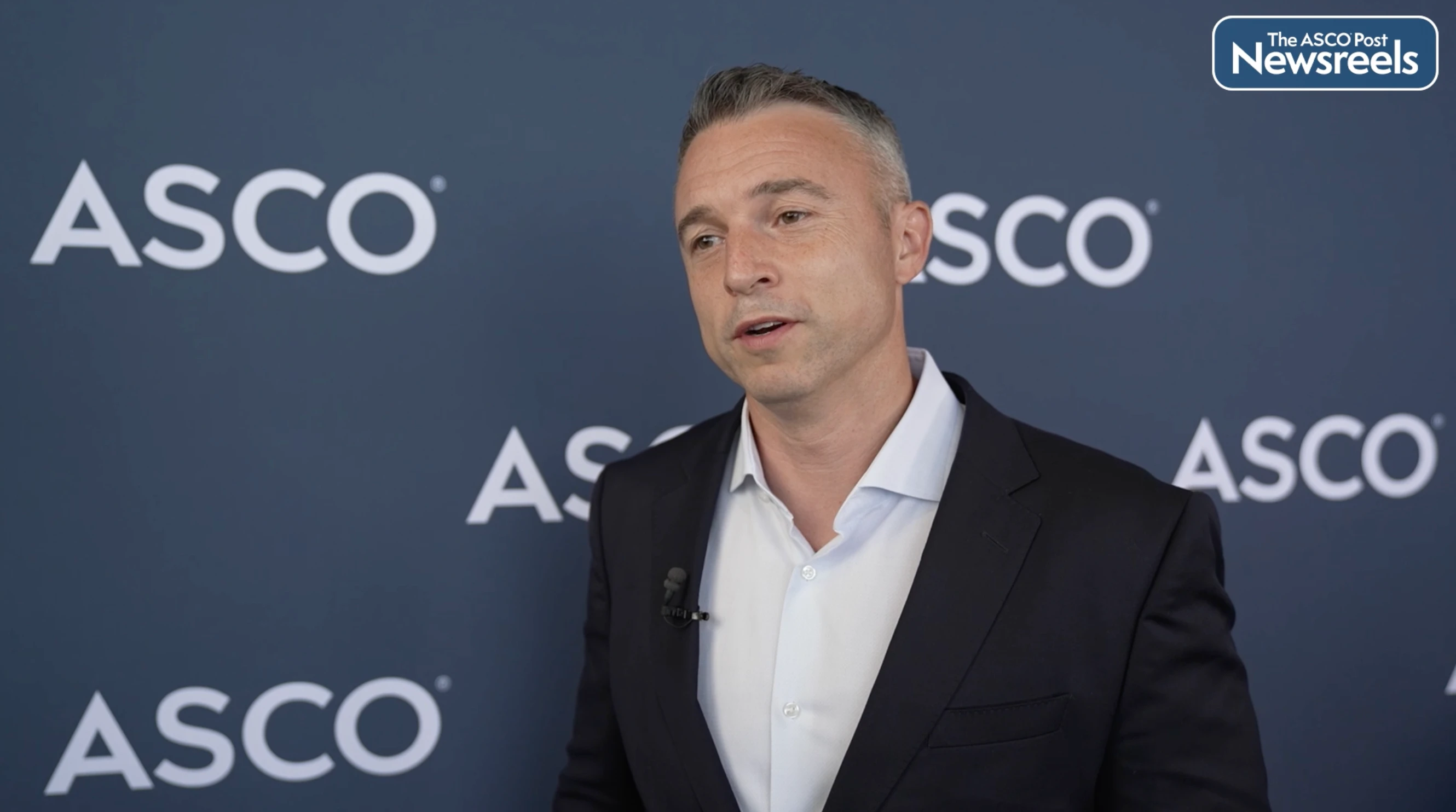
Noelle Cloven, MD, on RAINFOL-03: Actively Recruiting Trial in Pretreated Endometrial Cancer
ASCO 2026
Noelle Cloven, MD, of Texas Oncology, discusses the actively recruiting RAINFOL-03 (ENGOT-EN-31/GOG-3128) study, a global, phase III, open-label, randomized study of rinatabart sesutecan vs investigator’s choice of chemotherapy in patients with endometrial cancer after receipt of platinum-based chemotherapy and PD-L1 inhibition (Abstract TPS5646).
The ASCO Post Staff
Elizabeth McDonald, MD, PhD, of the University of Pennsylvania, discusses results from a retrospective cohort study that showed that the use of GLP-1 treatment was associated with a significantly lower incidence of breast cancer, after accounting for age, race, ethnicity, BMI, breast density, and type 2 diabetes status (Abstract 10506).
The ASCO Post Staff
Samuel J. Klempner, MD, FASCO, of Mass General Brigham Cancer Institute, discusses a single-arm phase II study—which is currently open and enrolling (ClinicalTrials.gov identifier NCT07070466)—evaluating ivonescimab in combination with FOLFOX as front-line therapy in locally advanced, unresectable, or metastatic HER2-negative gastroesophageal adenocarcinoma (Abstract TPS4246).
The ASCO Post Staff
Julie R. Gralow, MD, FACP, FASCO, Chief Medical Officer and Executive Vice President of ASCO, provides an overview of the highlights of this year’s meeting, including practice-changing data included in the Plenary Session.
Wassim McHayleh, MD, FACP, MBA, of AdventHealth Cancer Institute, provides an update from the phase Ib/II ELEVATE trial, an open-label umbrella study. This report focuses on updated safety and preliminary efficacy for elacestrant and capivasertib for patients with estrogen receptor (ER)-positive/HER2-negative advanced breast cancer who experienced disease progression on first-line endocrine therapy plus CDK4/6 inhibition (Abstract 1098).
Gopa Iyer, MD, of Memorial Sloan Kettering Cancer Center, presents initial results from the phase I NEXUS-01 study, which evaluated LY4052031, an antibody-drug conjugate targeting Nectin-4, in patients with advanced or metastatic urothelial carcinoma (Abstract 4508).