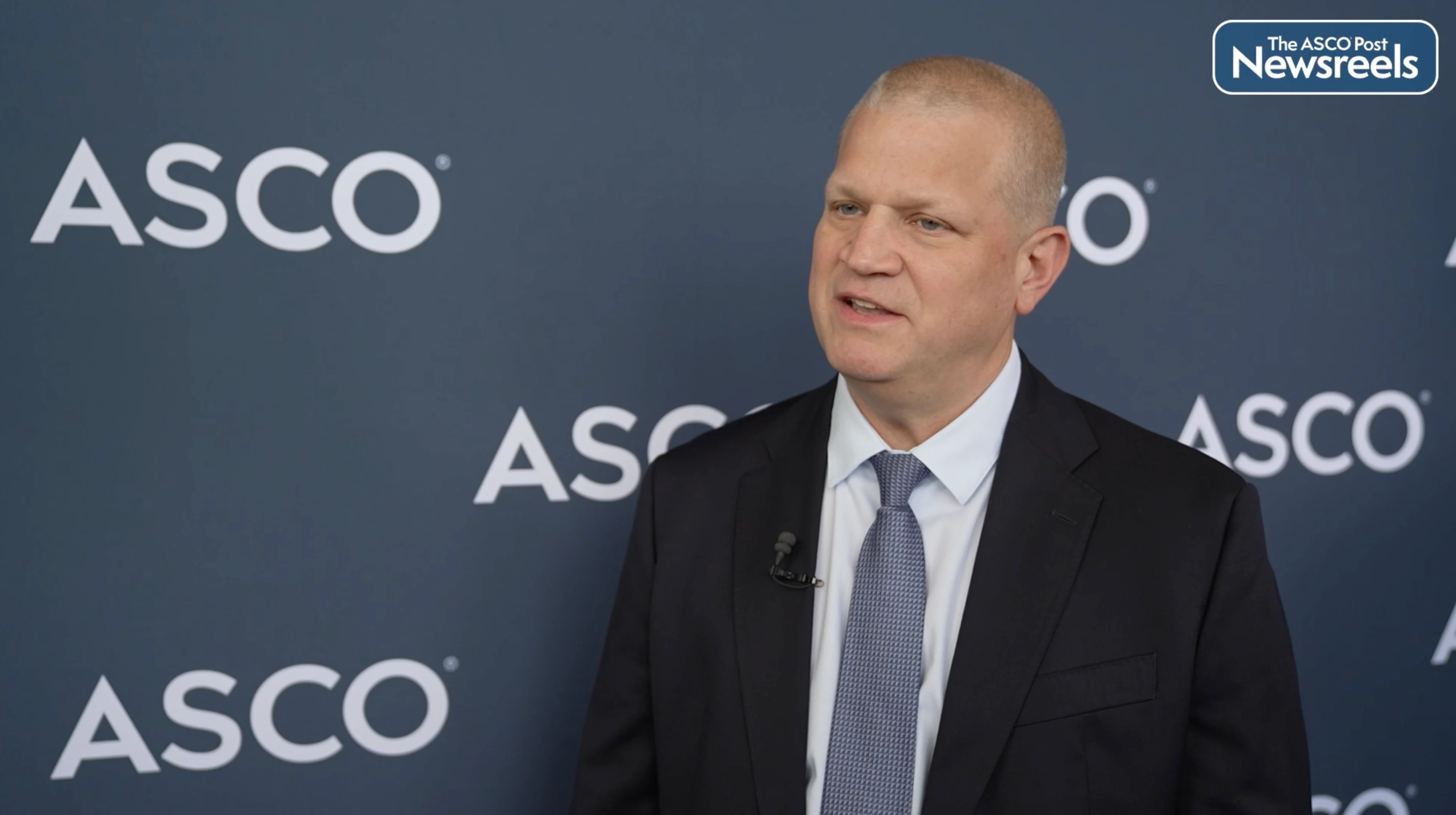
Jame Abraham, MD, FACP, on Update on the DESTINY-Breast05 Trial
ASCO 2026
Jame Abraham, MD, FACP, of Cleveland Clinic, provides an update on the DESTINY-Breast05 trial, which is an ongoing phase III trial investigating postneoadjuvant trastuzumab deruxtecan (T-DXd) as compared with trastuzumab emtansine (T-DM1) in patients with HER2-positive breast cancer with residual invasive disease and node-positive disease at surgery or inoperable disease at diagnosis. Dr. Abraham makes special note of rates of interstitial lung disease seen in the trial and methods of management.
The ASCO Post Staff
Atish Choudhury, MD, PhD, of Dana-Farber Cancer Institute, talks about findings from the phase II A-DREAM/Alliance A032101 trial, which explored the possibility of androgen-deprivation (ADT) interruption in patients with metastatic hormone-sensitive prostate cancer who had an exceptional response to androgen receptor pathway inhibitors (ARPIs) (Abstract 5004).
Walter Weber, MD, of University Hospital Basel, presents data from the international randomized phase III PREPEC trial (OPBC-02), which found prepectoral implant-based breast reconstruction (IBBR) significantly and relevantly improved long-term quality of life—at the cost of a higher risk of loss or replacement of expander or implant—compared to subpectoral IBBR (Abstract 504).
The ASCO Post Staff
Julie R. Gralow, MD, FACP, FASCO, Chief Medical Officer and Executive Vice President of ASCO, provides an overview of the highlights of this year’s meeting, including practice-changing data included in the Plenary Session.
The ASCO Post Staff
Noelle Cloven, MD, of Texas Oncology, discusses the actively recruiting RAINFOL-03 (ENGOT-EN-31/GOG-3128) study, a global, phase III, open-label, randomized study of rinatabart sesutecan vs investigator’s choice of chemotherapy in patients with endometrial cancer after receipt of platinum-based chemotherapy and PD-L1 inhibition (Abstract TPS5646).
Antonio Llombart-Cussac, MD, PhD, of Medica Scientia Innovation Research (MEDSIR), discusses the ongoing ADELA study, a double-blind, placebo-controlled, randomized phase III trial of elacestrant plus everolimus vs elacestrant plus placebo in patients with estrogen receptor (ER)-positive HER2-negative advanced breast cancer with ESR1-mutated tumors who experienced disease progression on endocrine therapy plus CDK4/6 inhibition (Abstract TPS1154).
ClinicalTrials.gov identifier: NCT06382948