Even Highly Curable Childhood Leukemias Take a Substantial Toll on Families, Study Finds

New research published by Rodwin et al in JNCCN—Journal of the National Comprehensive Cancer Network has found that families of children receiving treatment for B-cell acute lymphoblastic leukemia (ALL) experience substantial and lasting challenges beginning early after diagnosis, according to a multicenter study embedded in a Children’s Oncology Group (COG) trial. The COG includes more than 200 member institutions that treat about 80% of all new cases of childhood and adolescent cancer—therefore, these findings represent the experiences of most families.
ASCO 2026: Lung Cancer Specialist Apar Kishor Ganti, MD, Shares His Insights

The 2026 ASCO Annual Meeting featured numerous high-impact studies in lung cancer. To help readers identify the presentations with the greatest potential to influence clinical practice, The ASCO Post asked lung cancer specialist Apar Kishor Ganti, MD, MS, FASCO, to share his top picks. Dr. Ganti is Professor in the Division of Medical Oncology and holds the Dr. and Mrs. D. Leon University of Nebraska Medical Center (UNMC) Research Fund Chair in Internal Medicine at UNMC in Omaha.
Verifying the Seen and Unseen by AI in Cancer Imaging

Artificial intelligence (AI) can be used in medical imaging and diagnostics to enhance physician capabilities, but also to identify features that humans are not able to see. In research settings, AI has already demonstrated that ability to identify biomarkers from routine medical images and guide clinical decision-making, although few tools have been cleared for clinical use yet as issues of verifiability and other challenges remain.
Mocertatug Rezetecan (Mo-Rez) Shows Early Activity in Platinum-Resistant Ovarian and Endometrial Cancers

First results from the global phase I BEHOLD-1 study suggest that the investigational B7-H4–targeted antibody-drug conjugate mocertatug rezetecan showed activity in two difficult-to-treat gynecologic cancers: platinum-resistant ovarian cancer and recurrent or advanced endometrial cancer.1 At the highest doses evaluated, confirmed objective response rates were 62% in platinum-resistant ovarian cancer and 67% in endometrial cancer, with responses observed across a range of B7-H4 expression levels.
Study Supports Universal Germline Genetic Testing Regardless of Age at Cancer Diagnosis

Universal germline genetic testing after an individual receives a cancer diagnosis may help to uncover hereditary cancer risks in the patient's family, according to findings published in Cancer Discovery.




 Charles Bennett and colleagues: The Inflation Reduction Act and Ibrutinib
 Derek Raghavan: How I Discuss the Current Political Chaos When Patients Ask Health-Related Questions About It
 Narjust Florez and Coral Olazagasti: Silence Is Complicity
 Robert Peter Gale: Therapy With a TKI for EGFR-Variant Lung Adenocarcinoma: Lessons From CML?
 Raj Mohan on Kindness, Mercy, Empathy, Compassion: Are They Relevant in the Era of Robotics and AI?
Sponsored Content

SPONSORED BY LILLY MEDICAL AFFAIRS
From Results to Action: Leveraging Multidisciplinary Teams to Optimize NSCLC CareMore Top Stories
Bivalent CAR T-Cell Therapy Shows No Delayed Toxicity and Promising Survival in Recurrent Glioblastoma
Longer follow-up from a phase I trial of intracerebroventricular bivalent CAR T-cell therapy in recurrent glioblastoma showed no long-term or delayed-onset toxicities, with a median overall survival of 12.0 months, according to updated data presented at the 2026 ASCO Annual Meeting.1 The...
FDA Grants Traditional Approval to Pembrolizumab for TMB-H Solid Tumors
On October 16, 2026, the U.S. Food and Drug Administration (FDA) granted traditional approval to pembrolizumab (Keytruda) or pembrolizumab and berahyaluronidase alfa-pmph (Keytruda Qlex) for the treatment of adult and pediatric patients with unresectable or metastatic tumor mutational burden–high...
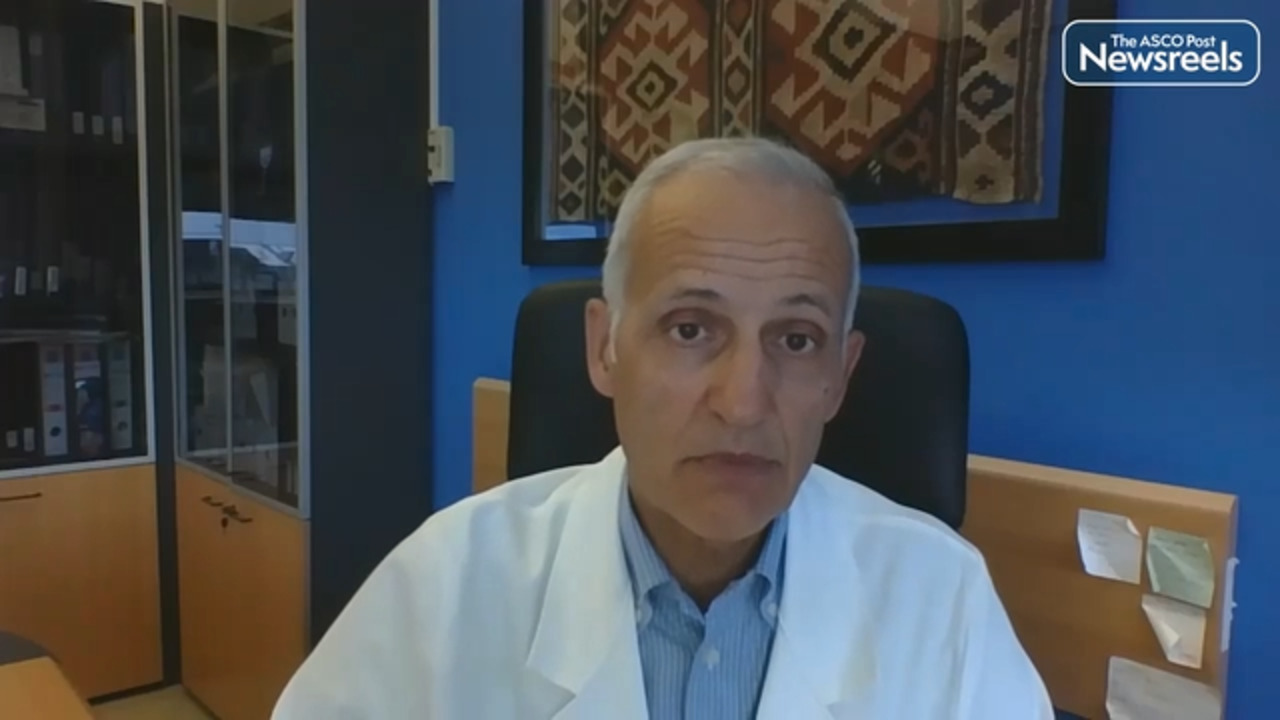
ASCO 2026: Lung Cancer Specialist Apar Kishor Ganti, MD, Shares His Insights
The 2026 ASCO Annual Meeting featured numerous high-impact studies in lung cancer. To help readers identify the presentations with the greatest potential to influence clinical practice, The ASCO Post asked lung cancer specialist Apar Kishor Ganti, MD, MS, FASCO, to share his top picks. Dr. Ganti is ...
Evolving Strategies in Relapsed/Refractory Diffuse Large B-Cell Lymphoma
When diffuse large B-cell lymphoma (DLBCL) fails to respond to front-line treatment or the disease later returns, Jeremy S. Abramson, MD, MMSc, wants to know when the disease progressed, if the patient is eligible for chimeric antigen receptor (CAR) T-cell therapy, and whether or not such treatment ...
Final MINT Study Results Strengthen Real-World Evidence for Mogamulizumab in Mycosis Fungoides and Sézary Syndrome
The final results from the German MINT study evaluating mogamulizumab in patients with mycosis fungoides and Sézary syndrome were recently presented at the European Organisation for Research and Treatment of Cancer Cutaneous Lymphoma Tumour Group (EORTC-CLTG) Annual Meeting 2026 in Berlin, Germany...

Mocertatug Rezetecan Shows Early Activity in Platinum-Resistant Ovarian and Endometrial Cancers
First results from the global phase I BEHOLD-1 study suggest that the investigational B7-H4–targeted antibody-drug conjugate mocertatug rezetecan showed activity in two difficult-to-treat gynecologic cancers: platinum-resistant ovarian cancer and recurrent or advanced endometrial cancer.1 At the...
Financial Incentives Increase Smoking Abstinence Among Those Referred for Lung Cancer Screening
Among medically underserved adults who smoked and were referred for lung cancer screening, the addition of financial incentives to usual care and free pharmacotherapy significantly increased rates of sustained tobacco abstinence compared with usual care alone or usual care plus free...
