
Africa is heading toward a cancer catastrophe, and the oncology community must not look away. Noncommunicable diseases already account for 37% of all deaths in the WHO African Region, up from 24% in 2000, and nearly two-thirds of these deaths occur prematurely, before 70.1,2These are not distant projections; they describe the lifetimes of today’s young Africans.
A Window of Opportunity
Africa still has a window of opportunity. Nearly 60% of the continent’s population is under age 25 today, which can create a perception that cancer and other noncommunicable diseases remain distant threats. Yet demographic and societal changes are already reshaping Africa’s health future. Rising life expectancy will
dramatically increase the number of people reaching the ages at which cancer becomes more common, and the population aged 60 years and older is projected to triple by 2050. 3 At the same time, Africa is urbanizing at an unprecedented pace, with approximately two-thirds of the population expected to live in urban areas by 2050.4 As people live longer and move into increasingly urban environments, exposure to major drivers of cancer and other chronic diseases, including unhealthy diets, physical inactivity, obesity, tobacco use, and harmful alcohol consumption, is likely to increase substantially.
The trajectory is stark. A major TheLancet Oncology Commission estimates that cancer deaths in sub-Saharan Africa could rise to approximately 1 million per year by 2030 without rapid intervention.5 Yet even basic surveillance is fragile: only about 6% of the region is covered by reasonably accurate death registration systems, leaving countries heavily reliant on limited cancer registry data to plan services.6
A Growing Burden of Disease
The epidemiologic transition is already underway. Improvements in the detection and treatment of infectious disease, together with increasing life expectancy, have been accompanied by a growing burden of cardiovascular disease, cancer, diabetes, and other chronic conditions. Recent Global Burden of Disease estimates suggest that noncommunicable diseases have overtaken communicable diseases and are now the leading cause of death across the African Union, marking a profound shift in the continent’s health profile.7Cardiovascular disease now leads mortality rankings and may represent the first wave of a broader noncommunicable disease epidemic. In many countries, cardiovascular disease emerges before cancer as populations age and exposure to behavioral risk factors increases. Africa may soon be entering a similar phase of the epidemiologic transition, with cancer and other chronic diseases likely to become an increasingly prominent contributor to disease burden in the decades ahead.
Prevention and Harm Reduction
Importantly, many of the factors driving this growing burden are preventable. As Africa continues to develop, future disease burden will increasingly reflect modifiable exposures, including tobacco use, harmful alcohol consumption, unhealthy diets, obesity, and physical inactivity.2These common risk factors underpin not only cancer, but also cardiovascular disease, diabetes, and other chronic conditions. This creates a rare opportunity for prevention and harm reduction to alter the trajectory of multiple diseases simultaneously and improve healthy life expectancy before these risks become fully entrenched.
Yet policy responses remain dangerously misaligned with risk. The World Health Organization (WHO) Regional Office for Africa (AFRO) reports persistent gaps in population-level measures, particularly on unhealthy diets and marketing controls, highlighting missed opportunities in public education and implementation.
African leaders and global partners should make harm reduction the organizing principle of cancer control. Cancer in Africa is not destiny; it is a policy choice.— SM Dhlomo, MBChB, MPH, Peter Harper, MD, and David Khayat, MD, PhD
Tweet this quote
For cervical cancer, the clearest “prevention win,” screening, remains far below target: across 28 countries, only about 14% of women ages 30 to 49 had ever been screened as of 2020.8HPV vaccination is expanding, but unevenly: 28 of 47 countries in the WHO African Region have introduced HPV vaccine into national programs, and first-dose coverage reached only about 33% in 2022.9Treatment capacity is also constrained: as of 2020, only 52% of African countries had external-beam radiotherapy and 39% had brachytherapy, with no country matching estimated need.10
Traditional prevention messaging often fails to account for the daily realities and structural constraints that shape people’s choices, and can widen inequities. A harm reduction frame is more pragmatic: pair strong tobacco and alcohol control with risk-proportionate regulation that prioritizes ending smoking while protecting youth; implement food reformulation and procurement policies that reduce salt and harmful fats in affordable staples; and make “90-70-90” cervical elimination real through vaccination, high-performance screening, and treatment access.8,11
Harm reduction is a pragmatic public health principle that accepts the reality of human behavior and focuses on reducing negative consequences rather than demanding perfect outcomes. It recognizes that meaningful reductions in risk, exposure, and disease burden should not be discounted simply because residual risk remains.
Cervical Cancer Elimination 90–70–90 Targets by 2030
- To eliminate cervical cancer, all countries must reach and maintain an incidence rate of below 4 per 100,000 women. Achieving that goal rests on three key pillars (vaccination, screening, and treatment) and their corresponding targets:
- 90% of girls fully vaccinated with the HPV vaccine by the age of 15;
- 70% of women screened using a high-performance test by the age of 35, and again by the age of 45;
- 90% of women with precancer treated and 90% of women with invasive cancer managed.
A continental harm reduction agenda must therefore focus on four priorities: strong tobacco and alcohol control with risk-proportionate regulation of safer nicotine products; reshaping food and urban environments through fiscal and planning tools; scaling human papillomavirus and hepatitis B vaccination and cervical screening; and embedding cancer control within universal health coverage, supported by registries and regional treatment hubs.
African leaders and global partners should make harm reduction the organizing principle of cancer control. Cancer in Africa is not destiny; it is a policy choice. The time to act is now.
DISCLOSURES: Drs. Dhlomo and Harper reported no conflicts of interest. Dr. Khayat serves as a consultant to Philip Morris International and Guardant Health.
REFERENCES
1. World Health Organization, Regional Office for Africa: Investment case series: Noncommunicable diseases and PENPlus. 2023–2024. Available at https://www.afro.who.int. Accessed October 21, 2026.
2. Barry A, Impouma B, Wolfe CM, et al: Non-communicable diseases in the WHO African region: Analysis of risk factors, mortality, and responses based on WHO data. Sci Rep 15:12288, 2025.
3. United Nations Department of Economic and Social Affairs, Population Division: World population prospects 2024: Summary of results. United Nations, New York, 2024. Available at: https://population.un.org/wpp/. Accessed October 21, 2026.
4. OECD, African Development Bank, UNOPS-Cities Alliance, UCLG Africa: Africa’s urbanisation dynamics 2025: Planning for urban expansion. OECD Publishing, Paris,2025. https://doi.org/10.1787/2a47845c-en. Accessed October 21, 2026.
5. Ngwa W, Addai B, Adewole I, et al: Cancer in sub-Saharan Africa: a Lancet Oncology Commission. Lancet Oncol 23:e251-e312, 2022.
6. Bray F, Parkin D, Gnangnon F, et al: Cancer in sub-Saharan Africa in 2020: A review of current estimates of the national burden, data gaps, and future needs. Lancet Oncol 23, 719-728, 2022.
7. Institute for Health Metrics and Evaluation: GBD Compare Data Visualization. IHME, University of Washington, Seattle, 2025.
8. Yang L, Boily MC, Rönn MM, et al: Regional and country-level trends in cervical cancer screening coverage in sub-Saharan Africa: A systematic analysis of population-based surveys (2000-2020). PLoS Medicine 20:e1004143, 2023.
9. World Health Organization, Regional Office for Africa (WHO AFRO): Status of the Cervical Cancer Elimination Initiative in WHO African Region. WHO AFRO, 2024.
10. Elmore SNC, Polo A, Bourque JM, et al: Radiotherapy resources in Africa: An International Atomic Energy Agency update and analysis of projected needs. Lancet Oncol 22:e391-e399, 2021.
11. World Health Organization: Sodium Reduction. WHO Fact Sheet. World Health Organization, Geneva, 2025.
About the Contributors
Dr. Sibongiseni Maxwell (SM) Dhlomo served as the Deputy Minister of Health and was the Member of the Executive Council for Health in KwaZulu-Natal, a province of South Africa from 2009 to 2019. He is a
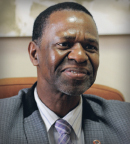
SM Dhlomo, MBCHB, MPH
former member of Umkhonto Wesizwe, a paramilitary wing of the African National Congress co-founded in December 1961 by Nelson Mandela, and he was incarceratedin the maximum-security apartheid prison Robben Island in South Africa in the 1980s. Dr. Dhlomo has also served in the South African National Defence Force and worked as an Academic at the University of KwaZulu-Natal lecturing in Public Health.
Dr. Peter Harper has served as the leading Consultant Medical Oncologist at Guy’s Hospital in London over the past 30 years. In 2004, Dr. Harper was awarded France’s highest national honor, the Chevalier de la
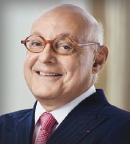
Peter Harper, MD
Legion d’Honneur, by President Jacques Chirac, in recognition for his services to French National Cancer Strategy. He is a past Chairman of the International Affairs Committee of ASCO, Board Member of the International Association for the Study of Lung Cancer (IASLC), Board Member of the International Gynaecologic Cancer Society (IGCS), and board member of many national & international cancer committees.
Dr. David Khayat is Head of the Department of Medical Oncology at Pitié-Salpêtrière Hospital; Professor of Oncology at the Université Pierre et Marie Curie; Adjunct Professor of Medicine at The University of Texas MD Anderson Cancer Center; and Advisor to the Director General of the World Health Organization. Dr.

David Khayat, MD, PhD
Khayat along with nine other luminaries in the cancer community developed the blueprint for a collection of 10 articles that together formed the International Charter of Paris Against Cancer, endorsed by then French President Jacques Chirac and the General Director of UNESCO, giving it the organization’s imprimatur. The Charter was signed on February 4, 2000, at the Palais de l’Élysée in Paris. Dr. Khayat was instrumental in the design and creation in 2005 of the French National Cancer Institute (Institut National du Cancer), and served for 3 years as theInstitute’s founding President. He remains the Institute’s Honorary President. Dr. Khayat is also the author of several health guides including Le Vrai Régime anticancer (The Anti-Cancer Diet), fictional medical thrillers, and a memoir De larmes et de sang (Of Tears and Blood).
Disclaimer: This commentary represents the views of the author and may not necessarily reflect the views of ASCO or The ASCO Post.
