ASH 2025
Early Results Demonstrate Safety and Efficacy of Mutant Calreticulin–Specific Monoclonal Antibody in Myelofibrosis
In patients with CALR exon 9–mutated myelofibrosis who were resistant or intolerant to prior Janus kinase (JAK) inhibitor therapy, or ineligible for such treatment, the first-in-class mutant calreticu...
ASH 2025: Myelofibrosis Roundup
For myelofibrosis, the treatment landscape is poised for change as new targets have emerged, and treatments are evolving beyond the standard Janus kinase (JAK) inhibitors. Novel therapies are being pa...
Myelofibrosis: Treatment Landscape Is Poised for Change
For myelofibrosis, the treatment landscape is poised for change as new targets have emerged, and treatments are evolving beyond the standard Janus kinase (JAK) inhibitors. Novel therapies are being pa...
Study Finds Inferior Survival Among Black Patients With AML, Independent of Cytogenetic Risk
Among patients with acute myeloid leukemia (AML) who were treated with intensive chemotherapy on clinical trials from the ECOG-ACRIN Cancer Research Group (ECOG-ACRIN), Black race was found to be an i...
First Results of Phase III OLYMPIA-3: Odronextamab Plus CHOP in Untreated DLBCL
The bispecific antibody odronextamab plus standard CHOP (cyclophosphamide, vincristine, doxorubicin, prednisone) chemotherapy yielded robust and durable responses in treatment-naive patients with diff...
Early Findings From First Human Study of In Vivo CAR T in Myeloma
The first-in-human clinical trial of an in vivo CAR T-cell therapy for multiple myeloma has shown encouraging clinical outcomes at an early time point, with a safety profile and ease of administration...
ASH 2025: Myelofibrosis Roundup
For myelofibrosis, the treatment landscape is poised for change as new targets have emerged, and treatments are evolving beyond the standard Janus kinase (JAK) inhibitors. Novel therapies are being pa...
Early Results Demonstrate Safety and Efficacy of Mutant Calreticulin–Specific Monoclonal Antibody in Myelofibrosis
In patients with CALR exon 9–mutated myelofibrosis who were resistant or intolerant to prior Janus kinase (JAK) inhibitor therapy or ineligible for such treatment, the first-in-class mutant calreticul...
Epcoritamab Plus R2 in Follicular Lymphoma: A Potential New Treatment Standard
In patients with follicular lymphoma who received at least one prior line of therapy, the combination of the bispecific antibody epcoritamab-bysp and rituximab–lenalidomide (R2) reduced the risk of di...
GIMEMA ALL2820: Chemotherapy-Free Regimen Studied in Front-Line Setting
As front-line therapy, a chemotherapy-free regimen combining the tyrosine kinase inhibitor (TKI) ponatinib and the bispecific T-cell engager blinatumomab significantly outperformed standard treatment ...
Highlights From the 2025 ASH Annual Meeting & Exposition
At this year’s American Society of Hematology (ASH) Annual Meeting & Exposition in Orlando, we had the opportunity to navigate both manned and unmanned traffic, contend with temperamental weather,...
MajesTEC-3: ‘Unprecedented’ Benefit in Previously Treated Multiple Myeloma
For patients with previously treated multiple myeloma, the greatest risk reduction yet achieved in a phase III clinical trial was reported with the BCMA-directed CD3 T-cell engager teclistamab-cqyv pl...
In Head-to-Head Comparison, Fixed-Duration Treatment Noninferior to Continuous for Previously Untreated CLL
Based on the phase III CLL17 trial, a fixed duration of targeted treatment demonstrated noninferiority to continuous treatment with respect to progression-free survival in previously untreated patient...
ASH 2025: Highlights in Relapsed/Refractory Multiple Myeloma
“Dripping water hollows out stone, not through force but through persistence.” – Ovid The 2025 American Society of Hematology (ASH) Annual Meeting & Exposition delivered multiple practice-changing...
Pirtobrutinib Improves Progression-Free Survival vs Bendamustine/Rituximab in Front-Line CLL/SLL
The first prospective, randomized phase III trial of a noncovalent Bruton’s tyrosine kinase (BTK) inhibitor exclusively in treatment-naive patients with chronic lymphocytic leukemia (CLL)/small lympho...
MajesTEC-3: ‘Unprecedented’ Benefit in Previously Treated Multiple Myeloma
For patients with previously treated multiple myeloma, the greatest risk reduction yet achieved in a phase III clinical trial was reported with the BCMA-directed CD3 T-cell engager teclistamab-cqyv pl...
In Head-to-Head Comparison, Fixed-Duration Treatment Noninferior to Continuous for Previously Untreated CLL
Based on the phase III CLL17 trial, a fixed duration of targeted treatment demonstrated noninferiority to continuous treatment with respect to progression-free survival in previously untreated patient...
Early Results Show Pirtobrutinib Matches Ibrutinib in BTK Inhibitor-Naive CLL
In the phase III BRUIN CLL-314 trial, response rates were found to be as good with the noncovalent Bruton's tyrosine kinase (BTK) inhibitor pirtobrutinib as with ibrutinib in both patients with treatm...
Benefit of Azacitidine Plus Venetoclax Confirmed in AML
The combination of the hypomethylating agent azacitidine and the BCL2 inhibitor venetoclax is an established regimen in older, unfit patients with acute myeloid leukemia (AML). Now, a phase II randomi...
Lymphocyte Kinetics After CAR T-Cell Infusion May Predict Survival Outcomes in Non-Hodgkin Lymphoma
A higher absolute lymphocyte count (ALC) after receipt of chimeric antigen receptor (CAR) T-cell therapy may be associated with improved progression-free and/or overall survival in patients with non-H...

Mikkael Sekeres, MD, MS, on MDS and Exposure to Agent Orange
Mikkael Sekeres, MD, MS, Chief, Division of Hematology and Professor of Medicine at Sylvester Comprehensive Cancer Center, part of the University of Miami Miller School of Medicine, presents findings ...

Nitin Jain, MD, on a Triplet Regimen for Richter Transformation
Nitin Jain, MD, of The University of Texas MD Anderson Cancer Center, reviews findings from a phase II trial of pirtobrutinib, venetoclax, and obinutuzumab for patients with Richter transformation (Ab...
CD123-Targeting ADC Shows Activity in AML and BPDCN
Researchers presented new data from two ongoing studies of pivekimab sunirine, an antibody-drug conjugate targeting CD123, in treating two aggressive blood cancers at the 2025 American Society of Hema...
Andrew Portuguese, MD, on Multiple Myeloma: Real-World Outcomes With Elranatamab
Andrew Portuguese, MD, of Fred Hutchinson Cancer Center, discusses findings from a multicenter analysis from the U.S. Multiple Myeloma Immunotherapy Consortium looking at the real-world safety and eff...
Amer Zeidan, MBBS, on TP53-Mutated Higher-Risk MDS: Bexmarilimab Plus Azacitidine
Amer Zeidan, MBBS, of Yale School of Medicine, shares results from the phase I/II BEXMAB study, which examined the safety, tolerability and preliminary efficacy of bexmarilimab—a novel macrophage chec...
Amer Zeidan, MBBS, on Lower-Risk MDS: Treatment-Emergent Cytopenias and Clinical Response
Amer Zeidan, MBBS, of Yale School of Medicine, discusses findings from an analysis of the IMerge trial, which explored the possible association between imetelstat-related cytopenias and hemoglobin inc...
Ianalumab Plus Eltrombopag Extends Time to Treatment Failure in ITP
The addition of the investigational monoclonal antibody ianalumab to eltrombopag extended the time to treatment failure in patients with primary immune thrombocytopenia (ITP) after prior treatment wit...
Follicular Lymphoma: Durable Remissions and Sustained Safety With Third-Line Lisocabtagene Maraleucel
Patients with relapsed or refractory follicular lymphoma treated in the third-line setting with a single infusion of the chimeric antigen receptor (CAR) T-cell therapy lisocabtagene maraleucel continu...
CD40 Overexpression Emerges as a Potential Biomarker for Angioimmunoblastic T-Cell Lymphoma
Researchers at The University of Texas MD Anderson Cancer Center have identified CD40 overexpression as a potential prognostic biomarker in angioimmunoblastic T-cell lymphoma (AITL), a rare subtype of...
Abbreviated Azacitidine Regimen Improves Outcomes in Lower-Risk MDS
A multicenter trial led by investigators at The University of Texas MD Anderson Cancer Center demonstrated that a 5-day regimen of azacitidine provides the best balance of efficacy and safety for pati...
Noninferiority Shown for Pirtobrutinib vs Ibrutinib in CLL/SLL
The noncovalent Bruton's tyrosine kinase (BTK) inhibitor pirtobrutinib achieved noninferiority to the covalent BTK inhibitor ibrutinib in terms of overall response rate in patients with chronic lympho...
Chemotherapy-Free Regimen Improves Outcomes in Newly Diagnosed Patients With Ph-Positive ALL
Initial results from the phase III GIMEMA ALL2820 trial demonstrated that a front-line, chemotherapy-free regimen combining the tyrosine kinase inhibitor (TKI) ponatinib and the bispecific T-cell enga...
Experimental CAR T-Cell Therapy Shows High Efficacy and a Favorable Safety Profile in Multiple Myeloma
Updated findings from the phase II iMMagine-1 study show that anitocabtagene autoleucel (anito-cel), an investigational CAR T-cell therapy for relapsed or refractory multiple myeloma, continues to del...
Epcoritamab Added to Second-Line Lenalidomide/Rituximab Improves Responses in Follicular Lymphoma
When epcoritamab was added to lenalidomide and rituximab, response rates were significantly higher and progression-free survival was prolonged for patients with follicular lymphoma treated in the seco...
Doublet Therapy Yields Higher Response Rates and Fewer Complications Than Standard Induction in AML
The combination of azacitidine and venetoclax led to improved efficacy outcomes with fewer complications than standard intensive induction chemotherapy as upfront treatment for patients with acute mye...
Jennifer Woyach, MD, on Relapsed/Refractory CLL: Next-Generation BTK Inhibitor
Jennifer Woyach, MD, of The Ohio State University Comprehensive Cancer Center, reviews phase I data on rocbrutinib, a new selective next-generation inhibitor of Bruton’s tyrosine kinase (BTK), in pati...
Jennifer Woyach, MD, on CLL/SLL: Pirtobrutinib vs Ibrutinib in Treatment-Naive and Relapsed/Refractory Disease
Jennifer Woyach, MD, of The Ohio State University Comprehensive Cancer Center, discusses results from the first head-to-head comparison of pirtobrutinib vs ibrutinib in treatment-naive patients and pa...
Brian Ball, MD, on Higher-Risk MDS: Bexmarilimab and Azacitidine
Brian Ball, MD, of City of Hope, presents updated results from the phase I/II BEXMAB study. They showed that the doublet had encouraging activity in patients with TP53-mutant, higher-risk MDS; transla...
Alexander Lesokhin, MD: Can Patients With Relapsed/Refractory Multiple Myeloma Successfully Pause or Discontinue Elranatamab?
Alexander Lesokhin, MD, of Memorial Sloan Kettering Cancer Center, discusses results of a retrospective analysis from the phase II MagnetisMM-3 trial. A post hoc analysis was conducted of the subgroup...
One in Three Families of Children With ALL Face Financial Hardship During Treatment
A new multicenter study reports that nearly one-third of families with children undergoing chemotherapy for acute lymphoblastic leukemia (ALL) develop substantial financial hardships during the 2 year...
Karthik Ramasamy, MBBS, FRCP, FRCPath, PhD, on Ultra–High-Risk Multiple Myeloma: RADAR Trial in Newly Diagnosed Transplant-Eligible Patients
Karthik Ramasamy, MBBS, FRCP, FRCPath, PhD, of the University of Oxford, discusses initial results of the phase II/III UK-based RADAR trial. The study evaluated isatuximab, bortezomib, lenalidomide, d...
Non–Total Body Irradiation Conditioning Regimen for Young Patients With MRD-Negative B-ALL
Two-year event-free survival rates were above 75% for children, adolescent, and young adult patients with B-cell acute lymphocytic leukemia (B-ALL) who had negative measurable residual disease (MRD) b...
Cyclophosphamide-Based Strategy Enables Safe Transplant From Broadly Mismatched Donors
Clinicians have traditionally prioritized high-level human leukocyte antigen (HLA) matching to minimize graft-vs-host disease (GVHD) after hematopoietic cell transplantation (HCT). New data from the A...
Shahzad Raza, MD, on Relapsed/Refractory Multiple Myeloma: Novel Doublet in Patients With Extramedullary Disease
Shahzad Raza, MD, of Cleveland Clinic, presents updated phase II results of the RedirecTT-1 trial, focusing on the efficacy and safety of talquetamab combined with teclistamab in patients with relapse...
Aaron Gerds, MD, on Using an AI System to Identify Patients Eligible for a Polycythemia Vera Trial
Aaron Gerds, MD, of Cleveland Clinic, reviews results of an evaluation of Synapsis AI, a medically trained, large language model–based end-to-end system, focusing on its accuracy and efficiency in ide...
Dory Abelman, PhD(c), HBHSc, on Newly Diagnosed Multiple Myeloma: Ultradeep Whole-Genome Sequencing of cfDNA
Dory Abelman, PhD(c), HBHSc, of the University of Toronto, discusses findings that support the feasibility of ultradeep cell-free DNA whole-genome sequencing for comprehensive genomic profiling in pat...
New Pooled Analysis Strengthens Case for MRD as Surrogate Endpoint in AML
Measurable residual disease (MRD), regardless of the method of assessment, is a robust individual-level predictor for overall survival among patients with acute myeloid leukemia (AML) who have already...
Guillermo Garcia-Manero, MD, on MDS: Research Highlights From ASH 2025
Guillermo Garcia-Manero, MD, of The University of Texas MD Anderson Cancer Center, reviews data from three abstracts in myelodysplastic syndromes (MDS) presented at this year’s meeting: outcomes from ...
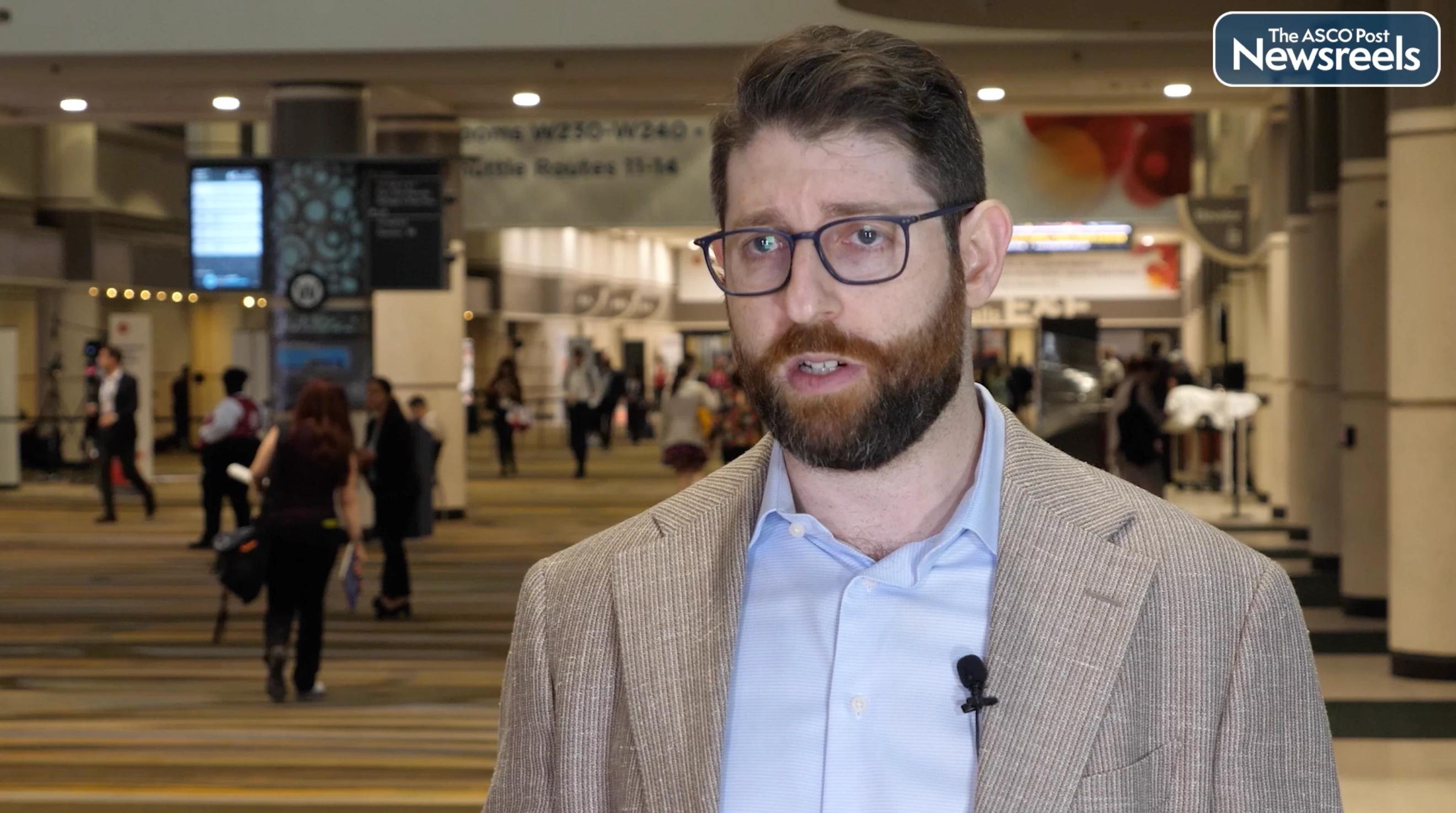
Benjamin Diamond, MD, on a Novel Quadruplet for Relapsed/Refractory Multiple Myeloma
Benjamin Diamond, MD, of the University of Miami, describes findings from the single-center phase II REKINDLE trial, which looked at the combination regimen of iberdomide, carfilzomib, daratumumab, an...
Black Patients With AML Face Younger Onset and Significantly Worse Survival Outcomes
A new analysis spanning more than 3 decades of Eastern Cooperative Oncology Group and American College of Radiology Imaging Network (ECOG-ACRIN) clinical trial data demonstrates that Black patients wi...
