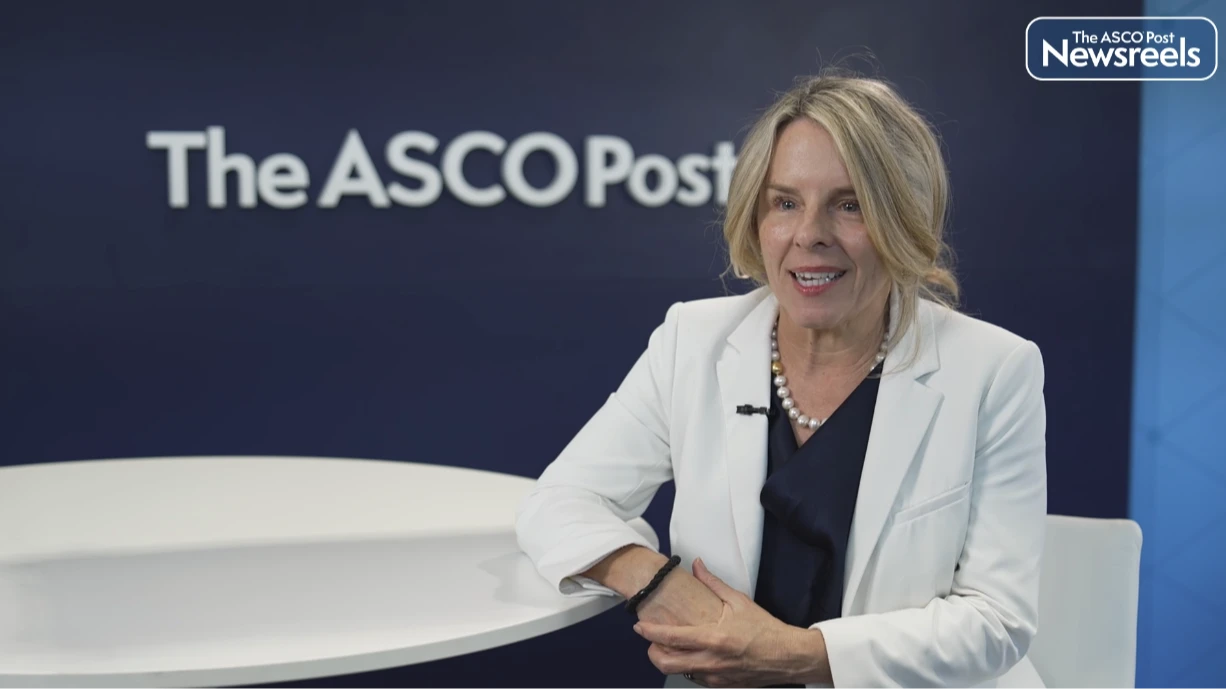
Rami Manochakian, MD, FASCO, on Updates on SCLC: No Longer Too Small to Ignore
ASCO 2026
Rami Manochakian, MD, FASCO, of Mayo Clinic Florida, summarizes an educational session at ASCO that reviewed the state of the field of small cell lung cancer (SCLC) treatment. After decades of limited treatment progress, advances are being seen in immunotherapies, radiation therapy, bispecific T-cell engagers, antibody-drug conjugates, and radionuclide therapies.
Laura Alder, MD, of Duke University Medical Center, highlights emerging data discussed in the meeting’s oral abstract session on small cell lung cancer, including increased toxicity without efficacy benefit from concurrent chemoradiation and immunotherapy, the intracranial activity of tarlatamab-dlle, and early data for a SEZ6-targeting antibody-drug conjugate.
The ASCO Post Staff
Julie R. Brahmer, MD, FASCO, of the Bloomberg–Kimmel Institute for Cancer Immunotherapy, Sidney Kimmel Comprehensive Cancer Center at Johns Hopkins University School of Medicine, provides expert commentary on the overall survival results from the phase III HARMONi-6 trial presented in this year’s Plenary Session. The study compared ivonescimab plus chemotherapy vs tislelizumab plus chemotherapy in previously untreated patients with advanced squamous non–small cell lung cancer (NSCLC) (Abstract LBA4).
Gopa Iyer, MD, of Memorial Sloan Kettering Cancer Center, presents initial results from the phase I NEXUS-01 study, which evaluated LY4052031, an antibody-drug conjugate targeting Nectin-4, in patients with advanced or metastatic urothelial carcinoma (Abstract 4508).
William G. Wierda, MD, PhD, of The University of Texas MD Anderson Cancer Center, presents pooled results from the BRUIN CLL-313 and BRUIN CLL-314 trials. BRUIN CLL-313 is comparing pirtobrutinib to bendamustine plus rituximab in treatment-naive patients with chronic lymphocytic leukemia/small lymphocytic lymphoma (CLL/SLL); BRUIN CLL-314 is comparing pirtobrutinib to ibrutinib in the same patient population (Abstract 7044).
The ASCO Post Staff
Noelle Cloven, MD, of Texas Oncology, discusses the actively recruiting RAINFOL-03 (ENGOT-EN-31/GOG-3128) study, a global, phase III, open-label, randomized study of rinatabart sesutecan vs investigator’s choice of chemotherapy in patients with endometrial cancer after receipt of platinum-based chemotherapy and PD-L1 inhibition (Abstract TPS5646).