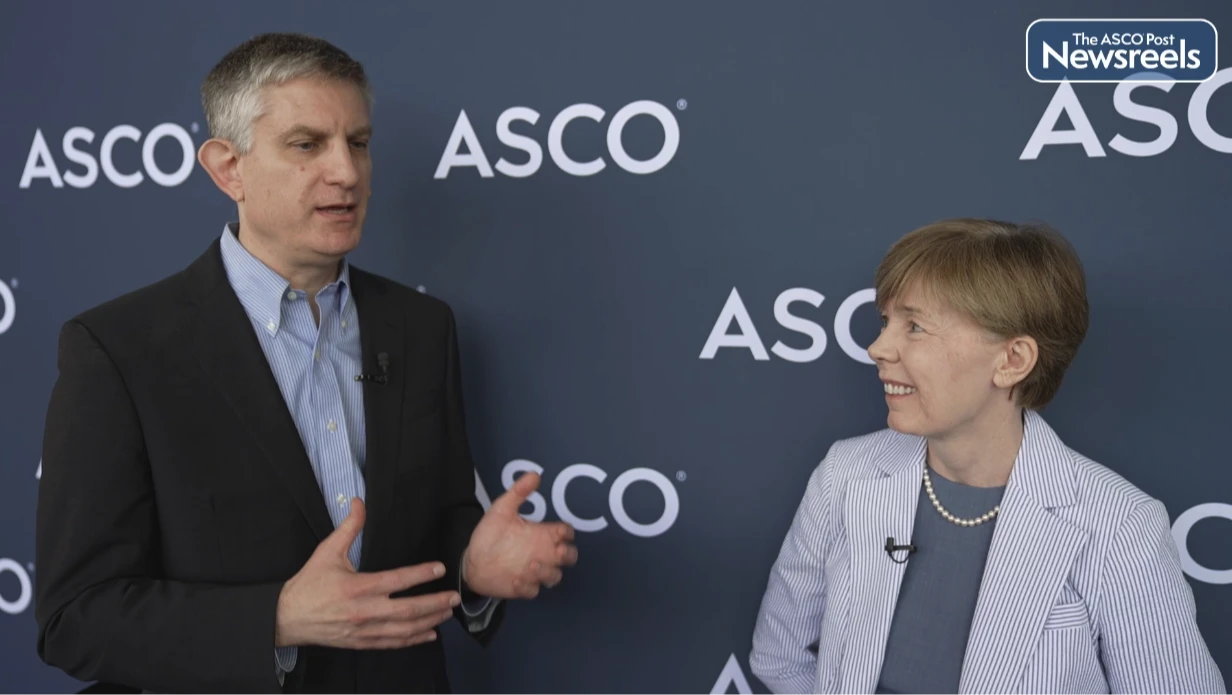
Misty Dawn Shields, MD, PhD, on SCLC: Expert Point of View
ASCO 2026Advertisement
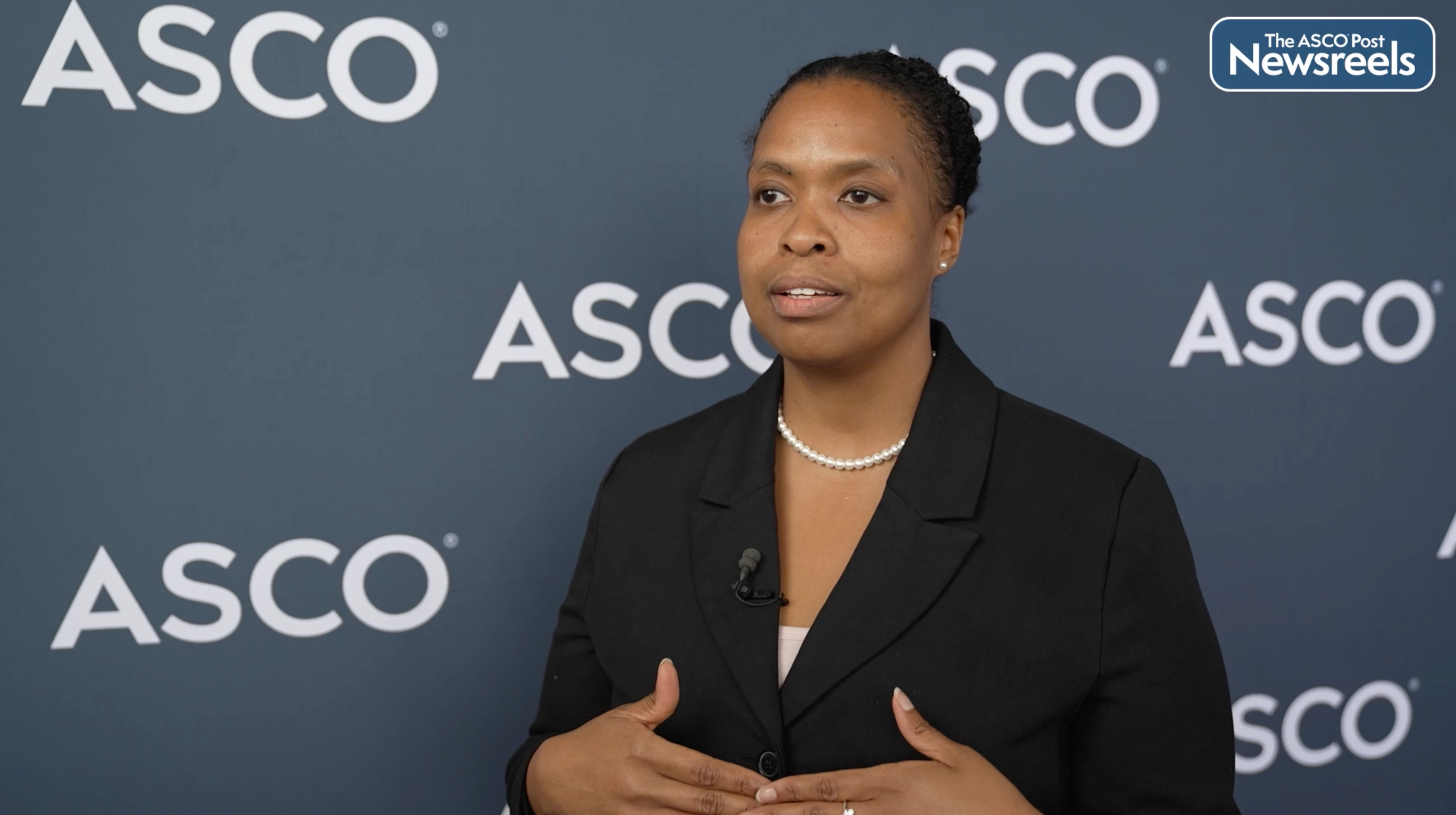
Misty Dawn Shields, MD, PhD, of Indiana University Melvin and Bren Simon Comprehensive Cancer Center, shares her perspective on two small cell lung cancer (SCLC) abstracts presented at this year’s meeting. The first focuses on a post hoc analysis of the phase III DeLLphi-304 trial (Abstract 8006), which looked at the intracranial efficacy of tarlatamab in the second line; the second evaluated concurrent thoracic radiotherapy, chemotherapy, and durvalumab in extensive-stage disease (Abstract LBA8005).
Transcript
Disclaimer: This video transcript has not been proofread or edited and may contain errors.
What an exciting time for our patients and loved ones impacted by small cell lung cancer. Really, studies offer new hope. One study that really is worth highlighting is the DeLLphi-304 post hoc analysis with intracranial efficacy for patients with extensive-stage small cell lung cancer in the second-line setting. What we saw with that data is that patients who have brain metastases and small cell lung cancer who received tarlatamab compared to chemotherapy for the second-line setting really had an improvement in progression-free and overall survival with the use of tarlatamab over chemotherapy. What this highlights is that patients receiving tarlatamab live longer and it actually raises the bar and helps equalize outcomes for patients who have brain metastases in small cell, which can be a real problem. Up to 80% of patients with small cell can have brain metastases. And so this is an important therapeutic option for our patients, things that we should really look out for, things such as the boxed warnings as ICANS or the immune effector cell-associated neurotoxicity syndrome as well as tumor-associated inflammation or TINAS. These are potential toxicities or side effects to this therapy that really should be watching out for. And a multidisciplinary team can help tease out this information for our patients to ensure proper care and handling of this medication. Sometimes when we see the tumor flare, we may have symptoms, but that might be because the patient's responding. And so we really want to make sure we stay on therapy and help patients through that potential side effect. Another study that we saw was the concurrent use of thoracic radiotherapy with chemoimmunotherapy. A phase III study presented by Professor Gronberg. In this study, we saw that actually the concurrent use of TRT with chemoIO is more toxic and not efficacious. Even in selected patients who have poor prognostic indicators like brain metastases or liver metastases or selected patients who finished all cycles of chemoimmunotherapy, there was no benefit. It did not improve progression-free or overall survival. And so with an increase in toxicity such as pneumonitis or esophagitis and no benefit for helping patients live longer, have better control their small cell, we really shouldn't pursue this therapeutic option for our patients. Now there is a RAPTOR study that's ongoing and we'll hope to see that. And that really was looking at the additional update with chemoimmunotherapy compared to the CREST study with chemotherapy for patients with extensive stage getting TRT after their treatment and those patients who responded and had good scans. So we'll have to see what that data is going to show. But we know now in the concurrent setting with chemoIO and concurrent TRT, really we shouldn't be doing this. This is not a safe or efficacious option. I think this really highlights all the exciting options. There's many novel therapeutics that are coming with ADCs and IO or bispecifics and IO and when should we use these therapeutics? Really, time will tell. We're starting to learn more about all these options that are coming and they're highlighted at ASCO. But what an exciting time for our patients and their loved ones.