AI Biomarker May Guide Adjuvant Chemotherapy in Resected Pancreatic Cancer

A histology-based artificial intelligence (AI) biomarker may help personalize adjuvant chemotherapy selection for patients with resected pancreatic ductal adenocarcinoma, according to the results of a study by Beaufils et al. The investigators developed and validated a deep learning model that analyzes routine histology slides to predict the relative benefit of adjuvant gemcitabine vs modified FOLFIRINOX (mFOLFIRINOX). The resulting biomarker, termed PANCprAId, identified patient subgroups with differential benefit from the two regimens in an external validation cohort from the randomized phase III PRODIGE-24/CCTG PA6 trial. The study is published in the Journal of Clinical Oncology.
NIH-Funded International Research Yields Patient-Derived Tumor Compendium

A research project funded by the National Institutes of Health (NIH), with collaborators around the country and the world, has generated extensive and diverse collections of patient-derived tumor models. Tumor tissue from patients with cancer contributed to the compendium of tumor models that will enhance the study of tumor biology and be an asset in accelerating the development of cancer therapies, while guiding future research directions.
Stanford Appoints New Leader to Expand Impact in Early Drug Development

Pamela Munster, MD, joined the Stanford Cancer Institute as the inaugural Associate Director for Early Detection and Interception Research on August 1, 2026. She also assumed a faculty appointment as a Professor in the Stanford Medicine Division of Oncology.
First-in-Class Bispecific ADC Shows Activity in Relapsed Extensive-Stage Small Cell Lung Cancer

In a phase Ib study published in the Journal of Clinical Oncology, Zhao et al found that the first-in-class bispecific antibody-drug conjugate (ADC) izalontamab brengitecan (iza-bren, BL-B01D1) demonstrated antitumor activity in patients with relapsed extensive-stage small cell lung cancer, particularly when used as second-line therapy.
Global Survey Identifies Barriers to Integrative Oncology Use in Cancer Care

Above 80% of cancer care providers globally report a lack of knowledge regarding integrative oncology treatments that prevent them from offering these services to patients, according to survey findings published in Supportive Care in Cancer.


 Charles Bennett and colleagues: The Inflation Reduction Act and Ibrutinib
 Derek Raghavan: How I Discuss the Current Political Chaos When Patients Ask Health-Related Questions About It
 Narjust Florez and Coral Olazagasti: Silence Is Complicity
 Robert Peter Gale: Therapy With a TKI for EGFR-Variant Lung Adenocarcinoma: Lessons From CML?
 Raj Mohan on Kindness, Mercy, Empathy, Compassion: Are They Relevant in the Era of Robotics and AI?
Sponsored Content

SPONSORED BY LILLY MEDICAL AFFAIRS
Treatment Considerations for Relapsed/Refractory CLL in the Post-cBTKi SettingMore Top Stories
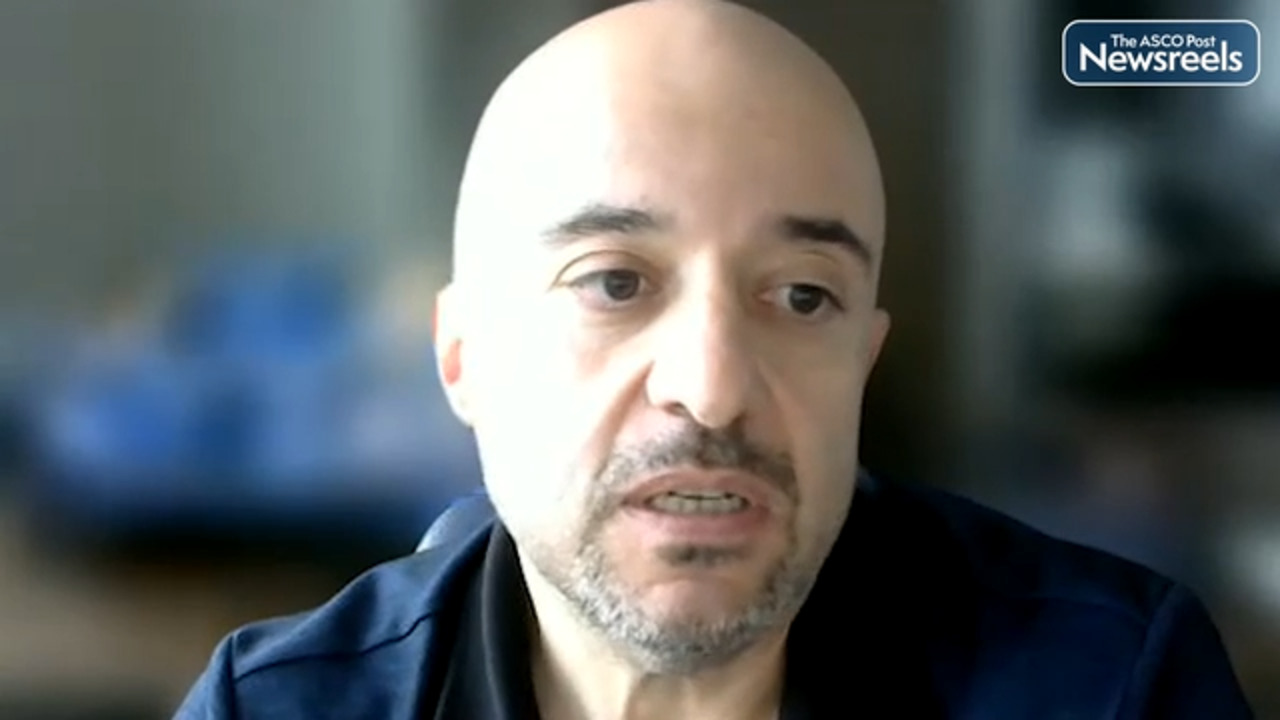
Discovery Is an Act of Hope: Remembering Dr. Maura Gillison’s Pursuit of Truth
Maura L. Gillison, MD, PhD Maura Gillison did not chase awards. She chased answers, and especially clinically impactful answers. That distinction between the pursuit of recognition and the pursuit of truth defined everything about her as a scientist, a clinician, and a person. She was direct...
Cretostimogene Grenadenorepvec in BCG-Unresponsive Non–Muscle-Invasive Bladder Cancer
In the phase III BOND-003 Cohort C trial, intravesical cretostimogene grenadenorepvec, an oncolytic immunotherapy, produced complete responses in three-quarters of patients with high-risk, bacillus Calmette-Guérin (BCG)-unresponsive, non–muscle-invasive bladder cancer (NMIBC) with carcinoma in...
ASCO Publishes First Guideline on ctDNA Testing in Solid Tumors and Lymphoma
A panel of ASCO experts voted to approve ASCO’s first guideline on ctDNA testing in patients with solid tumors or lymphoma on November 18, 2025.1 The guideline addresses four overarching clinical questions: when ctDNA testing should (or should not) be used to (1) support cancer diagnosis; (2)...
The Fear of Having Cancer Never Goes Away
There is a strong history of breast cancer in my family, and the fact that I have dense breasts adding to my risk of developing the disease, kept me vigilant about getting a yearly mammogram screening since I turned 32. The test never showed any suspicious lesions over the last nearly 2 decades,...
QOL Impact of Postmastectomy Chest Wall Radiotherapy: 5-Year Follow-up
In the 5-year quality-of-life (QOL) analysis of the phase III SUPREMO trial published in The Lancet Oncology, Velikova et al found that women with intermediate-risk breast cancer who received postmastectomy chest wall radiotherapy experienced modestly worse local chest wall symptoms at 5 years, but ...

Electronic Prior Authorization Requirements for Drugs
The Association for Clinical Oncology (ASCO) submitted formal comments (see https://bit.ly/4xYRg1j) to the Centers for Medicare & Medicaid Services (CMS) in response to the 2026 CMS Interoperability Standards and Prior Authorization for Drugs proposed rule. If finalized, this rule will require...
Darolutamide Plus Goserelin in AR-Positive Salivary Gland Carcinoma
Patients with androgen receptor (AR)–positive salivary gland carcinoma treated with darolutamide plus goserelin experienced greater antitumor activity than those treated with darolutamide alone in the Japanese phase II DISCOVARY trial, while both approaches demonstrated manageable safety profiles...
