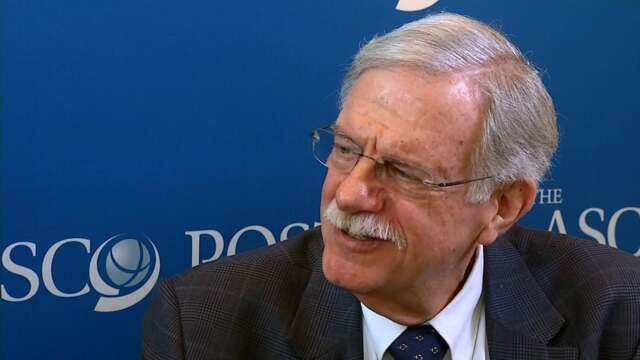
Eric Jonasch, MD, on Kidney Cancer: Current and Novel Treatment Options
2015 NCCN Annual Conference
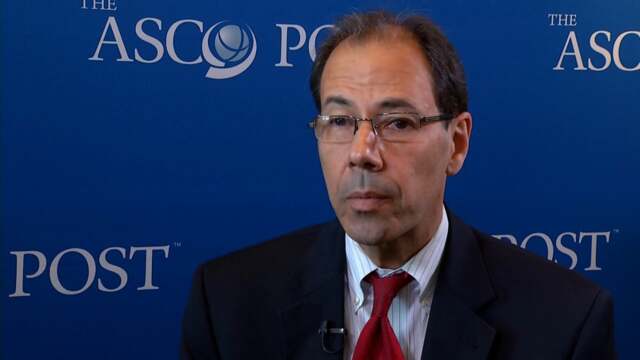
Eric Jonasch, MD, of The University of Texas, MD Anderson Cancer Center, discusses the progress being made in kidney cancer treatment and the clinical trials that focused on sunitinib, sorafenib, and everolimus, among others.
Thomas A. D’Amico, MD
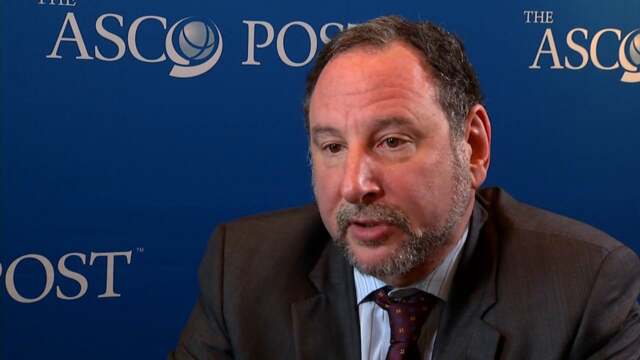
Thomas A. D’Amico, MD, of Duke Cancer Institute, discusses the superior efficacy of thoracoscopic lobectomy. This minimally invasive procedure is used in only 50% of lung cancer surgeries in the United States, in 30% of procedures in Asia, and in as few as 10% to 20% of procedures in Europe.
Peter G. Shields, MD
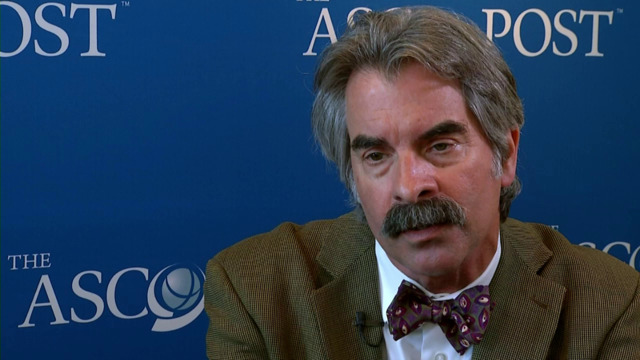
Peter G. Shields, MD, of The Ohio State University Comprehensive Cancer Center and the James Cancer Hospital and Solove Research Institute, discusses the new NCCN Guidelines for helping patients with cancer to stop smoking. Counseling is a critical part of these new recommendations.
Ingrid A. Mayer, MD
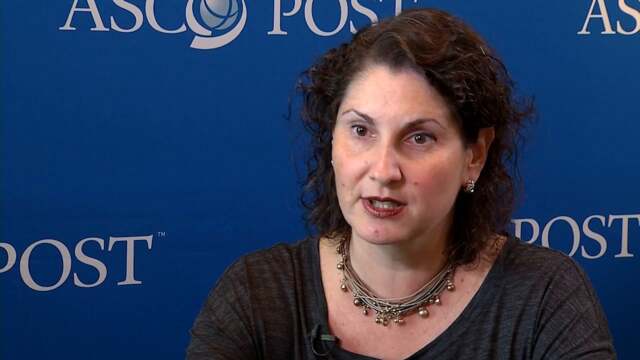
Ingrid A. Mayer, MD, of the Vanderbilt-Ingram Cancer Center, discusses the evolution of endocrine therapy for metastatic breast cancer.
Jerald P. Radich, MD
Jerald P. Radich, MD, of the Fred Hutchinson Cancer Research Center and Seattle Cancer Care Alliance discusses the evolution in treating and monitoring CML and whether monitoring at 3 and 6 months will ultimately prove useful.
Samuel M. Silver, MD, PhD, and David S. Ettinger, MD
Samuel M. Silver, MD, PhD, of the University of Michigan Comprehensive Cancer Center, and David S. Ettinger, MD, of The Sidney Kimmel Comprehensive Cancer Center at Johns Hopkins, discuss the evolution of the NCCN Guidelines, the importance of including palliative care and survivorship recommendations, and the use of the guidelines in community practices.