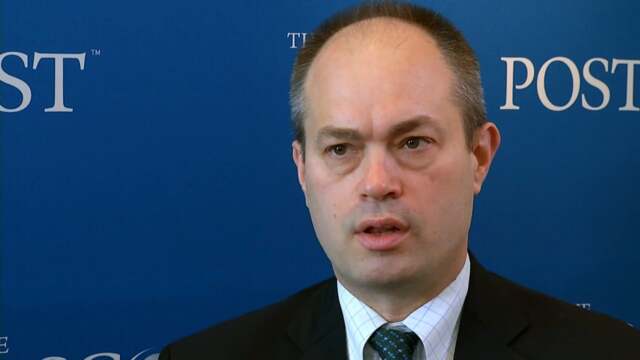
Anthony J. Olszanski, RPh, MD, on Immunotherapy and Melanoma
2015 NCCN Annual Conference
Anthony J. Olszanski, RPh, MD, of the Fox Chase Cancer Center, discusses the advances in immunotherapy generally and for melanoma in particular.
Related Videos
Samuel M. Silver, MD, PhD, and David S. Ettinger, MD
Samuel M. Silver, MD, PhD, of the University of Michigan Comprehensive Cancer Center, and David S. Ettinger, MD, of The Sidney Kimmel Comprehensive Cancer Center at Johns Hopkins, discuss the evolution of the NCCN Guidelines, the importance of including palliative care and survivorship recommendations, and the use of the guidelines in community practices.
Eric Jonasch, MD
Eric Jonasch, MD, of The University of Texas, MD Anderson Cancer Center, discusses the progress being made in kidney cancer treatment and the clinical trials that focused on sunitinib, sorafenib, and everolimus, among others.
Robert W. Carlson, MD, and Lee N. Newcomer, MD, MHA
Robert W. Carlson, MD, Chief Executive Officer of the National Comprehensive Cancer Network, and Lee N. Newcomer, MD, MHA, of UnitedHealthCare, discuss the value of NCCN Guidelines in determining coverage decisions, the future of affordable care, bundled payments, and the clear value approach.
Andrew D. Zelenetz, MD, PhD
Andrew D. Zelenetz, MD, PhD, of Memorial Sloan Kettering Cancer Center, talks about the revolution in lymphoma treatment, which started with rituximab and continues with obinutuzumab, ibrutinib, and others.
William G. Wierda, MD, PhD
William G. Wierda, MD, PhD, of The University of Texas MD Anderson Cancer Center, discusses the latest information on managing CLL and his optimism that a cure is in sight.