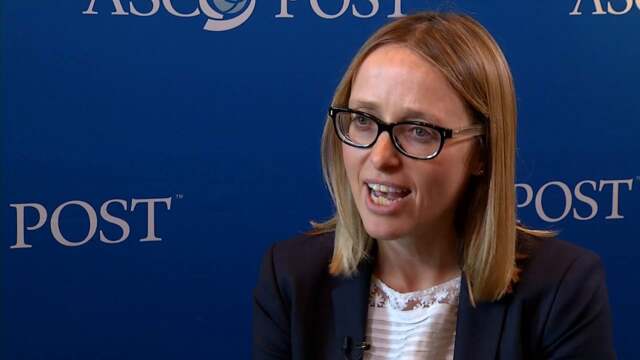
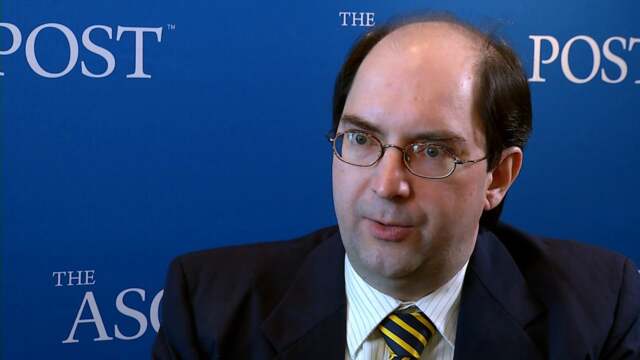
Leora Horn, MD, MSc
Leora Horn, MD, MSc, of the Vanderbilt-Ingram Cancer Center, discusses the range of treatment options for people with lung cancer, including third generation inhibitors, and the key clinical trials studying alternatives for patients with acquired resistance.
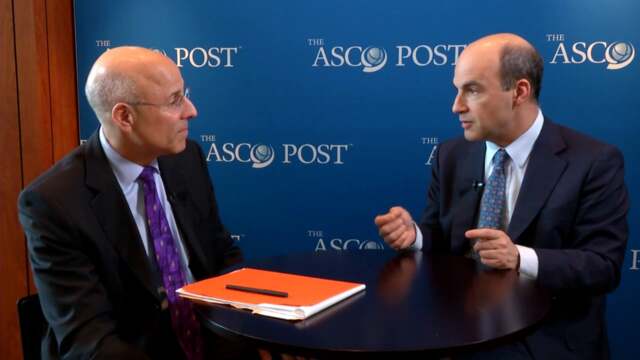
Clifford Goodman, PhD, and Peter B. Bach, MD, MAPP
Clifford Goodman, PhD, of the The Lewin Group, and Peter B. Bach, MD, MAPP, of Memorial Sloan Kettering Cancer Center, discuss the affordability of cancer care, the “financial toxicities” of high drug prices, and what could and should be done about it.
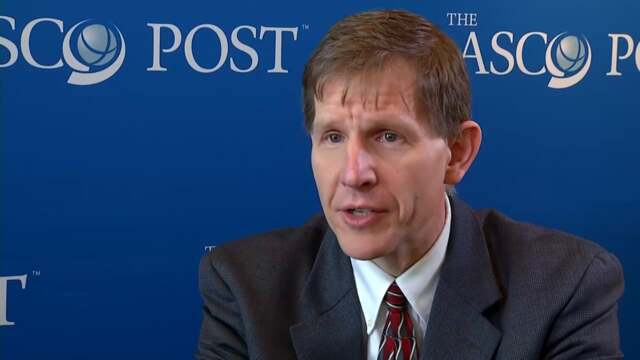
Anthony J. Olszanski, RPh, MD
Anthony J. Olszanski, RPh, MD, of the Fox Chase Cancer Center, discusses the advances in immunotherapy generally and for melanoma in particular.
Andrew J. Armstrong, MD, ScM
Andrew J. Armstrong, MD, ScM, of Duke Cancer Institute, discusses the recent practice-changing landmark studies that showed significant increases in survival for men with castration-resistant prostate cancer and led to updates in the NCCN Guidelines for this disease.
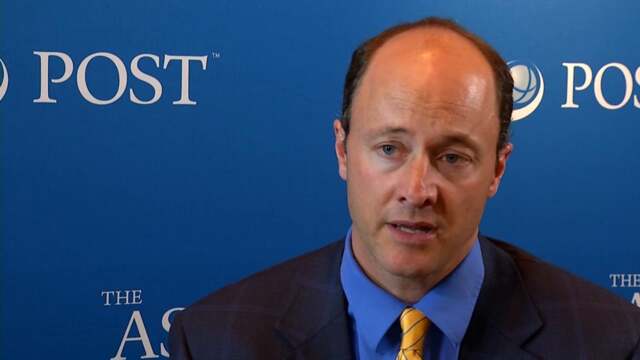
John C. Grecula, MD
John C. Grecula, MD, of The Ohio State University Comprehensive Cancer Center and the James Cancer Hospital and Solove Research Institute, discusses the evolution of precision delivery of radiation for patients with small cell lung cancer and advances that include prophylactic cranial radiotherapy, thoracic radiotherapy, and the use of PET-CT.