Ovarian Cancer 2024: Year at a Glance, Part 1
Thematic Newsreels
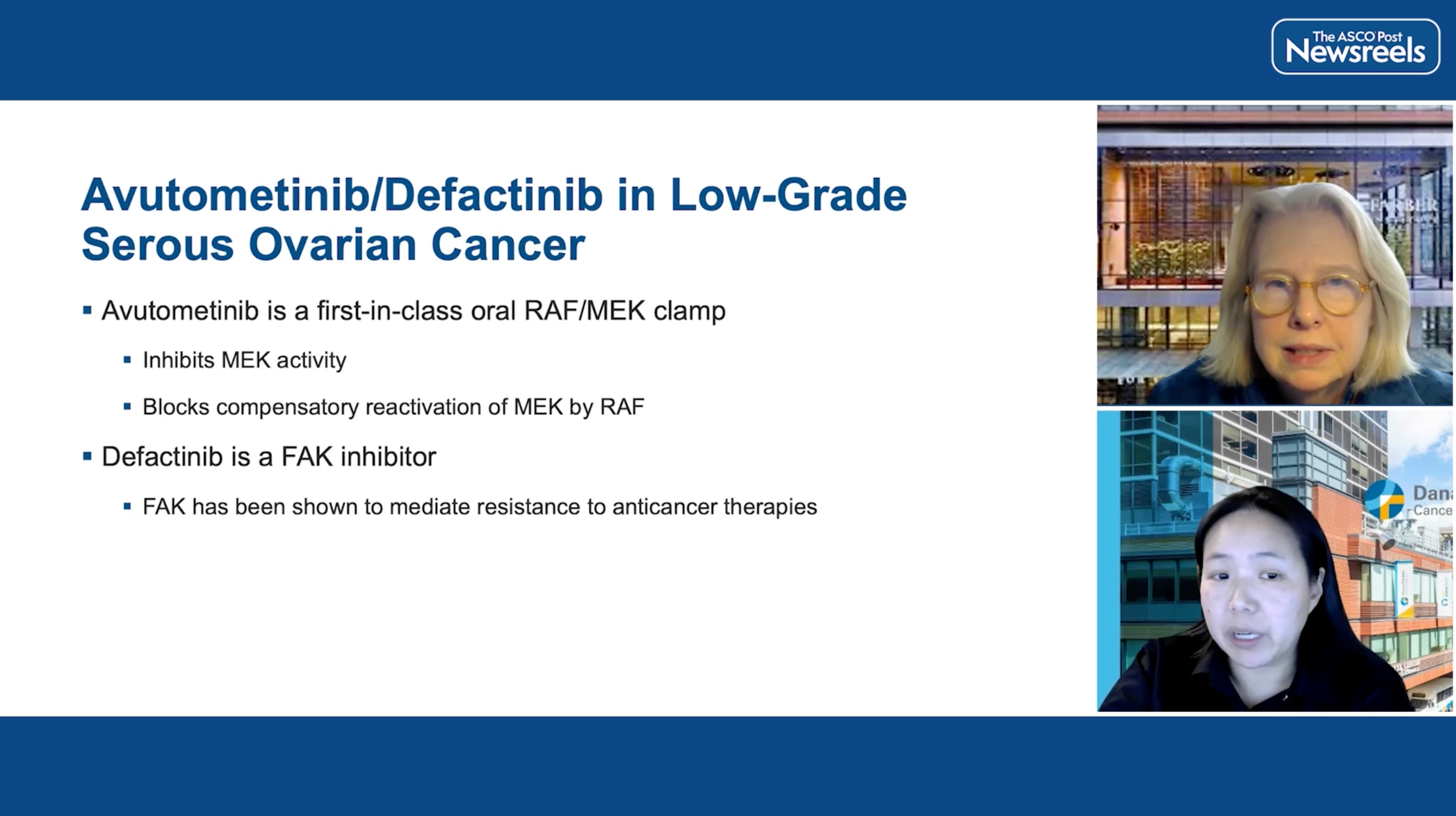
Over the past year, several important studies in ovarian cancer have been presented at multiple oncology meetings and published in a number of peer-reviewed publications. In this installment of a two-part discussion for The ASCO Post Newsreels, Ursula A. Matulonis, MD, and Joyce F. Liu, MD, MPH, discuss antibody-drug conjugates and clinical trials including PRIMA and ATHENA. In part two of this feature, Dr. Matulonis and Dr. Liu talk about low-grade serous ovarian carcinoma and an important recently published study.
Filmed November 22, 2024
The ASCO Post Staff
Raajit K. Rampal, MD, PhD, Director of the Center for Hematologic Malignancies and the Myeloproliferative Neoplasms Program at Memorial Sloan Kettering Cancer Center, discusses management strategies for these two conditions often associated with myelofibrosis. He discusses the role of Janus kinase inhibitors; using older therapies in novel ways; how stem cell transplantation is considered; and more.
References
- Marrone M, Morere L, Oladapo A, et al: Hematologic improvement experienced by pacritinib-treated patients with myelofibrosis in real-world clinical settings. Blood 144 (suppl 1):3814, 2024.
- Rampal RK, Verstovsek S, Devlin SM, et al: Safety and efficacy of combined ruxolitinib and thalidomide in patients with myelofibrosis: A phase II study. Blood 134 (suppl 1):4163, 2019.
In this second installment of a two-part discussion about ovarian cancer advances for The ASCO Post Newsreels, Ursula A. Matulonis, MD, and Joyce F. Liu, MD, MPH, discuss low-grade serous ovarian carcinoma and an important recently published study. View part 1 of the program to hear them discuss antibody-drug conjugates and clinical trials including PRIMA and ATHENA.
Filmed November 22, 2024
The ASCO Post Staff
Arvind N. Dasari, MD, PhD, of The University of Texas MD Anderson Cancer Center, discusses data presented at the ESMO Gastrointestinal Cancers Congress 2025, which showed that adding circulating tumor DNA (ctDNA) testing to current standard of care surveillance for patients with colorectal cancer (CRC) better identified patients who are appropriate candidates for metastasis-directed therapy.
Reference
- Dasari NA, Nakamura Y, Sorscher S, et al: Clinical utility of including circulating tumor DNA monitoring in standard of care colorectal cancer surveillance. ESMO Gastrointestinal Cancers Congress 2025. Abstract 2O.
Access to second-line chimeric antigen receptor (CAR) T-cell therapy remains suboptimal in relapsed/refractory diffuse large B-cell lymphoma (DLBCL). Matthew Lunning, DO, FACP, of the University of Nebraska Medical Center, explains that prior tafasitamab exposure may theoretically affect CD19 detection or antigen persistence, but clinical evidence demonstrating impaired subsequent CAR T-cell efficacy is lacking. Real-world data have not established CD19 loss, supporting continued consideration of CAR T-cell therapy following tafasitamab-based treatment.
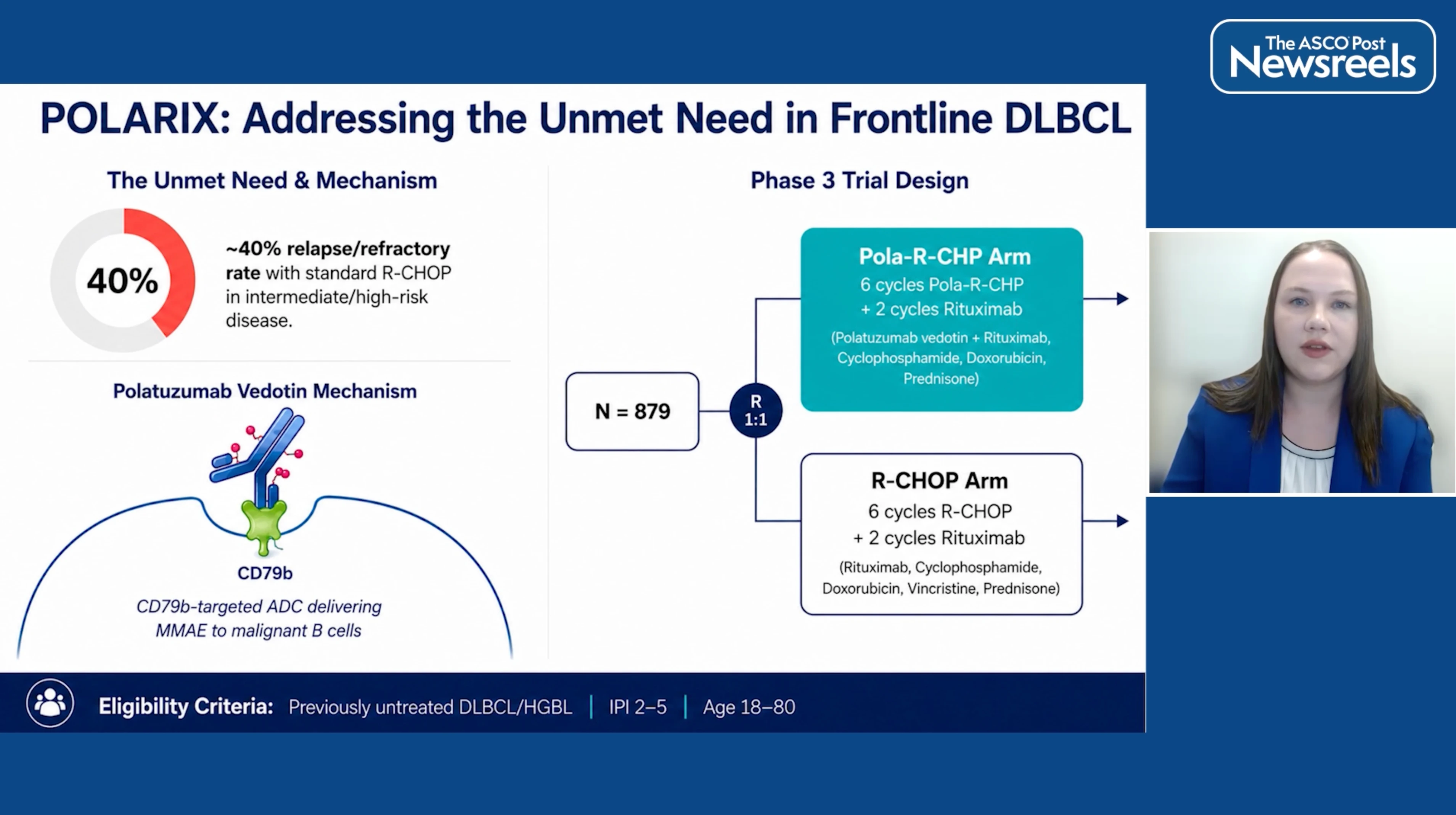
Jennifer Gile, MD, of Willamette Valley Cancer Institute, reviews findings from the POLARIX study, a double-blind, placebo-controlled, international phase III trial that evaluated pola-R-CHP—a modified regimen of rituximab, cyclophosphamide, doxorubicin, vincristine, and prednisone (R-CHOP), in which vincristine was replaced with polatuzumab vedotin—as compared with standard R-CHOP, in patients with previously untreated intermediate-risk or high-risk diffuse large B-cell lymphoma (DLBCL). With a 5-year update from the trial being published recently, Dr. Gile discusses long-term results, the regimen’s performance in key high-risk subgroups, and how the study altered the front-line management of this disease.