Combination Treatment and Patient Selection for Relugolix vs Leuprolide
Thematic Newsreels
Atish D. Choudhury, MD, PhD, a medical oncologist and clinical/translational investigator at the Lank Center for Genitourinary Oncology at Dana-Farber Cancer Institute, discusses current guideline recommendations for the use of relugolix and leuprolide, relugolix as a combination backbone, and important considerations when applying these data to clinical practice.
References
1. De La Cerda J, Dunshee C, Gervasi L, et al: A phase I clinical trial evaluating the safety and dosing of relugolix with novel hormonal therapy for the treatment of advanced prostate cancer. Target Oncol 3:383-390, 2023.
2. George DJ, Saad F, Cookson MS, et al: Impact of concomitant prostate cancer medications on efficacy and safety of relugolix versus leuprolide in men with advanced prostate cancer. Clin Genitourin Cancer 3:383-392, 2023.
3. Brown G, Belkoff L, Hafron JM, et al: Coadministration of apalutamide and relugolix in patients with localized prostate cancer at high risk for metastases. Target Oncol 1:95-103, 2023.
Related Videos
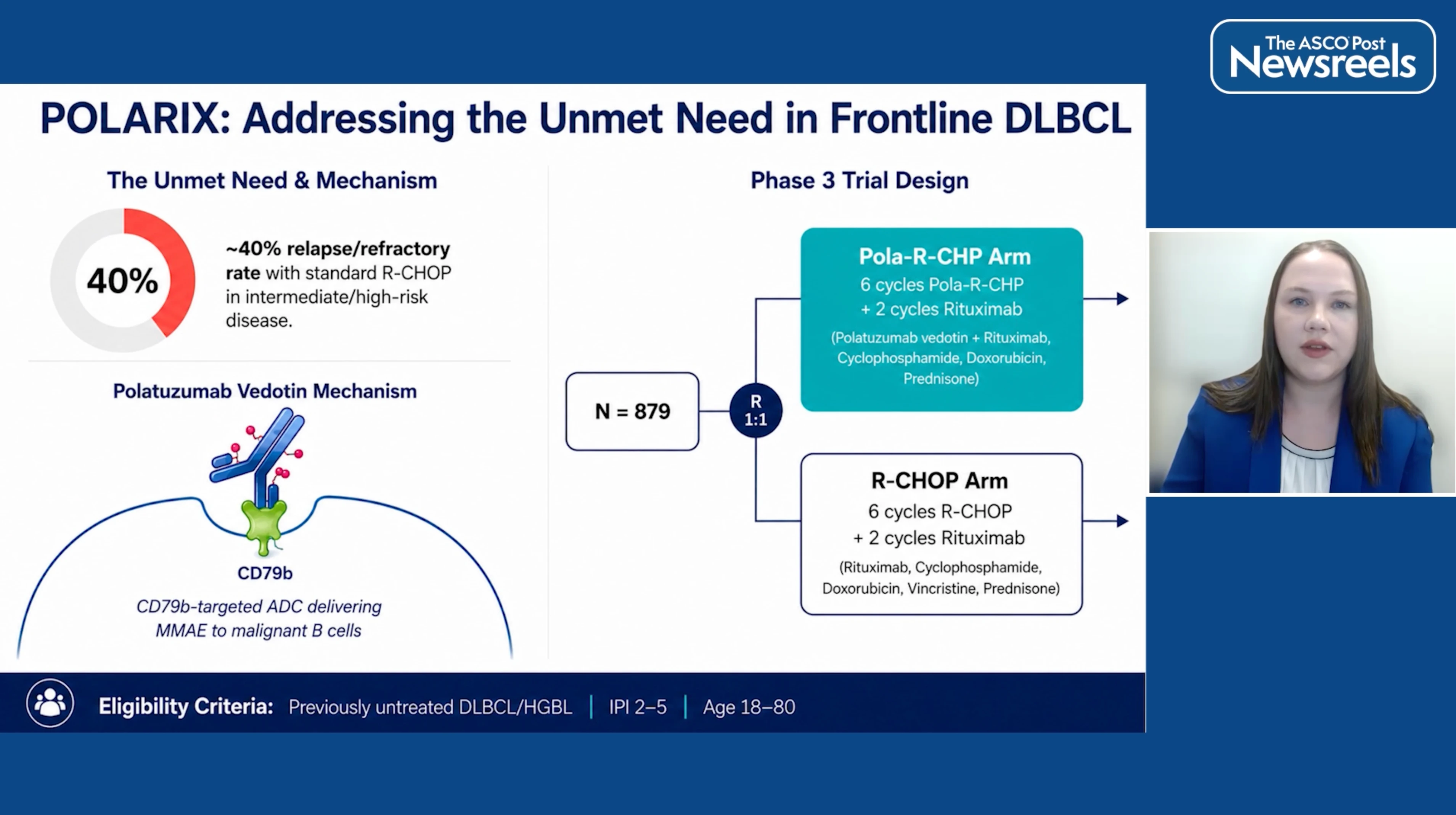
Jennifer Gile, MD, of Willamette Valley Cancer Institute, reviews findings from the POLARIX study, a double-blind, placebo-controlled, international phase III trial that evaluated pola-R-CHP—a modified regimen of rituximab, cyclophosphamide, doxorubicin, vincristine, and prednisone (R-CHOP), in which vincristine was replaced with polatuzumab vedotin—as compared with standard R-CHOP, in patients with previously untreated intermediate-risk or high-risk diffuse large B-cell lymphoma (DLBCL). With a 5-year update from the trial being published recently, Dr. Gile discusses long-term results, the regimen’s performance in key high-risk subgroups, and how the study altered the front-line management of this disease.
Benjamin P. Levy, MD, of Johns Hopkins Sidney Kimmel Cancer Center, discusses research into moving KRAS G12C inhibitors from the second to the first line, as well as combining them with immunotherapies and EGFR antibodies. Some potential combinations under investigation include KRAS G12C inhibitors (such as olomorasib, fulzerasib, divarasib, and adagrasib) and single-agent immunotherapy (pembrolizumab) or EGFR-targeting therapies (cetuximab).
The ASCO Post Staff
Kent Shih, MD, of Tennessee Oncology, shares three patient cases that illustrate how gene-expression profiling (GEP) in patients with melanoma helps shape the decision to proceed to sentinel lymph node biopsy (SLNB) and how often and thorough follow-up should be with medical oncology.
Allison Betof Warner, MD, PhD, reviews important clinical research in the treatment of advanced melanoma, including tumor-infiltrating lymphocyte (TIL) therapy, the role of this innovative treatment in advanced melanoma, and relevant data, peer-reviewed literature, and FDA approvals in 2024. She also provides a look ahead at what is on the horizon in 2025 with regard to care for patients with advanced melanoma.
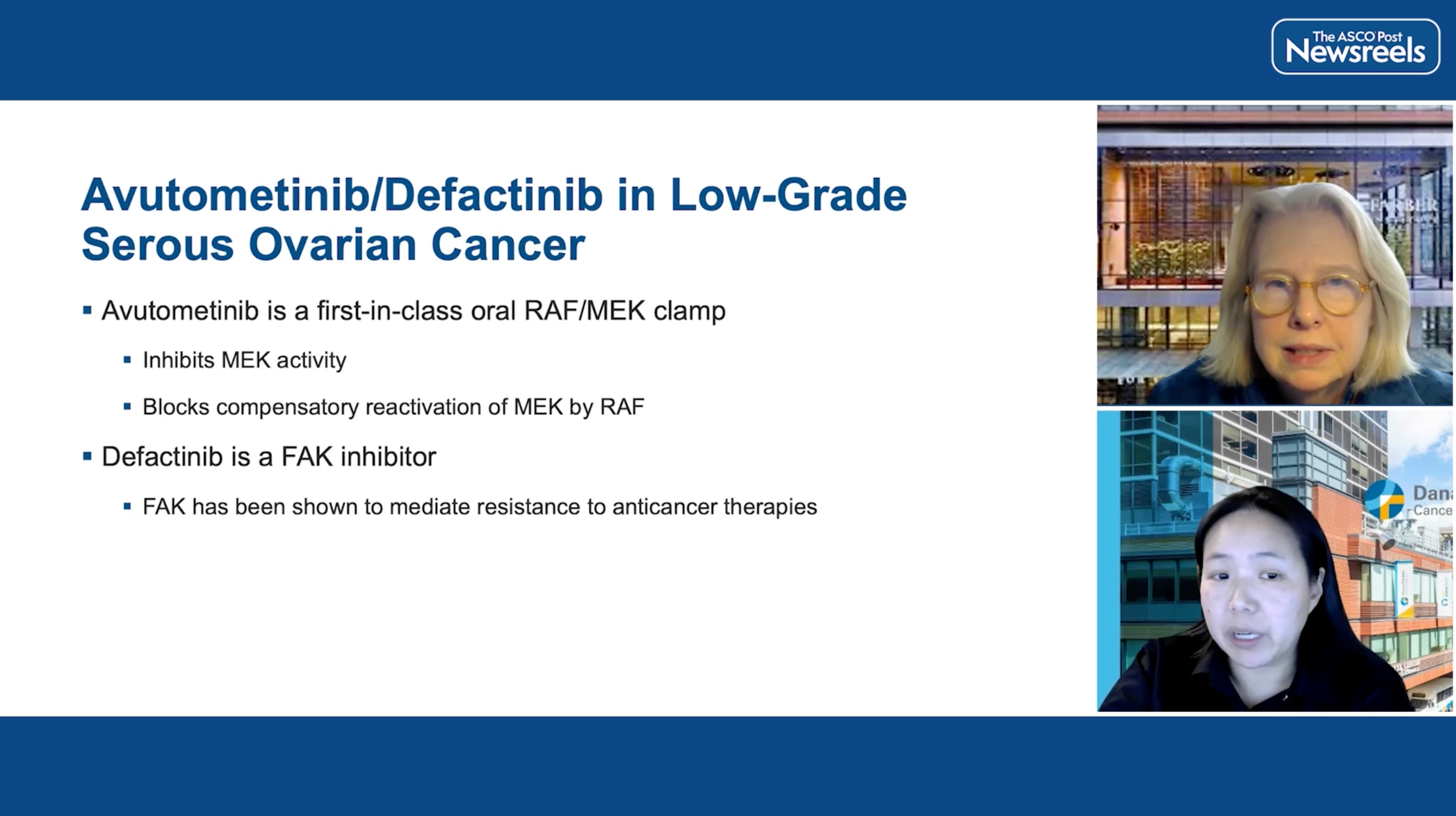
In this second installment of a two-part discussion about ovarian cancer advances for The ASCO Post Newsreels, Ursula A. Matulonis, MD, and Joyce F. Liu, MD, MPH, discuss low-grade serous ovarian carcinoma and an important recently published study. View part 1 of the program to hear them discuss antibody-drug conjugates and clinical trials including PRIMA and ATHENA.
Filmed November 22, 2024