Kent Shih, MD, on Adjuvant Therapy in Melanoma: How Does GEP Testing Factor In?
Thematic Newsreels
Kent Shih, MD, of Tennessee Oncology, presents three patients cases that show how the use of gene-expression profile testing guides patient and practitioner decision-making when choosing the appropriate path of adjuvant treatment among individuals with melanoma.
The ASCO Post Staff
Atish D. Choudhury, MD, PhD, a medical oncologist and clinical/translational investigator at the Lank Center for Genitourinary Oncology at Dana-Farber Cancer Institute, discusses current guideline recommendations for the use of relugolix and leuprolide, relugolix as a combination backbone, and important considerations when applying these data to clinical practice.
References
1. De La Cerda J, Dunshee C, Gervasi L, et al: A phase I clinical trial evaluating the safety and dosing of relugolix with novel hormonal therapy for the treatment of advanced prostate cancer. Target Oncol 3:383-390, 2023.
2. George DJ, Saad F, Cookson MS, et al: Impact of concomitant prostate cancer medications on efficacy and safety of relugolix versus leuprolide in men with advanced prostate cancer. Clin Genitourin Cancer 3:383-392, 2023.
3. Brown G, Belkoff L, Hafron JM, et al: Coadministration of apalutamide and relugolix in patients with localized prostate cancer at high risk for metastases. Target Oncol 1:95-103, 2023.
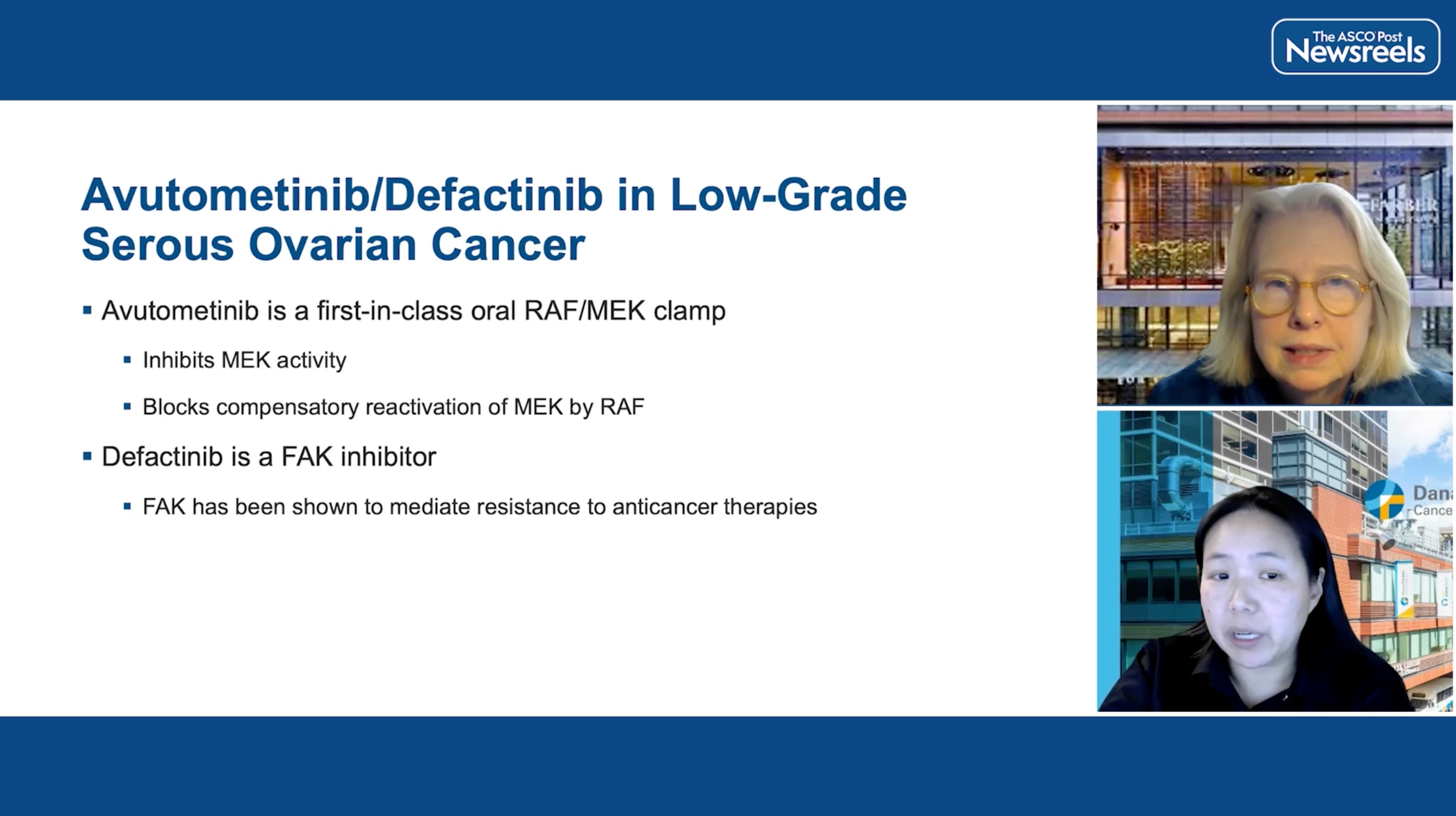
In this second installment of a two-part discussion about ovarian cancer advances for The ASCO Post Newsreels, Ursula A. Matulonis, MD, and Joyce F. Liu, MD, MPH, discuss low-grade serous ovarian carcinoma and an important recently published study. View part 1 of the program to hear them discuss antibody-drug conjugates and clinical trials including PRIMA and ATHENA.
Filmed November 22, 2024
The ASCO Post Staff
Raajit K. Rampal, MD, PhD, Director of the Center for Hematologic Malignancies and the Myeloproliferative Neoplasms Program at Memorial Sloan Kettering Cancer Center, discusses management strategies for these two conditions often associated with myelofibrosis. He discusses the role of Janus kinase inhibitors; using older therapies in novel ways; how stem cell transplantation is considered; and more.
References
- Marrone M, Morere L, Oladapo A, et al: Hematologic improvement experienced by pacritinib-treated patients with myelofibrosis in real-world clinical settings. Blood 144 (suppl 1):3814, 2024.
- Rampal RK, Verstovsek S, Devlin SM, et al: Safety and efficacy of combined ruxolitinib and thalidomide in patients with myelofibrosis: A phase II study. Blood 134 (suppl 1):4163, 2019.
The ASCO Post Staff
Kent Shih, MD, of Tennessee Oncology, shares three patient cases that illustrate how gene-expression profiling (GEP) in patients with melanoma helps shape the decision to proceed to sentinel lymph node biopsy (SLNB) and how often and thorough follow-up should be with medical oncology.
Benjamin P. Levy, MD, of Johns Hopkins Sidney Kimmel Cancer Center, reviews currently available therapies for patients with KRAS G12C–mutated non–small cell lung cancer (NSCLC), noting the importance of genomic testing to identify individuals eligible for treatment with these agents. He discusses the two FDA-approved second-line drugs in this space—sotorasib and adagrasib—touching on their efficacy and associated adverse events. He also mentions divarasib, an investigational next-generation KRAS G12C inhibitor, which showed superiority over both sotorasib and adagrasib in a recent head-to-head phase III trial.