Erika Hamilton, MD, on Oral SERDs in Breast Cancer: State of the Science
Thematic Newsreels
Erika Hamilton, MD, Director, Breast Cancer Research at Sarah Cannon Research Institute, provides a look at “where we stand in 2025” in the field of oral selective estrogen receptor degraders (SERDs) for patients with estrogen receptor–positive, HER2-negative breast cancer. She discusses the first and only FDA-approved oral SERD, elacestrant, indicated for use after CDK4/6 inhibitor therapy in patients with ESR1 mutations; reviews agents still being tested in clinical trials, such as imlunestrant and camizestrant; and highlights the role of oral SERDs as both monotherapies and in novel combinations. As Dr. Hamilton explains, “there haven’t been novel endocrine backbones [for these patients] since fulvestrant.”
Allison Betof Warner, MD, PhD, reviews important clinical research in the treatment of advanced melanoma, including tumor-infiltrating lymphocyte (TIL) therapy, the role of this innovative treatment in advanced melanoma, and relevant data, peer-reviewed literature, and FDA approvals in 2024. She also provides a look ahead at what is on the horizon in 2025 with regard to care for patients with advanced melanoma.
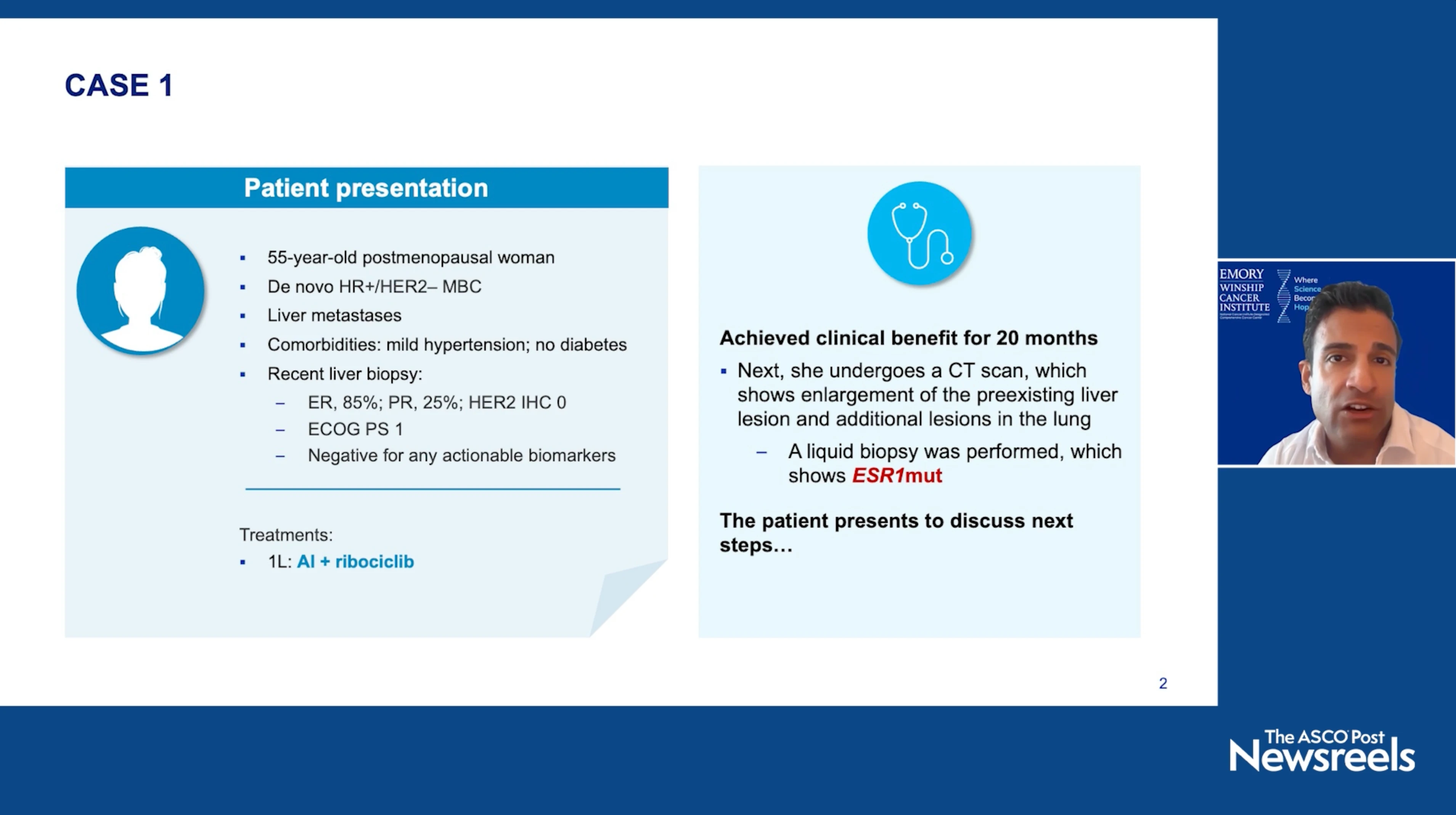
ESR1 mutations are a major mechanism of acquired endocrine resistance in hormone receptor–positive metastatic breast cancer and are associated with poorer outcomes. Serial ctDNA testing enables dynamic detection of emergent ESR1 mutations and clonal evolution, potentially informing treatment selection. As Neil M. Iyengar, MD, outlines via a patient case and deeper data review, ESR1 testing strategies should be individualized based on treatment duration, disease stability, and patient preferences.
The ASCO Post Staff
Kent Shih, MD, of Tennessee Oncology, shares three patient cases that illustrate how gene-expression profiling (GEP) in patients with melanoma helps shape the decision to proceed to sentinel lymph node biopsy (SLNB) and how often and thorough follow-up should be with medical oncology.
The ASCO Post Staff
Atish D. Choudhury, MD, PhD, a medical oncologist and clinical/translational investigator at the Lank Center for Genitourinary Oncology at Dana-Farber Cancer Institute, discusses forms of hormonal therapy for patients with prostate cancer, with a focus on the HERO trial, which evaluated oral relugolix vs injectable leuprolide in patients with advanced hormone-sensitive disease. Dr. Choudhury touches on additional analyses from HERO as well, including the effects seen with relugolix on major cardiovascular events.
References
1. Shore ND, Saad F, Cookson MS, et al: Oral relugolix for androgen-deprivation therapy in advanced prostate cancer. N Engl J Med 382:2187-2196, 2020.
2. Saad F, George DJ, Cookson MS, et al: Relugolix vs leuprolide effects on castration resistance-free survival from the phase 3 HERO study in men with advanced prostate cancer. Cancers 15:4854, 2023.
3. Tombal B, Collins S, Morgans AK, et al: Impact of relugolix versus leuprolide on the quality of life of men with advanced prostate cancer: Results from the phase 3 HERO study. Eur Urol 6:579-57, 2023.
4. Spratt DE, George DJ, Shore ND, et al: Efficacy and safety of radiotherapy plus relugolix in men with localized or advanced prostate cancer. JAMA Oncol 5:594-602, 2024.
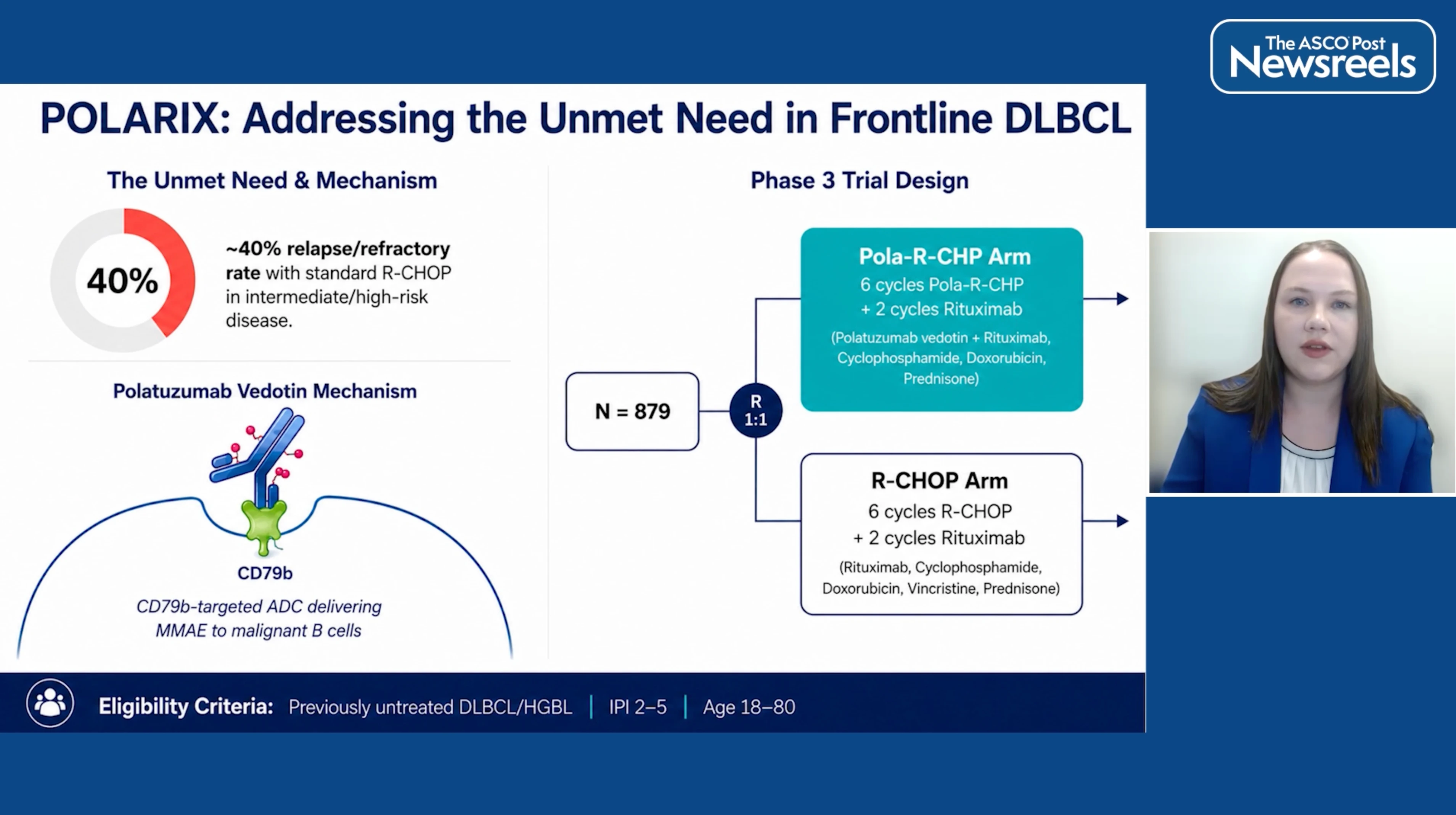
Jennifer Gile, MD, of Willamette Valley Cancer Institute, reviews findings from the POLARIX study, a double-blind, placebo-controlled, international phase III trial that evaluated pola-R-CHP—a modified regimen of rituximab, cyclophosphamide, doxorubicin, vincristine, and prednisone (R-CHOP), in which vincristine was replaced with polatuzumab vedotin—as compared with standard R-CHOP, in patients with previously untreated intermediate-risk or high-risk diffuse large B-cell lymphoma (DLBCL). With a 5-year update from the trial being published recently, Dr. Gile discusses long-term results, the regimen’s performance in key high-risk subgroups, and how the study altered the front-line management of this disease.