Kent Shih, MD, on Use of GEP for SLNB and Follow-up Planning in Melanoma
Thematic Newsreels
Kent Shih, MD, of Tennessee Oncology, shares three patient cases that illustrate how gene-expression profiling (GEP) in patients with melanoma helps shape the decision to proceed to sentinel lymph node biopsy (SLNB) and how often and thorough follow-up should be with medical oncology.
The ASCO Post Staff
Circulating tumor DNA has many roles in cancer treatment: early diagnosis, tumor profiling, determining response to therapy, and tracking clinical dynamics. In this video, Arvind N. Dasari, MD, MS, of The University of Texas MD Anderson Cancer Center, focuses on it as a marker for measurable residual disease (MRD), which can help to determine risk of disease recurrence in patients with cancer. Dr. Dasari reviews the development of assays for MRD, both tumor-informed and tumor-agnostic, and provides top-level data from several clinical trials on the topic that have informed the role of MRD testing in both the colorectal cancer and general solid tumor space.
References
- Tie J, Wang Y, Lo SN, et al: Circulating tumor DNA analysis guiding adjuvant therapy in stage II colon cancer: Overall survival and updated 5-year results from the randomized DYNAMIC trial. 2024 ASCO Annual Meeting. Abstract 108.
- Lieu CH, Yu G, Kopetz S, et al: NRG-GI008: Colon adjuvant chemotherapy based on evaluation of residual disease (CIRCULATE-NORTH AMERICA). 2024 ASCO Gastrointestinal Cancers Symposium. Abstract TPS243.
- Tie J, Wang Y, Loree J, et al: ctDNA-guided adjuvant chemotherapy escalation in stage III colon cancer: Primary analysis of the ctDNA-positive cohort from the randomized AGITG dynamic-III trial (intergroup study of AGITG and CCTG). 2025 ASCO Annual Meeting. Abstract 3505.
- Lumish MA, Jayakumaran G, Fox M, et al: Frequency of minimal residual disease as measured by ctDNA in mismatch repair deficient tumors following curative resection. 2021 ASCO Annual Meeting. Abstract e14520.
- Kotani D, Oki E, Nakamura Y, et al: Molecular residual disease and efficacy of adjuvant chemotherapy in patients with colorectal cancer. Nature Medicine 29:127-134, 2023.
- Kasi PM, Aushev VN, Ensor J, et al: Circulating tumor DNA (ctDNA) for informing adjuvant chemotherapy (ACT) in stage II/III colorectal cancer (CRC): Interim analysis of BESPOKE CRC study. 2024 ASCO Gastrointestinal Cancers Symposium. Abstract 9.
- Maddalena G, Pellatt AJ, Eluri M, et al: INTERCEPT Program of circulating tumor DNA (ctDNA) testing for minimal residual disease (MRD) in colorectal cancer (CRC): Results from a prospective clinical cohort. 2024 ASCO Gastrointestinal Cancers Symposium. Abstract 27.
- Meyerhardt JA, Shi Q, Fuchs CS, et al: Effect of celecoxib vs placebo added to standard adjuvant therapy on disease-free survival among patients with stage III colon cancer. JAMA 13:1277-1286, 2021.
- Nowak JA, Shi Q, Twombly T, et al: Prognostic and predictive role of circulating tumor DNA (ctDNA) in stage III colon cancer treated with celecoxib: Findings from CALGB (Alliance)/SWOG 80702. 2025 ASCO Gastrointestinal Cancers Symposium. Abstract LBA14.
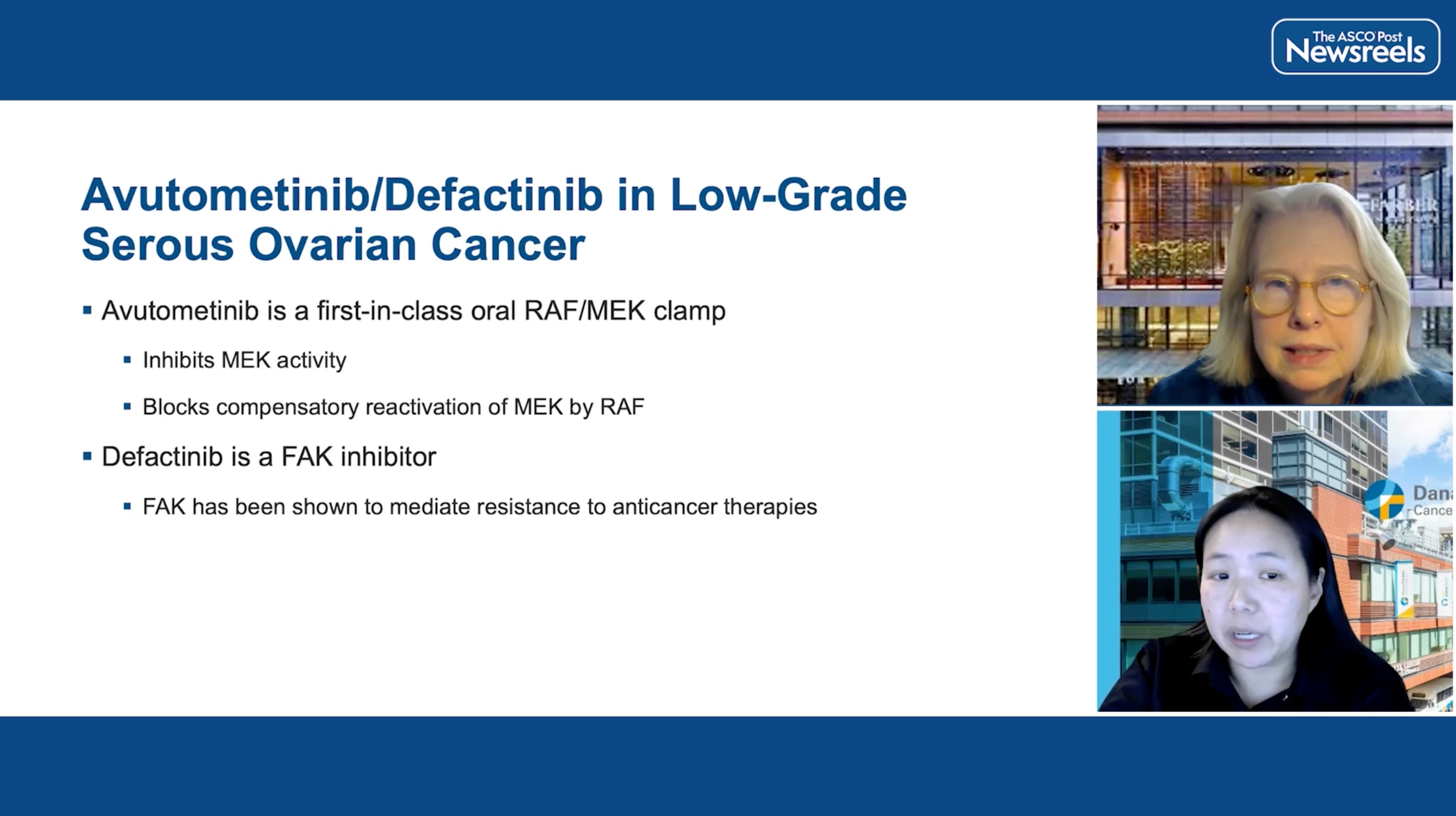
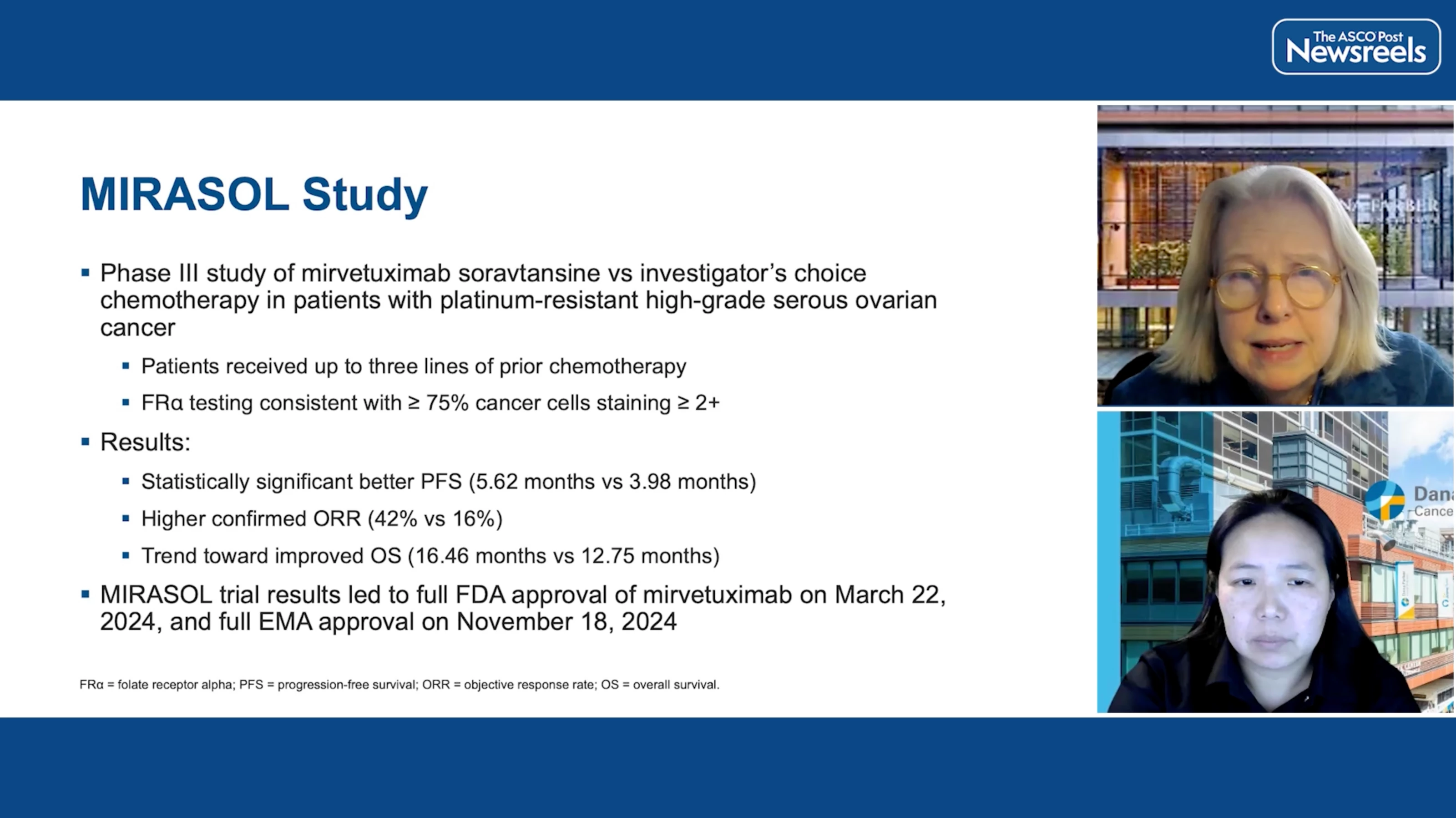
In this second installment of a two-part discussion about ovarian cancer advances for The ASCO Post Newsreels, Ursula A. Matulonis, MD, and Joyce F. Liu, MD, MPH, discuss low-grade serous ovarian carcinoma and an important recently published study. View part 1 of the program to hear them discuss antibody-drug conjugates and clinical trials including PRIMA and ATHENA.
Filmed November 22, 2024
The ASCO Post Staff
Arvind N. Dasari, MD, PhD, of The University of Texas MD Anderson Cancer Center, discusses data presented at the ESMO Gastrointestinal Cancers Congress 2025, which showed that adding circulating tumor DNA (ctDNA) testing to current standard of care surveillance for patients with colorectal cancer (CRC) better identified patients who are appropriate candidates for metastasis-directed therapy.
Reference
- Dasari NA, Nakamura Y, Sorscher S, et al: Clinical utility of including circulating tumor DNA monitoring in standard of care colorectal cancer surveillance. ESMO Gastrointestinal Cancers Congress 2025. Abstract 2O.
Over the past year, several important studies in ovarian cancer have been presented at multiple oncology meetings and published in a number of peer-reviewed publications. In this installment of a two-part discussion for The ASCO Post Newsreels, Ursula A. Matulonis, MD, and Joyce F. Liu, MD, MPH, discuss antibody-drug conjugates and clinical trials including PRIMA and ATHENA. In part two of this feature, Dr. Matulonis and Dr. Liu talk about low-grade serous ovarian carcinoma and an important recently published study.
Filmed November 22, 2024
The ASCO Post Staff
Raajit K. Rampal, MD, PhD, Director of the Center for Hematologic Malignancies and the Myeloproliferative Neoplasms Program at Memorial Sloan Kettering Cancer Center, reviews the four FDA-approved Janus kinase (JAK) inhibitors for patients with myelofibrosis, touching upon differences in their mechanisms of action and toxicity profiles. He also discusses clinical trials of add-on drugs to the currently approved JAK inhibitors, which may increase their efficacy and durability, as well as trials of novel JAK inhibitors and immunotherapies targeting CALR.