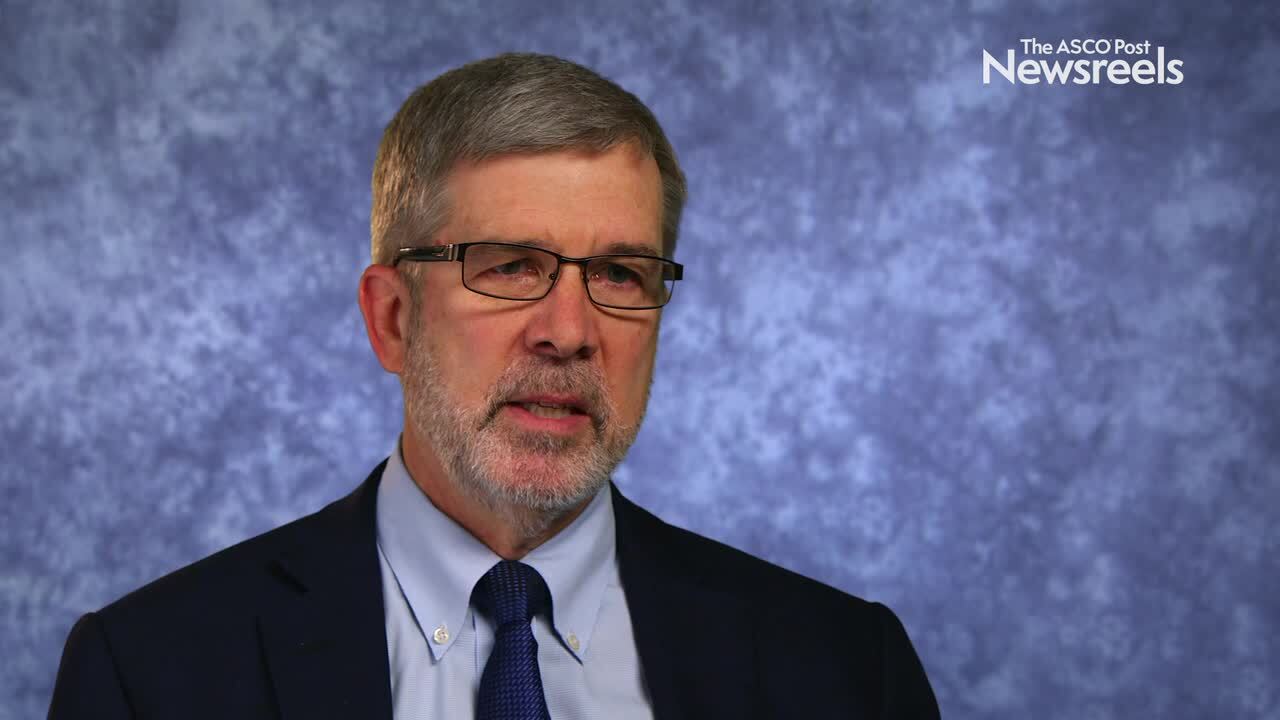
Frederick L. Locke, MD, on Innovative CAR-T Cell Therapies: The Patient Experience
NCCN Annual Conference 2019
Frederick L. Locke, MD, of the H. Lee Moffitt Cancer Center and Research Institute, discusses recent approvals of chimeric antigen receptor T-cell therapies in leukemia and lymphoma, and how clinicians are using infrastructure, navigation, and early referrals to maximize response and minimize toxicity.
Eric Jonasch, MD, of The University of Texas MD Anderson Cancer Center, discusses major findings over the past 12 months in kidney cancer, including combination immunotherapies and trends in surgical oncology.
Matthew A. Gubens, MD, of the UCSF Helen Diller Family Comprehensive Cancer Center, discusses recent updates to the NCCN Guidelines in non–small cell lung cancer, including the use of pembrolizumab as a single agent or in combination based on PD-L1 status, treatment selection in squamous and nonsquamous patients, and how mutational status affects treatment strategy.
Chrysalyne Schmults, MD, of Brigham and Women’s Hospital, discusses treatment strategies in these nonmelanoma skin cancers, including surgery, forthcoming staging systems, and ongoing trials combining adjuvant radiotherapy and immunotherapy.
Melinda L. Telli, MD, of the Stanford Cancer Institute, discusses the various systemic therapies for patients with early-stage hormone receptor–positive, HER2-negative disease.
James L. Mohler, MD, of the Roswell Park Comprehensive Cancer Center, discusses updated recommendations in prostate cancer: more specificity for family history and genomic sequencing, as well as the evolving uses of androgen-deprivation therapy.