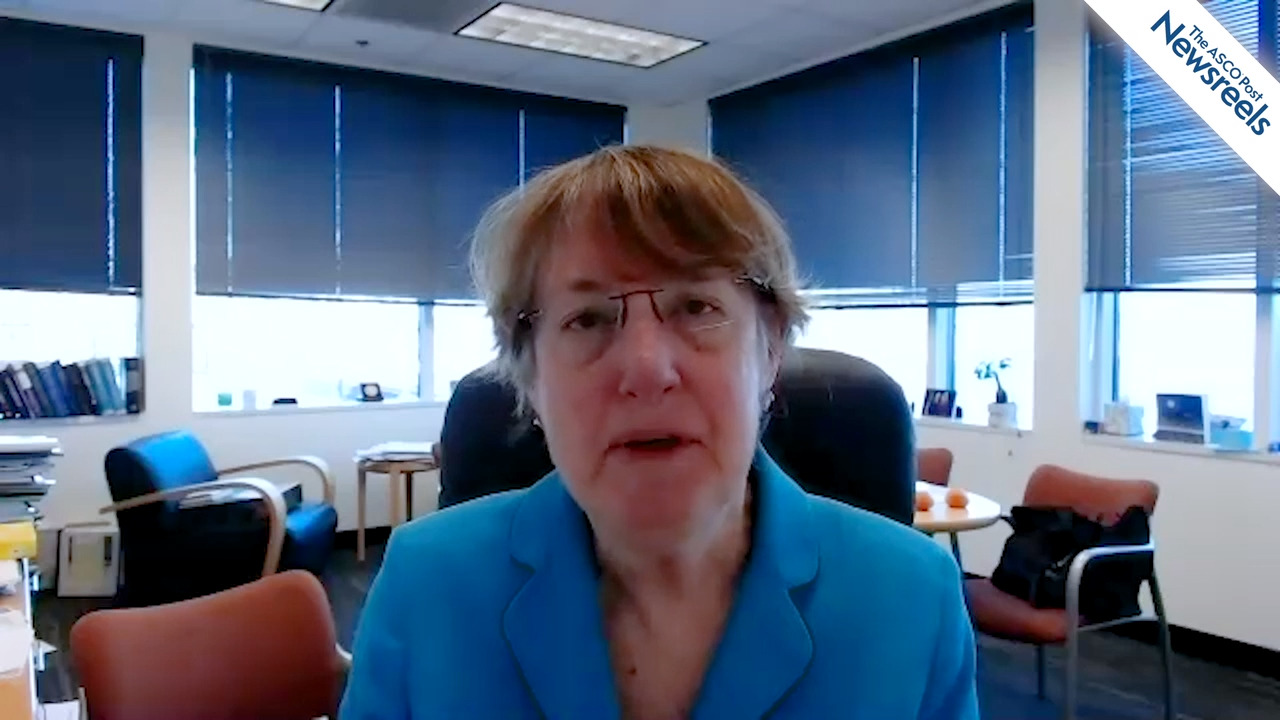
Irene M. Ghobrial, MD, on How COVID-19 is Changing the Conduct of Clinical Trials
COVID-19 and Cancer Care
Irene M. Ghobrial, MD, of Dana-Farber Cancer Institute, talks about PROMISE—her screening study for people at high-risk of developing precursor conditions of multiple myeloma—and how this and other trials have been altered in the wake of the pandemic, as well as what might be considered a silver lining to the crisis. Filmed March 30, 2020.
The ASCO Post Staff
Eduardo L. Cazap, MD, PhD, of the Sociedad Latinoamericana y del Caribe de Oncología Médica, and an international editor on The ASCO Post Editorial Board, talks about the situation in Argentina treating patients with COVID-19, and the 10-country research effort led by the World Health Organization seeking to fast track research on the coronavirus. Filmed April 7, 2020.
The ASCO Post Staff
Syed A. Abutalib, MD, of Cancer Treatment Centers of America, talks with Miguel-Angel Perales, MD, of Memorial Sloan Kettering Cancer Center, about the challenges and concerns related to transplants for patients with hematologic malignancies who are particularly vulnerable to infection with the coronavirus. Recorded July 13, 2020.
The ASCO Post Staff
Are you treating patients with advanced chronic myeloid leukemia (accelerated phase or blast crisis) any differently during the COVID-19 pandemic?
Recorded April 24, 2020.
The ASCO Post Staff
During the COVID-19 pandemic, when and why would you consider delaying autologous transplant for patients with diffuse large B-cell lymphoma in second complete remission?
Recorded April 21, 2020.
The ASCO Post Staff
Nancy E. Davidson, MD, of the Seattle Cancer Care Alliance, and a member of The ASCO Post Editorial Board, talks about her experiences in one of the communities hardest hit by coronavirus and offers some practical advice on making changes in treatment and research. Recorded April 7, 2020.