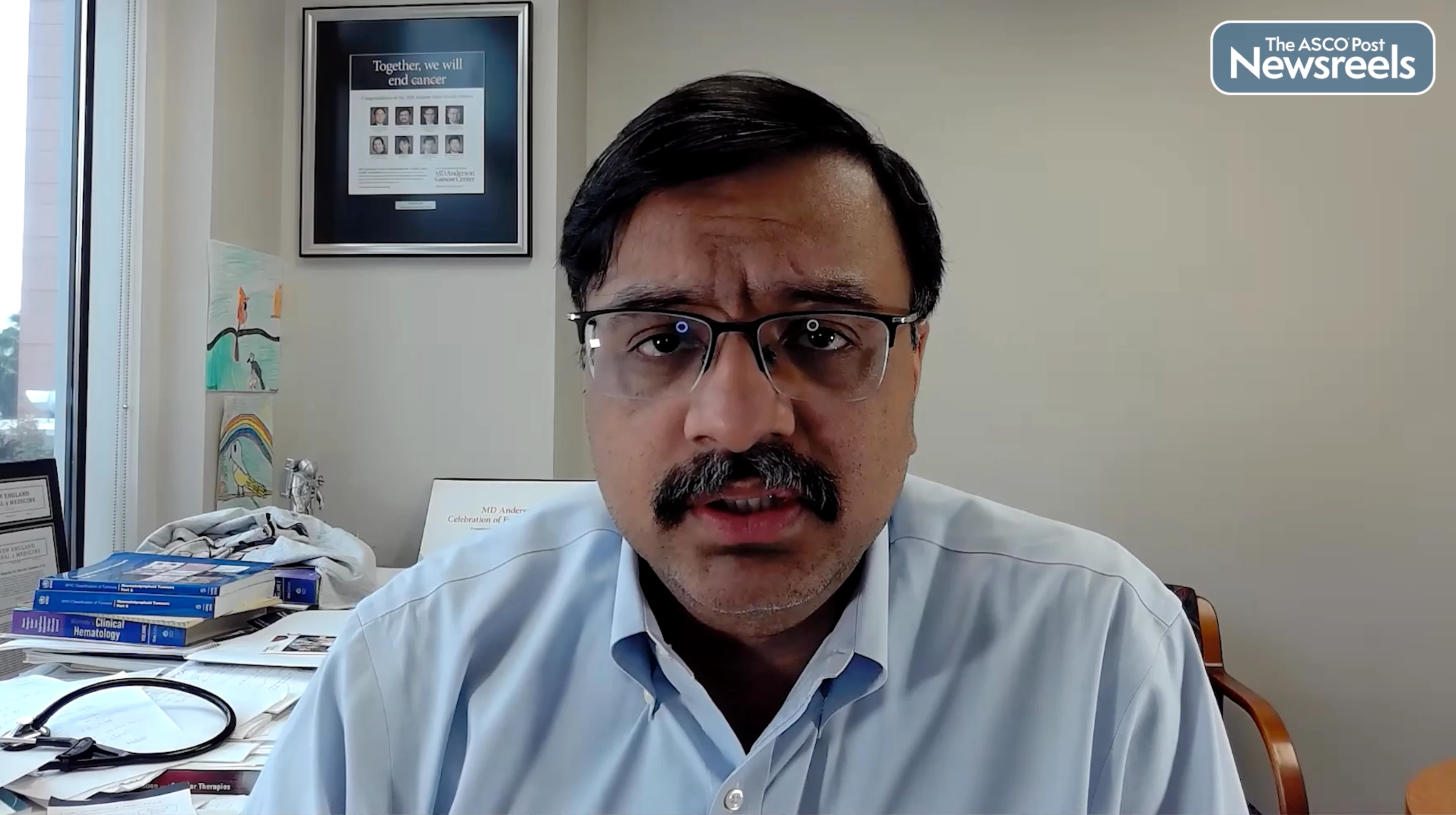
Aaron Logan, MD, PhD, on Relapsed/Refractory B-Cell ALL: Real-World Data on Brexucabtagene Autoleucel and Transplant
ASH 2025
Aaron Logan, MD, PhD, of UCSF Health, discusses research examining the effect of transplant before or after treatment with brexucabtagene autoleucel in the real world for adult patients with relapsed or refractory Philadelphia chromosome–negative B-cell acute lymphoblastic leukemia (ALL) (Abstract 516).
The ASCO Post Staff
Jennifer Woyach, MD, of The Ohio State University Comprehensive Cancer Center, reviews phase I data on rocbrutinib, a new selective next-generation inhibitor of Bruton’s tyrosine kinase (BTK), in patients with relapsed/refractory chronic lymphocytic leukemia (CLL) and prior exposure to BTK and/or BCL-2 inhibitors (Abstract 87).
The ASCO Post Staff
Brian Ball, MD, of City of Hope, presents updated results from the phase I/II BEXMAB study. They showed that the doublet had encouraging activity in patients with TP53-mutant, higher-risk MDS; translational data support the combination regimen’s potential for altering immune dysregulation in this subtype (Abstract 236).
The ASCO Post Staff
Ibrahim Aldoss, MD, of City of Hope, presents findings from a small, single-center study of patients aged 55 years and older with B-cell acute lymphoblastic leukemia (ALL) in first complete remission who were treated with CD19-directed CAR T-cell therapy. Researchers found the therapy was safe, resulted in low-grade adverse events, and led to preliminary durable measurable residual disease response (Abstract 443).
The ASCO Post Staff
Shahzad Raza, MD, of Cleveland Clinic, presents updated phase II results of the RedirecTT-1 trial, focusing on the efficacy and safety of talquetamab combined with teclistamab in patients with relapsed/refractory multiple myeloma and extramedullary disease (Abstract 698). The study also received simultaneous publication in The New England Journal of Medicine.
The ASCO Post Staff
Nitin Jain, MD, of The University of Texas MD Anderson Cancer Center, reviews findings from a phase II trial of pirtobrutinib, venetoclax, and obinutuzumab for patients with Richter transformation (Abstract 89).