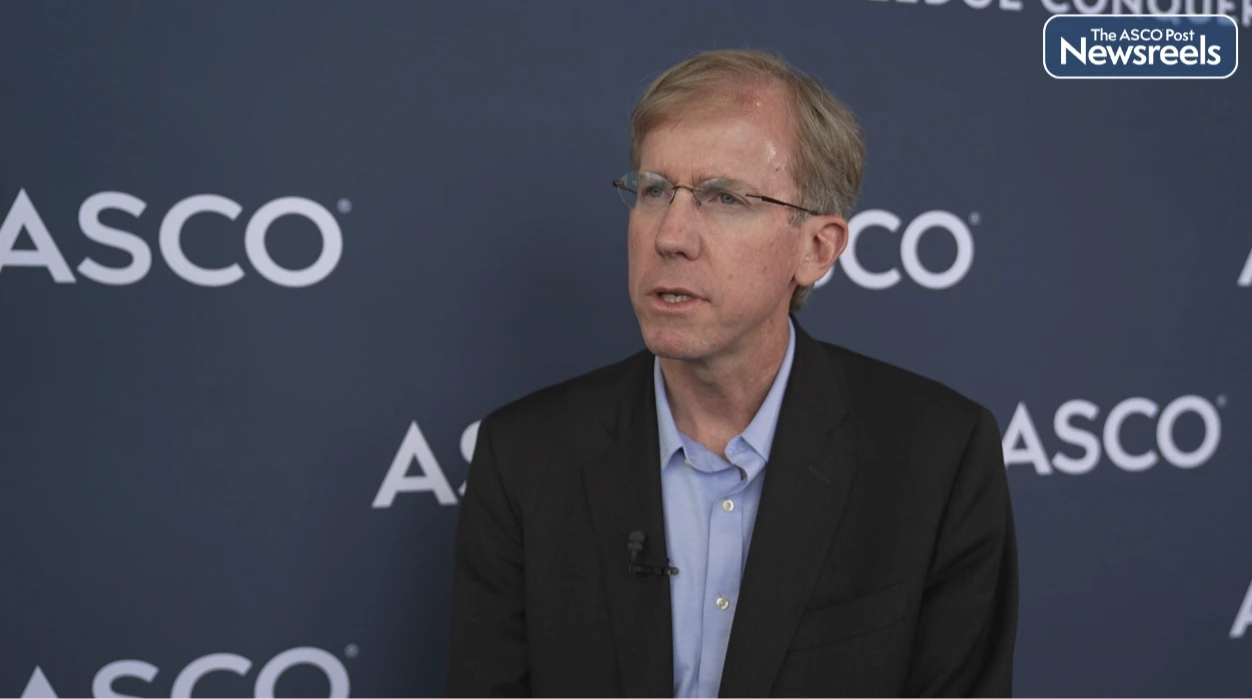
Ronald C. Chen, MD, MPH, FASCO, on High-Risk Muscle-Invasive Urothelial Carcinoma: HRQoL With Pembrolizumab vs Observation
ASCO 2026
Ronald C. Chen, MD, MPH, FASCO, of the University of Kansas Medical Center, presents health-related quality of life (HRQoL) data from the AMBASSADOR trial, which showed that in patients with high-risk muscle-invasive urothelial carcinoma after radical surgery, adjuvant pembrolizumab for 1 year approximately doubled disease-free survival, causes fatigue and dyspnea which modestly impacted physical function and ability to perform certain roles (such as work and hobbies), without impact on overall quality of life (Abstract 4513).
The ASCO Post Staff
Xin Gao, MD, of Massachusetts General Hospital and Harvard Medical School, discusses initial results from the phase I EXCEED trial of LY4101174, a Nectin-4–targeting antibody-drug conjugate, for patients with advanced or metastatic urothelial carcinoma (Abstract 4517).
The ASCO Post Staff
Yashasvini Sampathkumar, MD, of Memorial Sloan Kettering Cancer Center, presents data on Talking to Employers and Medical Staff about Work (TEAMWork), an English/Spanish intervention. The English/Spanish intervention, delivered as a booklet or mobile app, was developed to improve work outcomes among women undergoing breast cancer therapy. Dr. Sampathkumar discusses whether the digital vs print format was preferable among this population (Abstract 11060).
The ASCO Post Staff
Elizabeth McDonald, MD, PhD, of the University of Pennsylvania, discusses results from a retrospective cohort study that showed that the use of GLP-1 treatment was associated with a significantly lower incidence of breast cancer, after accounting for age, race, ethnicity, BMI, breast density, and type 2 diabetes status (Abstract 10506).
The ASCO Post Staff
Adam Kibel, MD, of Brigham and Women's Hospital, discusses findings from the phase III PROTEUS trial, which evaluated perioperative (neoadjuvant and adjuvant) apalutamide and androgen deprivation therapy vs placebo and ADT with radical prostatectomy in patients with high-risk localized or locally advanced prostate cancer. Dr. Kibel talks about how the regimen of apalutamide and ADT affects both the surgical procedure itself as well as patient outcomes postprocedure (Abstract LBA1).
The ASCO Post Staff
John M. Burke, MD, of SCRI at Rocky Mountain Cancer Centers I The US Oncology Network, presents findings from the phase III frontMIND trial, which evaluated tafasitamab plus lenalidomide and R-CHOP in patients newly diagnosed with diffuse large B-cell lymphoma (Abstract LBA7000).