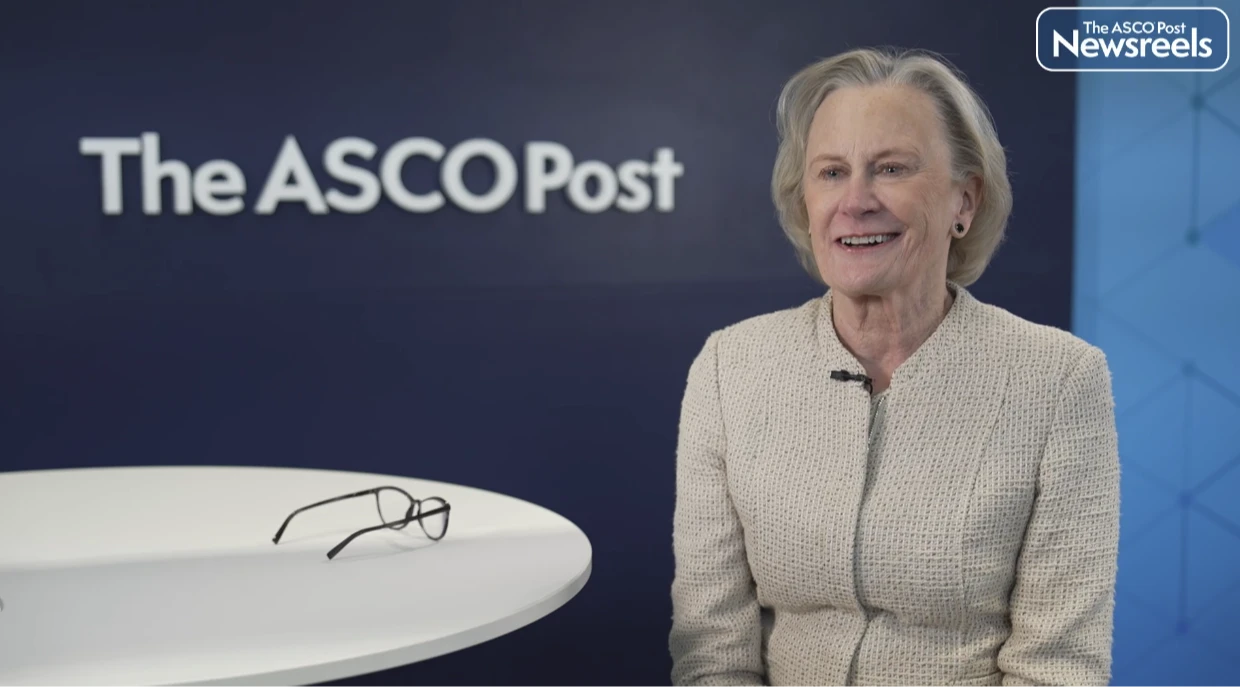
Ramaswamy Govindan, MD, FASCO, on EGFR-Mutant NSCLC: Final Overall Survival Results From Alliance A081105
ASCO 2026
Ramaswamy Govindan, MD, FASCO, of Alvin J. Siteman Cancer Center at Washington University School of Medicine in St. Louis, presents the final overall survival results from the randomized phase III Alliance A081105 trial, which evaluated adjuvant erlotinib vs observation after complete resection of EGFR-mutant non–small cell lung cancer (NSCLC) (Abstract 8001).
The ASCO Post Staff
Julie R. Brahmer, MD, FASCO, of the Bloomberg–Kimmel Institute for Cancer Immunotherapy, Sidney Kimmel Comprehensive Cancer Center at Johns Hopkins University School of Medicine, provides expert commentary on the overall survival results from the phase III HARMONi-6 trial presented in this year’s Plenary Session. The study compared ivonescimab plus chemotherapy vs tislelizumab plus chemotherapy in previously untreated patients with advanced squamous non–small cell lung cancer (NSCLC) (Abstract LBA4).
Lucy Gilbert, MD, of McGill University Health Centre, discusses subgroup analyses from the ROSELLA study. Relacorilant plus nab-paclitaxel demonstrated a statistically and clinically significant overall survival benefit in patients with platinum-resistant ovarian cancer compared to a weekly taxane; subgroup analyses for overall survival showed a consistent benefit favoring the addition of relacorilant to nab-paclitaxel irrespective of prior taxane use (Abstract 5503).
The ASCO Post Staff
Robert C. Stein, PhD, MBBChir, FRCP, of the National Institute for Health Research University College London Hospitals Biomedical Research Centre, discusses the first results from the phase III randomized OPTIMA trial, which is comparing chemotherapy decisions made with the Prosigna (PAM50) gene expression test with standard treatment with estrogen receptor (ER)-positive, HER2-negative early breast cancer (Abstract 500).
The ASCO Post Staff
Richard Cathomas, MD, of Cantonal Hospital Graubünden, reviews results from the primary analysis of SAKK 06/19, an open-label single arm phase II trial, which found that the combination of intravesical recombinant bacillus Calmette-Guérin (BCG) with atezolizumab, cisplatin, and gemcitabine was feasible and safe without unexpected toxicities and demonstrates promising efficacy in patients with muscle-invasive bladder cancer (MIBC) (Abstract 4503).
The ASCO Post Staff
Julie R. Gralow, MD, FACP, FASCO, Chief Medical Officer and Executive Vice President of ASCO, provides an overview of the highlights of this year’s meeting, including practice-changing data included in the Plenary Session.