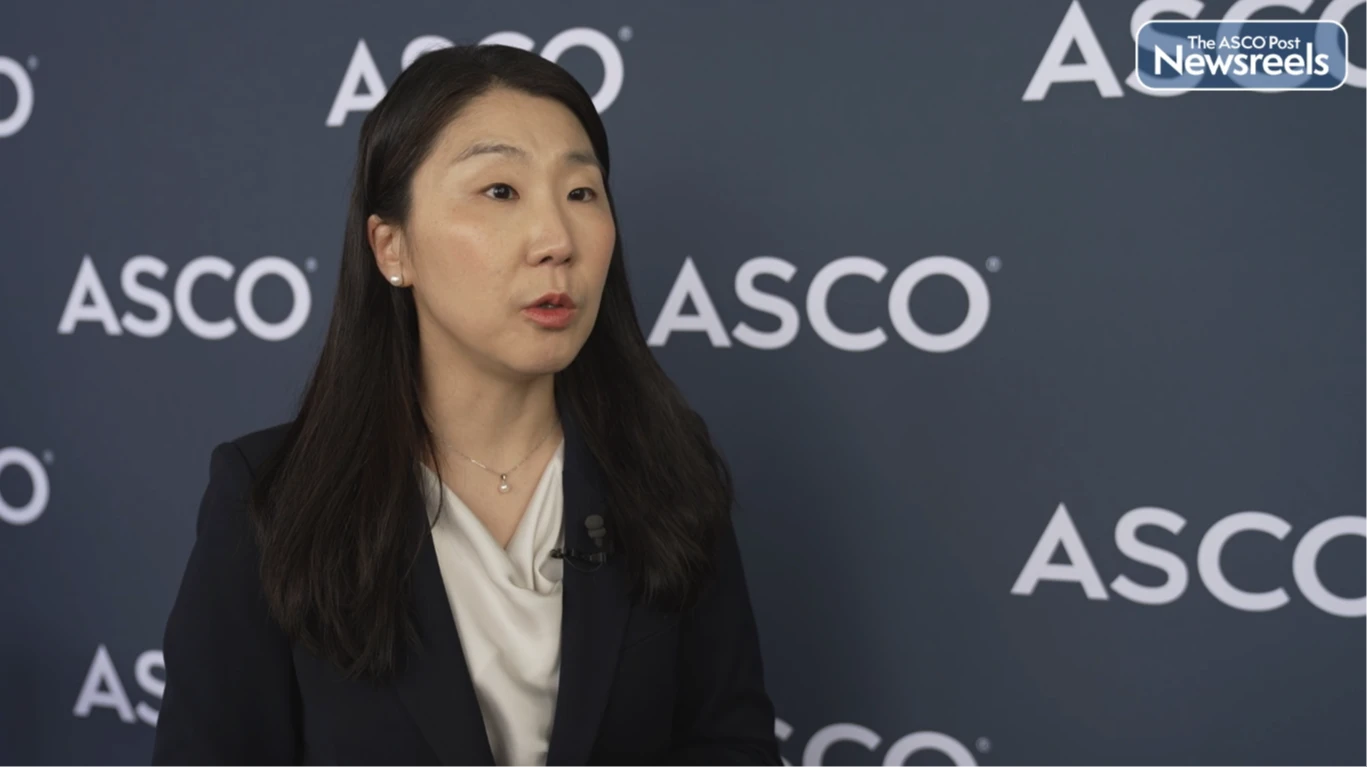
Mark A. Dickson, MD, on Advanced Dedifferentiated Liposarcoma: SARC041 Trial
ASCO 2026
Mark A. Dickson, MD, of Memorial Sloan Kettering Cancer Center, presents findings from SARC041, a phase III randomized double-blind study of abemaciclib vs placebo in patients with dedifferentiated liposarcoma; patients who received abemaciclib experienced a statistically significant improvement in progression-free survival (Abstract LBA2).
Jennifer A. Woyach, MD, of The Arthur G. James Cancer Hospital and Richard J. Solove Research Institute at The Ohio State University, discusses the ongoing, actively recruiting ROCKET-CLL trial, which is a phase III study aiming to compare the efficacy of rocbrutinib vs pirtobrutinib in patients with relapsed or refractory chronic lymphocytic leukemia (CLL)/small lymphocytic lymphoma (SLL) who have been pretreated with Bruton tyrosine kinase covalent inhibitors (Abstract TPS7100).
For more information about the trial, visit ClinicalTrials.gov (identifier NCT07342478).
Dai Chihara, MD, of The University of Texas MD Anderson Cancer Center, reviews results from an open-label, single-arm, phase II trial that investigated the combination of epcoritamab with R-miniCVP (rituximab, cyclophosphamide, vincristine, prednisone) in patients with newly diagnosed diffuse large B-cell lymphoma (DLBCL) classified as unfit or frail per geriatric assessment or not eligible for anthracycline chemotherapy due to reduced ejection function or prior exposure (Abstract 7002).
The ASCO Post Staff
Ramaswamy Govindan, MD, FASCO, of Alvin J. Siteman Cancer Center at Washington University School of Medicine in St. Louis, presents the final overall survival results from the randomized phase III Alliance A081105 trial, which evaluated adjuvant erlotinib vs observation after complete resection of EGFR-mutant non–small cell lung cancer (NSCLC) (Abstract 8001).
Daneng Li, MD, of City of Hope, discusses dose-finding results from a phase I/II trial of tegavivint, a downstream Wnt/β-catenin inhibitor, in patients with advanced hepatocellular carcinoma (HCC) (Abstract 4015).
The ASCO Post Staff
Jessica J. Lin, MD, Mass General Brigham Cancer Institute, presents data from the ALKOVE-1 study, which is looking at the investigational ALK tyrosine kinase inhibitor (TKI) neladalkib among patients with ALK-positive non–small cell lung cancer (NSCLC); Dr. Lin discusses the first analyses of phase II TKI-pretreated patients and preliminary data in TKI-naive patients (Abstract 8503).