Sameek Roychowdhury, MD, PhD, on Telemedicine in Clinical Trials
2025 ASCO Annual MeetingAdvertisement
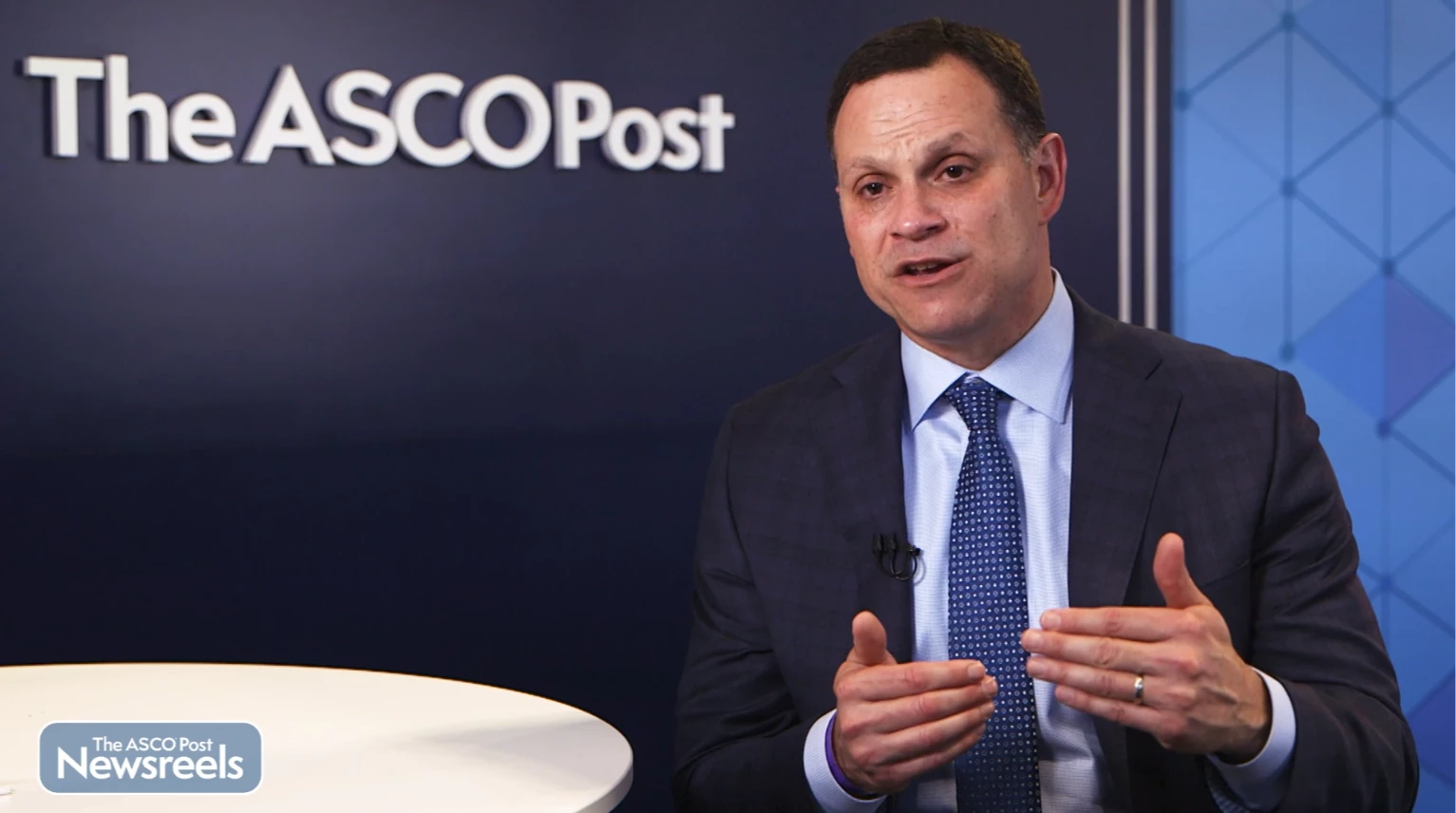
Sameek Roychowdhury, MD, PhD, of the Arthur G. James Cancer Hospital and Richard J. Solove Research Institute at The Ohio State University Wexner Medical Center, discusses a recently opened telemedicine clinical trial of pemigatinib in patients with advanced or metastatic FGFR-mutated pancreatic cancer, and the germination of a new initiative, TNT Cancer, which focuses on leveraging telemedicine to bring trials nationwide.
Transcript
Disclaimer: This video transcript has not been proofread or edited and may contain errors.
I'd love to tell you about our new nationwide telemedicine clinical trial for pancreas cancer with FGFR gene fusions or mutations. This is a first-of-its-kind telemedicine-only study where we can reach patients from the entire United States of America. This was inspired by several patients that we've treated on FGFR basket trials with pancreas cancer. The patients did very well, living three to five years with their metastatic disease with FGFR kinase inhibitors. So this was the inspiration for this study, which was also driven by what we learned from COVID. Many of the investigators running clinical trials from 2020 to 2021 had to make some adjustments, and we all got used to telemedicine, doing things remotely, getting tests done remotely. With that, we realized that it was possible. We had treated a couple of patients with FGFR kinase inhibitors, and when we thought about pancreas cancer—this was a disease that would probably not have a drug developed for it when the FGFR gene fusion is about 1% of pancreas cancer—we think that's about 500 patients per year, which is a sizable population of people who can benefit. But when it comes to developing a drug with the traditional trial format, it’s very costly and maybe not worth the economic investment. So instead of a $30 million trial, we could do a trial for just over $2 million for 40 patients with FGFR fusion–positive pancreas cancer. The study includes patients with fusions for FGFR 1, 2, and 3, as well as activating mutations for the same receptors. It’s been open since May—it just opened. We're evaluating our first patient all the way from Alabama. The patient never has to travel. We work hand in hand with the local oncologist. They don't do any of the study-specific activities—only we do that. They will help us do CAT scans and blood work, but we will manage the drug, the dose, the assessment of side effects, and so forth as the trial lead. There are no other sub-sites, so it reduces the cost. There's no extra regulatory paperwork. So there's no sub-sites. We're hoping that people will learn about this study. We are accepting referrals, so please reach out to me if you have a candidate patient. We'll be happy to work with you to evaluate them. We also want other investigators to work with us to implement new clinical trials using telemedicine. We want to share what we are doing, and we want to learn from you. We're launching an effort called TNT Cancer—TNT: Telemedicine Nationwide Therapeutics for Cancer. We want to partner with other investigators who want to do this too. So we look forward to meeting all of you and evaluating your patients.