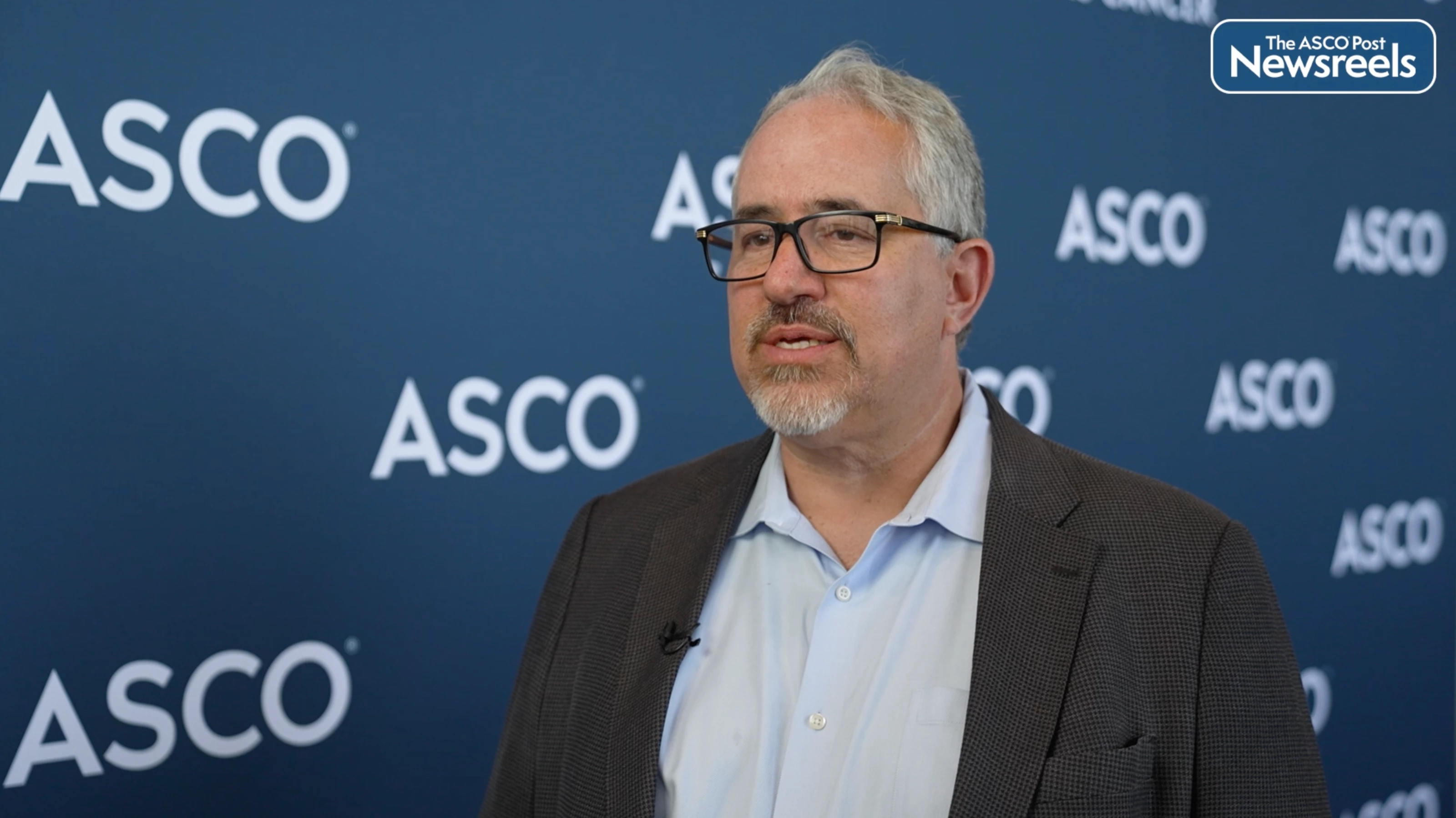
Manmeet Singh Ahluwalia, MD, MBA, FASCO, on Liquid Biopsy in Glioblastoma
2025 ASCO Annual MeetingAdvertisement
Manmeet Singh Ahluwalia, MD, MBA, FASCO, of Miami Cancer Institute, Baptist Health South Florida, discusses the ongoing LIBERATE trial, which is evaluating safety and technical efficacy of transcranial MR-guided microbubble-enhanced transcranial focused ultrasound for increasing blood circulating tumor and cell-free DNA levels in adults with glioblastoma (Abstract TPS2094).
Transcript
Disclaimer: This video transcript has not been proofread or edited and may contain errors.
Glioblastoma is one of the most challenging tumors to treat. One of the challenges that we have in glioblastoma is this issue of the blood-brain barrier. As we are moving into this era of precision oncology, liquid biopsies have come into vogue in looking at how patients can be treated with targeted therapies and how we can monitor them during the course of their treatment in brain tumors. However, because of this blood-brain barrier issue, we do not have enough cell-free DNA in the blood. So when we do these liquid biopsies, sometimes we may not pick up any genomic alterations. LIBERATE was a multicenter trial that was done across the United States at up to 20 sites, looking at using MR-guided focused ultrasound to non-invasively disrupt the blood-brain barrier to increase the yield in the blood of cell-free DNA. Essentially, on this trial, patients who were scheduled to undergo a resection or a biopsy for their glioblastoma in recurrence or newly diagnosed setting underwent an MR-guided ultrasound, and we got blood from them just before the procedure, and then at 30 minutes, one hour, two, and three hours post-procedure. Then these patients underwent clinically indicated surgery or biopsy one to two weeks later. The trial is comparing the genomic alterations seen in the liquid biopsy (blood) and comparing it to the tissue to ensure at least 70% or greater concordance between the two. Also, one of the endpoints is to determine whether we can use this MR-guided, non-invasive disruption of the blood-brain barrier to increase the yield of the liquid biopsy. The target is to at least hopefully double it. Because what that will do is increase the chances of finding genomic alterations in the blood if they exist in the brain tumor. If the trial is successful, it can be transformative for the field because it will create new opportunities for using liquid biopsies to evaluate what is going on in the tumor in real time and then give opportunities for selecting new targeted agents to go after the genomic alterations that are driving these tumors.