Peter Schmid, MD, PhD, and Hope S. Rugo, MD, on Metastatic Triple-Negative Breast Cancer: Atezolizumab Plus Nab-paclitaxel
2019 ASCO Annual Meeting
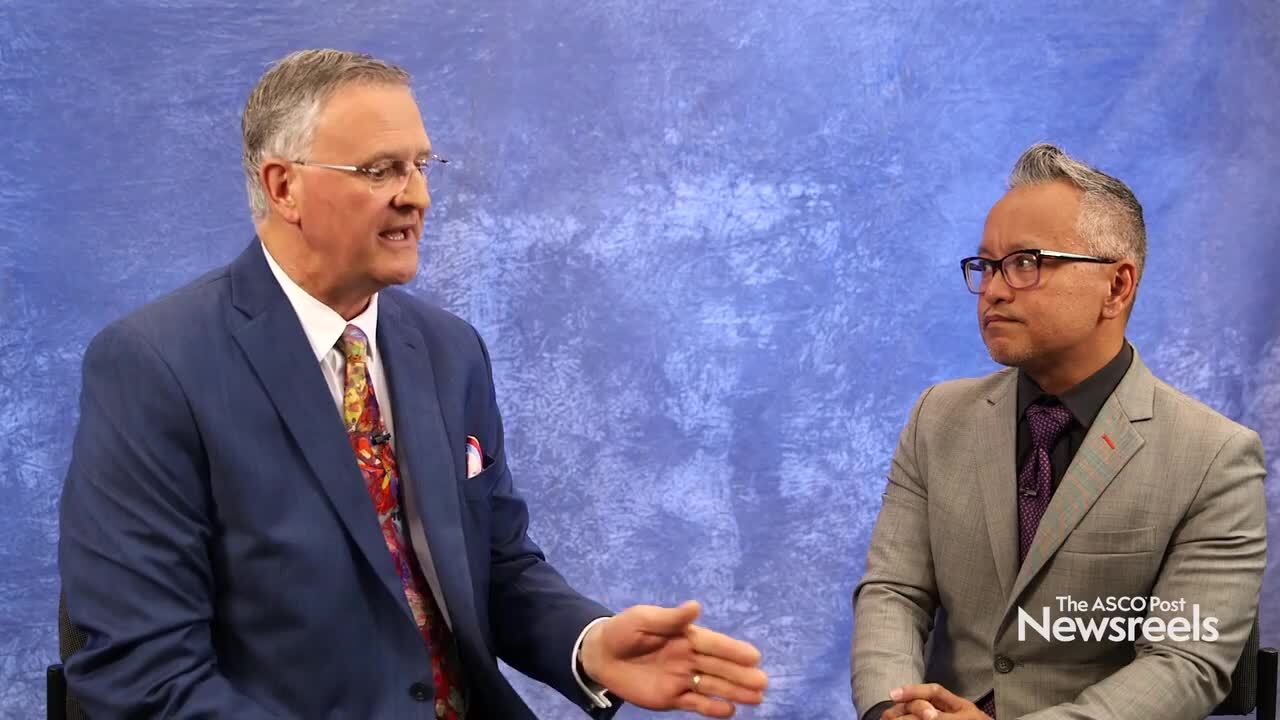
Hope S. Rugo, MD, of the University of California, San Francisco, and Peter Schmid, MD, PhD, of Barts Cancer Institute, Queen Mary University of London, discuss an update of the IMpassion130 interim overall survival analysis of atezolizumab plus nab-paclitaxel in previously untreated locally advanced or metastatic triple-negative breast cancer (Abstract 1003).
Don S. Dizon, MD, of the Lifespan Cancer Institute, and Richard T. Penson, MD, of Massachusetts General Hospital Cancer Center, discuss phase III study findings on the PARP inhibitor olaparib, which showed a significantly higher objective response rate vs nonplatinum chemotherapy for patients with ovarian cancer who relapsed, are platinum-sensitive, and have BRCA-mutant disease (Abstract 5506).
Margaret A. Tempero, MD, discusses phase III results from the multicenter APACT trial, which showed that adjuvant nab-paclitaxel plus gemcitabine may be an option for patients who are ineligible for treatment with FOLFIRINOX (Abstract 4000).
Hope S. Rugo, MD, of the University of California, San Francisco, and Peter Schmid, MD, PhD, of Barts Cancer Institute, Queen Mary University of London, discuss ongoing trials of immunotherapy for early triple-negative breast cancer; immunotherapy in other disease subtypes such as estrogen receptor–positive and HER2-positive; and checkpoint inhibition in PD-L1–negative disease.
Jason Westin, MD, of The University of Texas MD Anderson Cancer Center, discusses findings of the Smart Start study on the chemotherapy-free combination of rituximab, lenalidomide, and ibrutinib in newly diagnosed diffuse large B-cell lymphoma (Abstract 7508).
Sara A. Hurvitz, MD, of the UCLA Jonsson Comprehensive Cancer Center, discusses the first study of ribociclib plus endocrine therapy vs endocrine therapy alone to demonstrate significantly longer overall survival in peri- and premenopausal women with advanced breast cancer (Abstract LBA1008).