Even Highly Curable Childhood Leukemias Take a Substantial Toll on Families, Study Finds

New research published by Rodwin et al in JNCCN—Journal of the National Comprehensive Cancer Network has found that families of children receiving treatment for B-cell acute lymphoblastic leukemia (ALL) experience substantial and lasting challenges beginning early after diagnosis, according to a multicenter study embedded in a Children’s Oncology Group (COG) trial. The COG includes more than 200 member institutions that treat about 80% of all new cases of childhood and adolescent cancer—therefore, these findings represent the experiences of most families.
ASCO 2026: Lung Cancer Specialist Apar Kishor Ganti, MD, Shares His Insights

The 2026 ASCO Annual Meeting featured numerous high-impact studies in lung cancer. To help readers identify the presentations with the greatest potential to influence clinical practice, The ASCO Post asked lung cancer specialist Apar Kishor Ganti, MD, MS, FASCO, to share his top picks. Dr. Ganti is Professor in the Division of Medical Oncology and holds the Dr. and Mrs. D. Leon University of Nebraska Medical Center (UNMC) Research Fund Chair in Internal Medicine at UNMC in Omaha.
Verifying the Seen and Unseen by AI in Cancer Imaging

Artificial intelligence (AI) can be used in medical imaging and diagnostics to enhance physician capabilities, but also to identify features that humans are not able to see. In research settings, AI has already demonstrated that ability to identify biomarkers from routine medical images and guide clinical decision-making, although few tools have been cleared for clinical use yet as issues of verifiability and other challenges remain.
Mocertatug Rezetecan (Mo-Rez) Shows Early Activity in Platinum-Resistant Ovarian and Endometrial Cancers

First results from the global phase I BEHOLD-1 study suggest that the investigational B7-H4–targeted antibody-drug conjugate mocertatug rezetecan showed activity in two difficult-to-treat gynecologic cancers: platinum-resistant ovarian cancer and recurrent or advanced endometrial cancer.1 At the highest doses evaluated, confirmed objective response rates were 62% in platinum-resistant ovarian cancer and 67% in endometrial cancer, with responses observed across a range of B7-H4 expression levels.
Study Supports Universal Germline Genetic Testing Regardless of Age at Cancer Diagnosis

Universal germline genetic testing after an individual receives a cancer diagnosis may help to uncover hereditary cancer risks in the patient's family, according to findings published in Cancer Discovery.

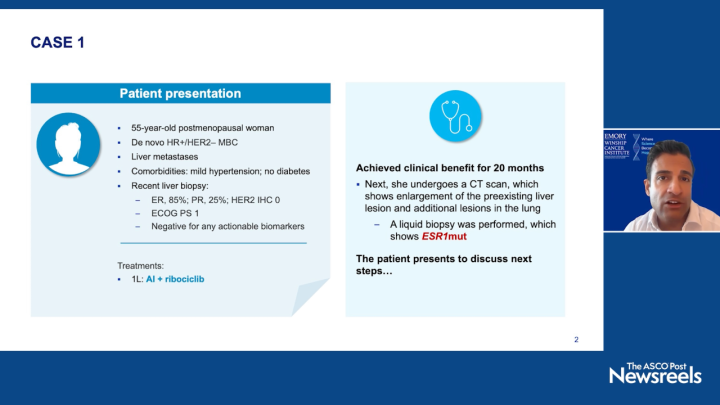



 Charles Bennett and colleagues: The Inflation Reduction Act and Ibrutinib
 Derek Raghavan: How I Discuss the Current Political Chaos When Patients Ask Health-Related Questions About It
 Narjust Florez and Coral Olazagasti: Silence Is Complicity
 Robert Peter Gale: Therapy With a TKI for EGFR-Variant Lung Adenocarcinoma: Lessons From CML?
 Raj Mohan on Kindness, Mercy, Empathy, Compassion: Are They Relevant in the Era of Robotics and AI?
Sponsored Content

SPONSORED BY LILLY MEDICAL AFFAIRS
From Results to Action: Leveraging Multidisciplinary Teams to Optimize NSCLC CareMore Top Stories
Building Momentum: ASCO’s Geriatric Oncology CoP
The ASCO Geriatric Oncology Community of Practice (geriatric oncology CoP) convened for its first in-person meeting at McCormick Place in Chicago in May 2026. Since its inception in 2022, the geriatric oncology CoP has brought together clinicians, researchers, trainees, and patient advocates...
National Academy of Medicine Elects 100 New Members for 2026
The National Academy of Medicine (NAM) has announced the election of 90 regular members and 10 international members during its annual meeting. Election to the Academy is considered one of the highest honors in the fields of health and medicine and recognizes individuals who have demonstrated...
Old Habits Die Hard: Project Optimus and the Next Generation of KRAS G12C Inhibitors
The recent announcement1 that divarasib, a next-generation KRAS G12C inhibitor, improved both progression-free and overall survival compared with first-generation KRAS G12C inhibitors (ie, sotorasib, adagrasib) is an important scientific milestone in the treatment of KRAS G12C–mutated non–small...
I Wasn’t Expecting Cancer at 22
Before I was diagnosed with advanced stage ovarian ependymoma, in 2025, when I was just 22, I didn’t know anything about cancer. I knew a few older adults who had had cancer, but that was the extent of my knowledge about the disease. Even to this day, I’m not sure I’ve completely wrapped my head...
FDA Approves Dostarlimab for MSI-H/dMMR Locally Advanced Rectal Cancer
On October 19, 2026, the U.S. Food and Drug Administration (FDA) granted an accelerated approval to the PD-1 inhibitor dostarlimab (Jemperli) for the treatment of adult patients with stage II/III locally advanced rectal cancer that is microsatellite instability–high (MSI-H) or mismatch repair...

Guideline Update Recommends Tailoring Breast Cancer Surveillance Based on Recurrence Risk
ASCO has published a guideline update offering clinicians new recommendations for breast cancer follow-up and surveillance after primary treatment.1 For this patient population, determining the optimal frequency and timing of visits can be a challenge, according to Expert Panel Co-Chair Maryam...
Mocertatug Rezetecan Shows Early Activity in Platinum-Resistant Ovarian and Endometrial Cancers
First results from the global phase I BEHOLD-1 study suggest that the investigational B7-H4–targeted antibody-drug conjugate mocertatug rezetecan showed activity in two difficult-to-treat gynecologic cancers: platinum-resistant ovarian cancer and recurrent or advanced endometrial cancer.1 At the...
