
Growing up, I was a curious, empathetic kid with an interest in biology. When I was diagnosed with non-Hodgkin lymphoma 2 months before I turned 15, those qualities shaped how I engaged with my care. I asked questions, wanted to understand what was happening in my body, and built strong relationships with my doctors and care team. I also grew up in a family culture that taught me my voice mattered and that advocating for myself was not only acceptable but important. Those traits and influences determined how I moved through treatment and set me on the path I am on now.
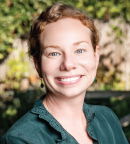
Rachel Westlake
As a teenager, I was active in sports, especially distance running. After practice one day, I realized that I couldn’t complete a bridge pose—a backbend that stretches the chest and spine. I couldn’t command my chest, abdomen, and hips to lift. I was confused and told my mom about the experience. I went through a series of diagnostic tests. Imaging tests showed a grapefruit-size tumor wrapped around my spinal cord, extending into my sacrum and pelvis, and a biopsy confirmed non-Hodgkin lymphoma (NHL).
I was enrolled in a specialized pediatric clinical trial evaluating treatment for high-risk B-cell NHL. The regimen included vincristine, doxorubicin, intrathecal and systemic methotrexate, high-dose cytarabine, and prednisone, and lasted 13 months. I was often ill and regularly hospitalized for side effects, including fever and neutropenia, but the therapy was successful and I was in complete remission.
However, the experience interrupted my formative teenage years and altered the trajectory of my life.
Facing Mortality
The protocol of the clinical trial I was enrolled in required spending a lot of time in the hospital. I was diagnosed at the end of my freshman year, and instead of a long summer of social activities, I was mostly confined to a hospital room or my home. My friends rallied around me, but didn’t know how to respond to the changes I was going through. How could they? Fifteen-year-olds aren’t supposed to get cancer.
My diagnosis came during a critical period of identity formation and independence. After my treatment ended, I was expected to resume a normal life, but nothing felt normal. I had faced mortality and emerged with more questions than certainty. I went to college because that was what was expected. I had access to survivorship care, but being away from home made it difficult to maintain. For many adolescent and young adult (AYA) survivors, the transition out of active treatment into long-term survivorship means losing continuity of care at exactly the moment when ongoing support matters most.
I remained in generally good health over the next 20 years, but I still carried the emotional weight of having had cancer, including fear of recurrence.
Coping With Cancer Recurrence
In 2015, I was 35 and approaching the upper AYA age range. I was in a period of transition and momentum in my life, and I had largely stopped expecting the cancer to return. And then it did.
I had pain in my left leg that brought me to the ground, repeatedly. Imaging revealed tumors in the bone marrow of my left tibia and femur and my right tibia, and a biopsy confirmed diffuse large B-cell lymphoma. A review of the tissue slides saved from my 1995 clinical trial revealed that this was likely a transformation of follicular lymphoma present in my original tumor.
I was treated with three cycles of rituximab, cyclophosphamide, doxorubicin, vincristine, and prednisone (R-CHOP), followed by several cycles of rituximab, dexamethasone, high-dose cytarabine, and cisplatin (R-DHAP), chosen deliberately to limit additional anthracycline exposure given my prior doxorubicin load. I underwent stem cell mobilization, high-dose BEAM conditioning, and an autologous stem cell transplant, then radiation. I am currently in remission with no evidence of disease.
I am grateful to my oncology team for counseling me about fertility preservation before treatment began and for giving me time to consider my options. That conversation doesn’t happen nearly often enough. Studies show that only half of patients of reproductive age at the time of their cancer diagnosis received fertility counseling. In 2025, ASCO released an update on its clinical practice guidelines on fertility preservation, recommending that providers include fertility preservation in cancer survivorship care.
Transitioning to long-term survivorship care is ongoing and complex. The conversations that matter, especially for young adults around values, fertility, cancer-related long-term effects, finances, mental health, and continuity of care, need to follow patients out of active treatment and into the rest of their lives.
I am intentional about my health maintenance, knowing that two experiences of intense AYA treatment will have lasting impact. I know that I’m at risk for accelerated biological aging and the possibility of developing aging-related illnesses earlier than those without a cancer history. I live a healthy lifestyle, seek the specialized care and support I need, and remain in lifelong oncological follow-up.
Charting a Career in Advocacy
I don’t know what course my life would have taken if I hadn’t had cancer, but I’m grateful for the path I’m on now. As a young person, I became a strong self-advocate, and that experience shaped my professional life. I ran programs teaching patient groups how to advocate for themselves and health-care professionals how to support and listen to self-advocating patients, and I am currently engaged in research on self-advocacy in AYA cancer care.
Young cancer survivors and those from marginalized populations and low-income and rural communities all face different challenges when trying to advocate for their health care. Providing a safe place for these survivors to voice their concerns and needs will help them to build the empowering skills they will carry for the rest of their lives.
I’m honored to serve the AYA professional community through my role as Executive Director of the AYA Cancer Coalition (AYACC). The AYACC brings together professionals across the AYA cancer continuum who work to improve outcomes for AYAs.
Three decades of living with cancer has shaped what I do and how I live. Through my work, I hope to improve the lives of other AYA cancer survivors, so they, too, may survive and thrive after cancer.
Rachel Westlake, 46, lives in Eureka, California. She is Executive Director of the Adolescent and Young Adult Cancer Coalition.
