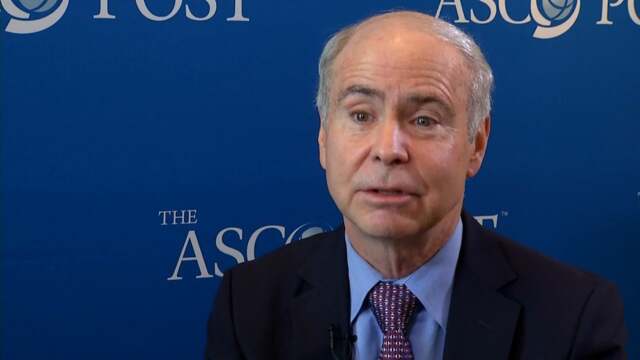
Robert W. Carlson, MD, and Lee N. Newcomer, MD, MHA, on 20 Years of Improving Cancer Care Together: A Payer’s Perspective
2015 NCCN Annual Conference
Robert W. Carlson, MD, Chief Executive Officer of the National Comprehensive Cancer Network, and Lee N. Newcomer, MD, MHA, of UnitedHealthCare, discuss the value of NCCN Guidelines in determining coverage decisions, the future of affordable care, bundled payments, and the clear value approach.
Gregory A. Otterson, MD
Gregory A. Otterson, MD, of The Ohio State University Comprehensive Cancer Center and the James Cancer Hospital and Solove Research Institute, discusses the evolution of lung cancer treatment from adjuvant chemotherapy to immunotherapy and the clinical trials underway.
Axel Grothey, MD
Axel Grothey, MD, of the Mayo Clinic Cancer Center, discusses how the NCCN Guidelines can help oncologists make strategic choices of the various agents available to treat metastatic colorectal cancer, individualizing patient care.
Peter E. Clark, MD
Peter E. Clark, MD, of the Vanderbilt-Ingram Cancer Center discusses the highlights of the 2015 NCCN Guidelines for bladder cancer in both non–muscle invasive and muscle-invasive disease.
Mario E. Lacouture, MD
Mario E. Lacouture, MD, of Memorial Sloan Kettering Cancer Center, discusses the effect on patients of dermatologic toxicities associated with targeted therapies: their psychosocial impact, financial burden, physiological pain, and potential to alter therapy. But the side effects of targeted treatments can and should be addressed.
Kenneth C. Anderson, MD
Kenneth C. Anderson, MD, of Dana-Farber/Brigham and Women’s Cancer Center, discusses the incredible progress made in treating multiple myeloma, with nine therapeutic options approved in the past decade, two drugs approved this year, and a number of new options on the horizon.