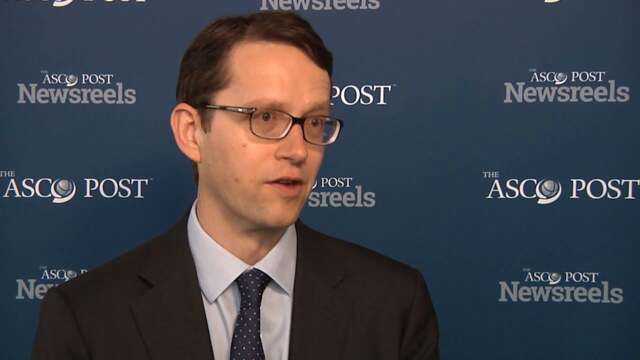
Leonard Saltz, MD, on Issues of Value in Melanoma Treatment
2015 ASCO Annual Meeting
Leonard Saltz, MD, of Memorial Sloan Kettering Cancer Center, discusses how the cost of care affects behavior and decision-making on the part of patients and oncologists.
Howard I. Scher, MD
Howard I. Scher, MD, of Memorial Sloan Kettering Cancer Center, discusses the updated criteria that will guide clinical trial design and conduct for therapeutics being tested in castration-resistant prostate cancer (Abstract 5000).
Laurie H. Sehn, MD, MPH, and James O. Armitage, MD
James O. Armitage, MD, of the University of Nebraska Medical Center, and Laurie H. Sehn, MD, MPH, of the British Columbia Cancer Agency, discuss a first-ever finding on obinutuzumab and bendamustine in the setting of rituximab-refractory indolent non-Hodgkin lymphoma (Abstract LBA8502).
Ruben A. Mesa, MD, and James O. Armitage, MD
James O. Armitage, MD, of The University of Nebraska Medical Center, and Ruben A. Mesa, MD, of the Mayo Clinic, discuss pacritinib and its significant efficacy in myelofibrosis (Abstract LBA7006).
Andrew James Martin, PhD
Andrew James Martin, PhD, of NHMRC Clinical Trials Centre, University of Sydney, discusses a form of vitamin B3 that reduced the incidence of new nonmelanoma skin cancers in high-risk patients (Abstract 9000).
Nicholas C. Turner, MD, PhD
Nicholas C. Turner, MD, PhD, of the Royal Marsden Hospital NHS Trust, discusses fulvestrant and palbociclib as a treatment option in pre- and postmenopausal women with hormone receptor–positive, HER2-negative metastatic breast cancer that progressed on prior endocrine therapy (Abstract LBA502).