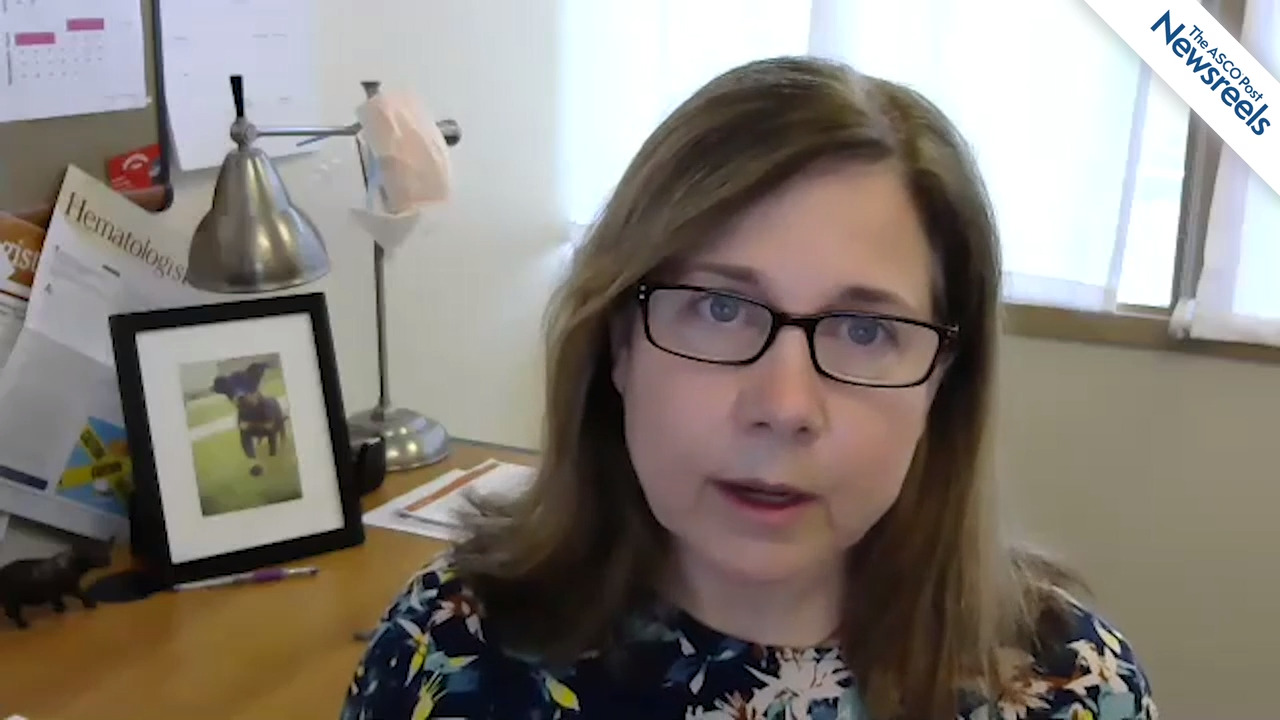
Mikkael A. Sekeres, MD, on Cancer Treatment in the Age of COVID-19: Personal Observations
COVID-19 and Cancer Care
Mikkael A. Sekeres, MD, of the Cleveland Clinic, talks about the ways in which social distancing and viral fears have affected the way he delivers treatment for his patients, as well as the effect on their psyches—and his. Recorded April 10, 2020.
The ASCO Post Staff
During the COVID-19 pandemic, when and why would you consider delaying autologous transplant for patients with diffuse large B-cell lymphoma in second complete remission?
Recorded April 21, 2020.
The ASCO Post Staff
During the COVID-19 pandemic, do you suggest delaying upfront autologous transplant for patients with multiple myeloma?
Recorded April 24, 2020.
The ASCO Post Staff
Are you treating patients with advanced chronic myeloid leukemia (accelerated phase or blast crisis) any differently during the COVID-19 pandemic?
Recorded April 24, 2020.
The ASCO Post Staff
Jacek Jassem, MD, PhD, of the Medical University of Gdansk, and an international editor on The ASCO Post Editorial Board, talks about the situation in Poland, how his institution is coping, and the adjustments the staff has made to deliver quality cancer care. Filmed April 17, 2020.