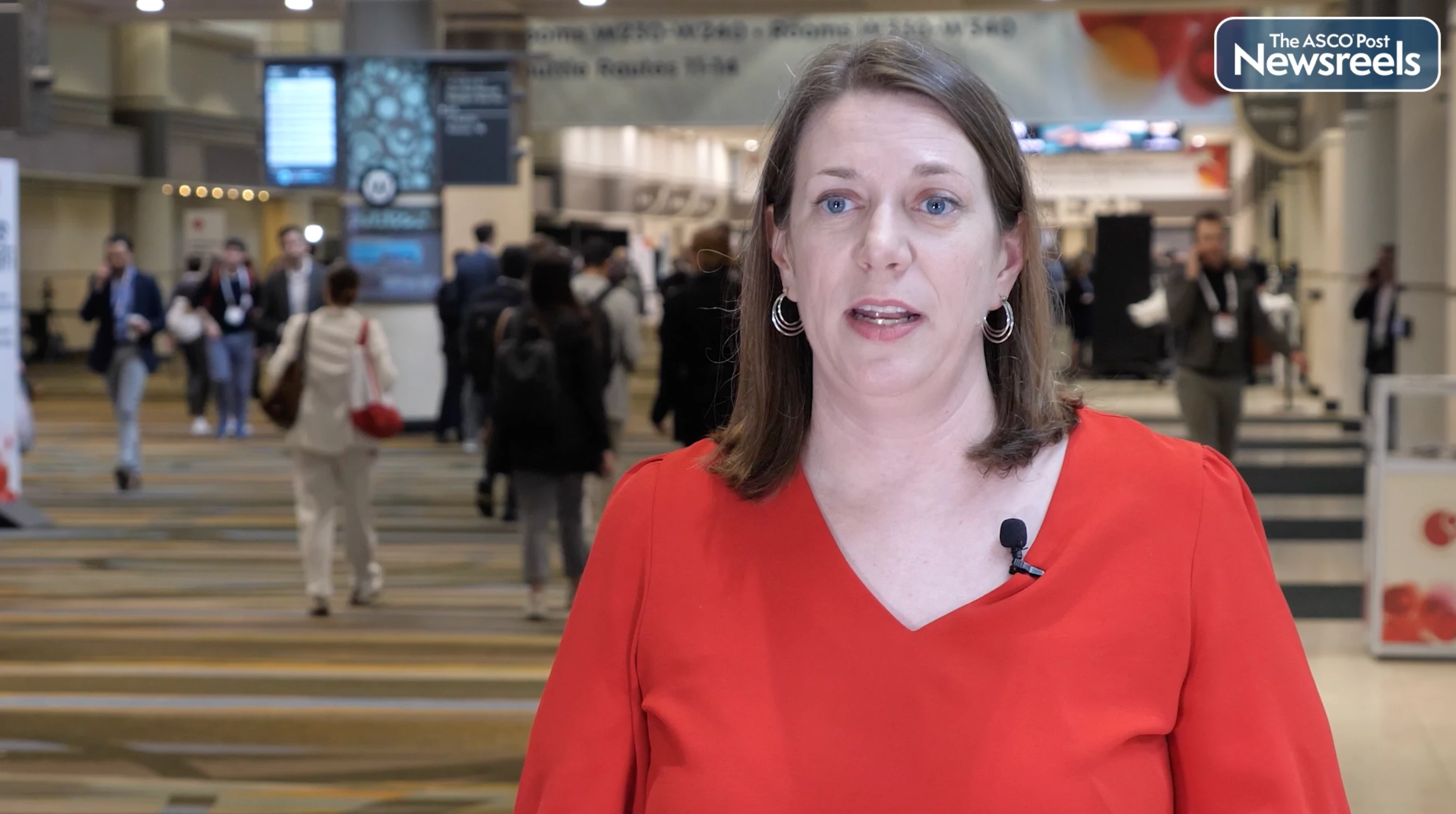
Ibrahim Aldoss, MD, on Older Adults With B-Cell ALL: CD19 CAR T-Cell Therapy
ASH 2025
Ibrahim Aldoss, MD, of City of Hope, presents findings from a small, single-center study of patients aged 55 years and older with B-cell acute lymphoblastic leukemia (ALL) in first complete remission who were treated with CD19-directed CAR T-cell therapy. Researchers found the therapy was safe, resulted in low-grade adverse events, and led to preliminary durable measurable residual disease response (Abstract 443).
The ASCO Post Staff
Brian Ball, MD, of City of Hope, presents updated results from the phase I/II BEXMAB study. They showed that the doublet had encouraging activity in patients with TP53-mutant, higher-risk MDS; translational data support the combination regimen’s potential for altering immune dysregulation in this subtype (Abstract 236).
The ASCO Post Staff
Mikkael Sekeres, MD, MS, Chief, Division of Hematology and Professor of Medicine at Sylvester Comprehensive Cancer Center, part of the University of Miami Miller School of Medicine, presents findings from a new study that connects exposure to the herbicide Agent Orange to earlier and more severe cases of myelodysplastic syndromes (MDS). Researchers concluded that exposure is associated with younger age at MDS diagnosis, ultimate MDS diagnosis, genetic complexity of MDS, increased risk of disease progression, and with Black race (Abstract 5626).
The ASCO Post Staff
Dory Abelman, PhD(c), HBHSc, of the University of Toronto, discusses findings that support the feasibility of ultradeep cell-free DNA whole-genome sequencing for comprehensive genomic profiling in patients with multiple myeloma, which may be a less invasive alternative to bone marrow biopsy (Abstract 495).
The ASCO Post Staff
Anand Patel, MD, of the University of Chicago, discusses results from a phase II trial that showed tyrosine kinase inhibitor plus inotuzumab ozogamicin–based therapy resulted in major molecular response in patients newly diagnosed with Philadelphia chromosome (Ph)-positive acute lymphoblastic leukemia (ALL) (Abstract 441).
The ASCO Post Staff
Jennifer Woyach, MD, of The Ohio State University Comprehensive Cancer Center, discusses results from the first head-to-head comparison of pirtobrutinib vs ibrutinib in treatment-naive patients and patients with covalent Bruton tyrosine kinase inhibitor–naive relapsed/refractory chronic lymphocytic leukemia/small lymphocytic lymphoma (CLL/SLL) (Abstract 683).