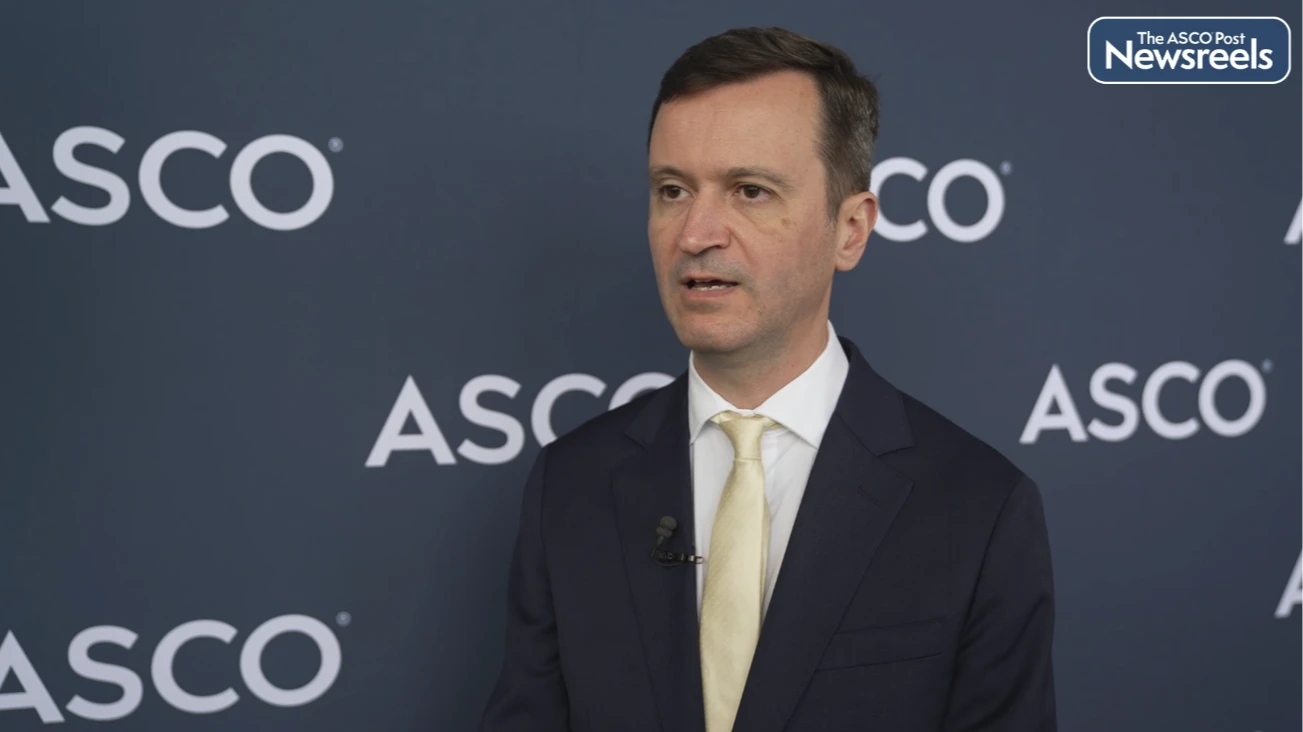
Wassim McHayleh, MD, FACP, MBA, on Elacestrant Plus Capivasertib in ER-Positive/HER2-Negative Advanced Breast Cancer: Update From ELEVATE
ASCO 2026
Wassim McHayleh, MD, FACP, MBA, of AdventHealth Cancer Institute, provides an update from the phase Ib/II ELEVATE trial, an open-label umbrella study. This report focuses on updated safety and preliminary efficacy for elacestrant and capivasertib for patients with estrogen receptor (ER)-positive/HER2-negative advanced breast cancer who experienced disease progression on first-line endocrine therapy plus CDK4/6 inhibition (Abstract 1098).
The ASCO Post Staff
Martine J. Piccart-Gebhart, MD, PhD, of Jules Bordet Institute, Université Libre de Bruxelles, reviews multiple abstracts discussing avenues of personalized treatment for patients with hormone receptor (HR)-positive, HER2-negative breast cancer, including genomic testing and systemic therapy.
Laura Alder, MD, of Duke University Medical Center, highlights emerging data discussed in the meeting’s oral abstract session on small cell lung cancer, including increased toxicity without efficacy benefit from concurrent chemoradiation and immunotherapy, the intracranial activity of tarlatamab-dlle, and early data for a SEZ6-targeting antibody-drug conjugate.
The ASCO Post Staff
Jonathan W. Goldman, MD, of the University of California, Los Angeles, presents event-free survival data from the primary analysis of the phase III LIBRETTO-432 trial, which investigated the efficacy of the kinase inhibitor selpercatinib in patients with stage IB–IIIA RET fusion–positive non–small cell lung cancer (NSCLC) (Abstract LBA3).
The ASCO Post Staff
Colton Jones, MD, of The University of Texas at San Antonio, talks about the results of a global, multicenter analysis that sought to determine the safety and efficacy of glucagon-like peptide-1 receptor agonists (GLP-1 RAs) for the primary prevention of hepatocellular carcinoma (HCC) in a pan-etiology high-risk cohort (Abstract 10522).
The ASCO Post Staff
Mark A. Dickson, MD, of Memorial Sloan Kettering Cancer Center, presents findings from SARC041, a phase III randomized double-blind study of abemaciclib vs placebo in patients with dedifferentiated liposarcoma; patients who received abemaciclib experienced a statistically significant improvement in progression-free survival (Abstract LBA2).