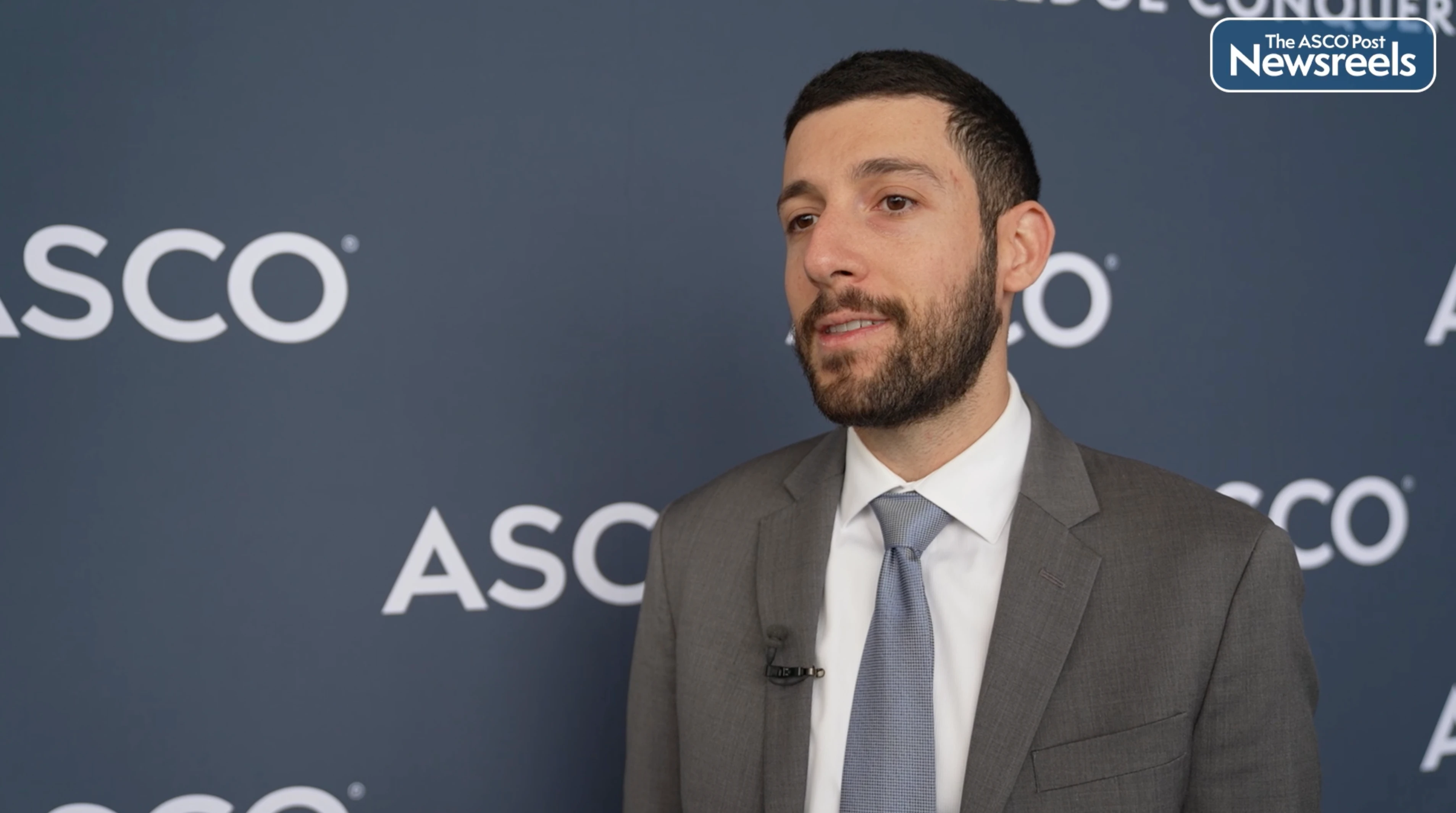
Daniel A. Ermann, MD, on Two Agents in Treatment-Naive Patients With CLL: Real-World Treatment and Survival Outcomes
ASCO 2026
Daniel A. Ermann, MD, of Huntsman Cancer Institute, University of Utah School of Medicine, reviews data from a retrospective analysis that compared the real-world effectiveness of monotherapy first-line treatment for patients with chronic lymphocytic leukemia (CLL) based on overall survival and time to next treatment (Abstract 7045).
The ASCO Post Staff
Tony S.K. Mok, MD, FRCPC, FASCO, of the Chinese University of Hong Kong, presents long-term findings from the CROWN trial, which evaluated lorlatinib vs crizotinib in patients with advanced ALK-positive non–small cell lung cancer (NSCLC). At 5 years, median progression-free survival was not reached with lorlatinib in this population, representing the longest progression-free survival ever reported in advanced NSCLC (Abstract 8502).
The ASCO Post Staff
Sanjay Popat, PhD, FRCP, of the Royal Marsden Hospital & Institute of Cancer Research, talks about the findings of the phase III AcceleRET-Lung study, which looked at the oral tyrosine kinase inhibitor pralsetinib as first-line therapy for patients with RET fusion–positive advanced or metastatic non–small cell lung cancer (NSCLC) (Abstract 8504).
Gopa Iyer, MD, of Memorial Sloan Kettering Cancer Center, presents initial results from the phase I NEXUS-01 study, which evaluated LY4052031, an antibody-drug conjugate targeting Nectin-4, in patients with advanced or metastatic urothelial carcinoma (Abstract 4508).
The ASCO Post Staff
Brian M. Wolpin, MD, MPH, of Dana-Farber Cancer Institute, and Eileen M. O’Reilly, MD, of Memorial Sloan Kettering Cancer Center, describe results from the phase III RASolute 302 trial, which evaluated the RAS(ON) muliselective inhibitor daraxonrasib in previously treated patients with metastatic pancreatic adenocarcinoma (Abstract LBA5).
Dor Abelman, BS, of the University of Toronto, reviews results of a comparison of two minimally invasive measurable residual disease (MRD) assays—BM-informed cfDNA whole-genome sequencing (cfWGS) and plasma proteomic MRD (EasyM)—in patients with multiple myeloma (Abstract 7546).