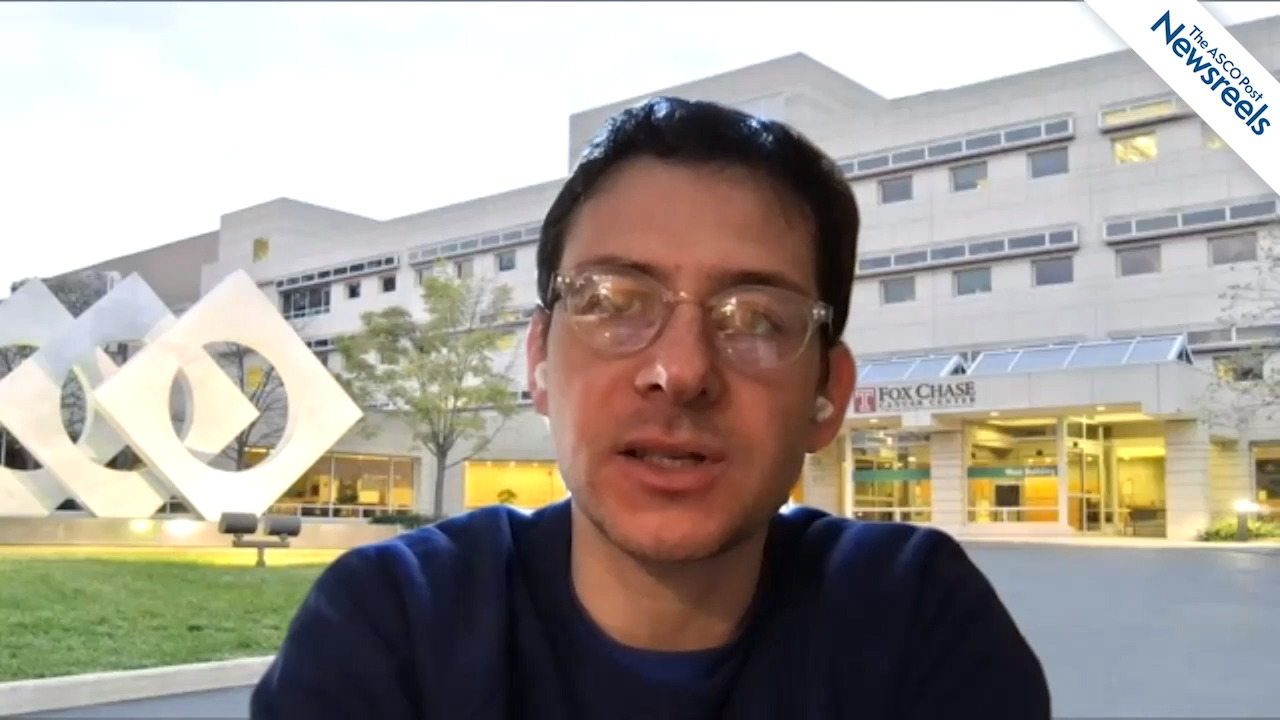
Christopher Sweeney, MBBS, on Prostate Cancer: Analyzing Biomarkers, Ipatasertib Plus Abiraterone
2021 Genitourinary Cancers Symposium
Christopher Sweeney, MBBS, of Dana-Farber Cancer Institute, discusses phase III findings from the IPATential150 trial, which showed the effectiveness of ipatasertib plus abiraterone as first-line treatment in patients with metastatic castration-resistant prostate cancer vs placebo plus abiraterone. Analyses of biomarkers linked to the PI3K/AKT pathway, a subtype with a poor prognosis, further support this therapeutic option (Abstract 13).
The ASCO Post Staff
Elizabeth R. Plimack, MD, of Fox Chase Cancer Center, discusses key abstracts discussed at this year’s meeting on renal cell carcinoma and offers her views on the latest trends and findings (Abstracts 269, 308, 270, 313).
The ASCO Post Staff
Thomas Powles, MD, PhD, of Cancer Research UK Barts Centre, discusses phase III results from the EV-301 trial, which showed that enfortumab vedotin is the first therapy to demonstrate a significant survival advantage over standard chemotherapy in patients with previously treated locally advanced or metastatic urothelial carcinoma (Abstract 393).
The ASCO Post Staff
Elizabeth R. Plimack, MD, of Fox Chase Cancer Center, discusses key abstracts discussed at this year’s meeting on bladder cancer and offers her views on the latest trends and findings (Abstracts 391, 393, 434).
The ASCO Post Staff
Daniel M. Geynisman, MD, of Fox Chase Cancer Center, discusses phase II results from the RETAIN BLADDER study, which sequenced bladder tumor samples while treating patients with neoadjuvant methotrexate, vinblastine, doxorubicin, and cisplatin chemotherapy. The goal was to increase metastasis-free survival and also preserve the bladder and quality of life (Abstract 397).
The ASCO Post Staff
Sumanta K. Pal, MD, of City of Hope, discusses phase II results from the SWOG 1500 study, which showed that compared with crizotinib and savolitinib, cabozantinib was the only agent that prolonged progression-free survival vs sunitinib in patients with metastatic papillary renal cell carcinoma (Abstract 270).