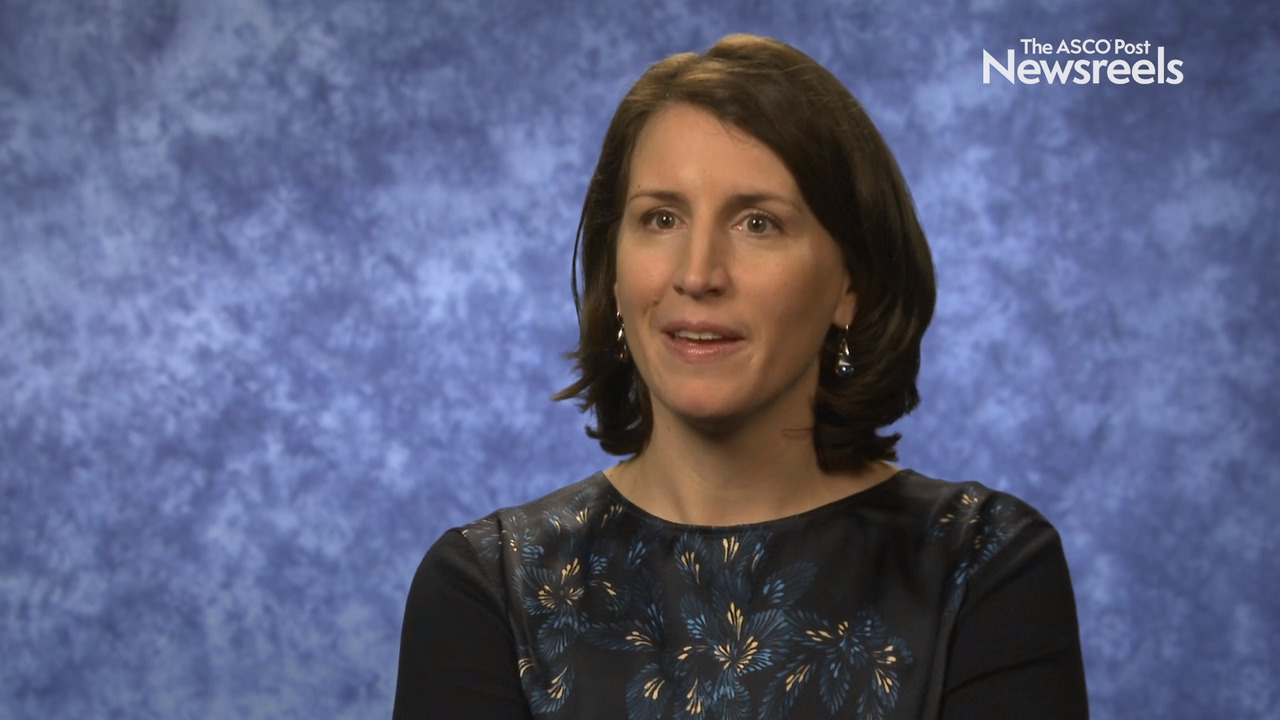
Brian C. Baumann, MD, on Bladder Cancer: Trial Results on Adjuvant Chemoradiotherapy vs Adjuvant Radiotherapy Alone
2019 Genitourinary Cancers Symposium
Brian C. Baumann, MD, of Washington University School of Medicine, discusses phase III study findings on adjuvant sequential chemotherapy plus radiotherapy vs adjuvant radiotherapy alone for locally advanced bladder cancer after radical cystectomy (Abstract 351).
Karim Fizazi, MD, PhD, of the University of Paris-Sud and Gustave Roussy, discusses study findings on the efficacy and safety of darolutamide in men with nonmetastatic castration-resistant prostate cancer (Abstract 140).
Ignacio Duran, MD, PhD, of the Hospital Universitario Marqués de Valdecilla, discusses an overall survival analysis of the phase III METEOR trial of cabozantinib vs everolimus in advanced renal cell carcinoma (Abstract 550).
Brian I. Rini, MD, of the Cleveland Clinic Taussig Cancer Institute, discusses current models used to estimate the risk of recurrence as well as genomic data that could help pinpoint individual tumor biology.
Howard I. Scher, MD, of Memorial Sloan Kettering Cancer Center, discusses circulating tumor cell number as a transitional surrogate endpoint for survival in phase II trials on metastatic castration-resistant prostate cancer (Abstract 143).
Laurence Albiges, MD, PhD, of Gustave Roussy, discusses findings on the safety and efficacy of nivolumab used in a “real world” prospective study on metastatic renal cell carcinoma (mRCC). This research was conducted after nivolumab was approved for the treatment of mRCC following failure of one or two tyrosine kinase inhibitors (Abstract 542).