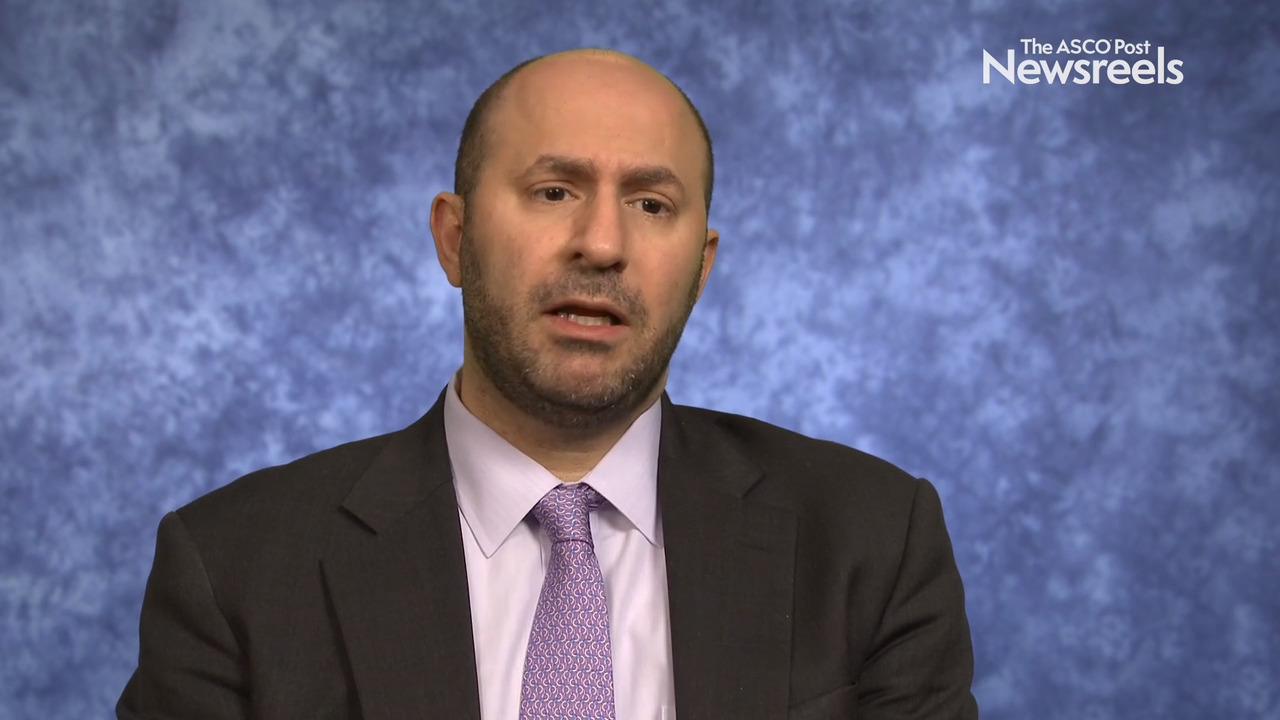
Sumanta K. Pal, MD, on Clinical Cancer Advances: The 14th Annual Report
2019 Genitourinary Cancers Symposium
Sumanta K. Pal, MD, of City of Hope, who served as a Co-Executive Editor of the 2019 publication Clinical Cancer Advances, discusses progress made during the past year in research and policy. The report was compiled with a team of experts in oncology subspecialties, cancer prevention, quality care, health disparities, and tumor biology.
Howard I. Scher, MD, of Memorial Sloan Kettering Cancer Center, discusses circulating tumor cell number as a transitional surrogate endpoint for survival in phase II trials on metastatic castration-resistant prostate cancer (Abstract 143).
Brian I. Rini, MD, of the Cleveland Clinic Taussig Cancer Institute, discusses current models used to estimate the risk of recurrence as well as genomic data that could help pinpoint individual tumor biology.
Karim Fizazi, MD, PhD, of the University of Paris-Sud and Gustave Roussy, discusses final phase III findings on men with newly diagnosed, high-risk, metastatic, castration-naive prostate cancer who were treated with abiraterone acetate plus prednisone added to androgen-deprivation therapy (Abstract 141).
Brian I. Rini, MD, of the Cleveland Clinic Taussig Cancer Institute, discusses phase III findings on a comparison of tivozanib and sorafenib in patients with refractory advanced renal cell carcinoma (Abstract 541).
Toni K. Choueiri, MD, of Dana-Farber Cancer Institute, discusses a subgroup analysis from the JAVELIN Renal 101 study on outcomes for avelumab plus axitinib vs sunitinib in advanced renal cell carcinoma (Abstract 544).