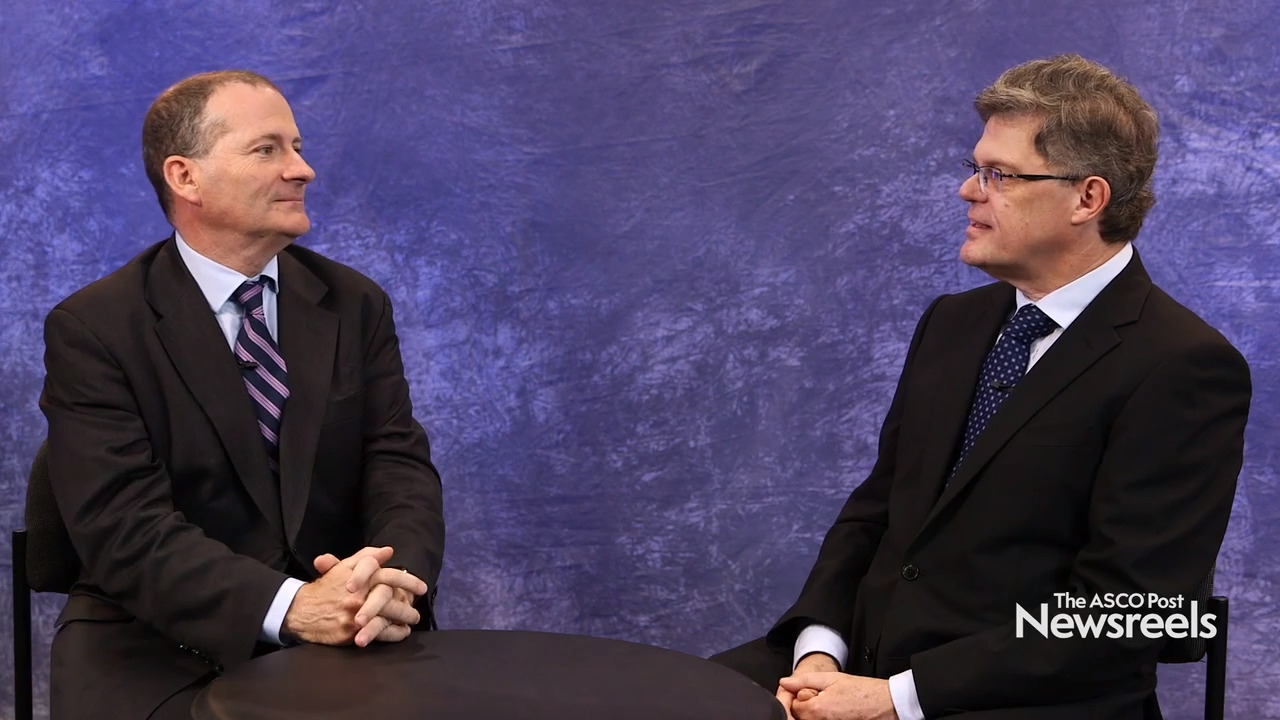
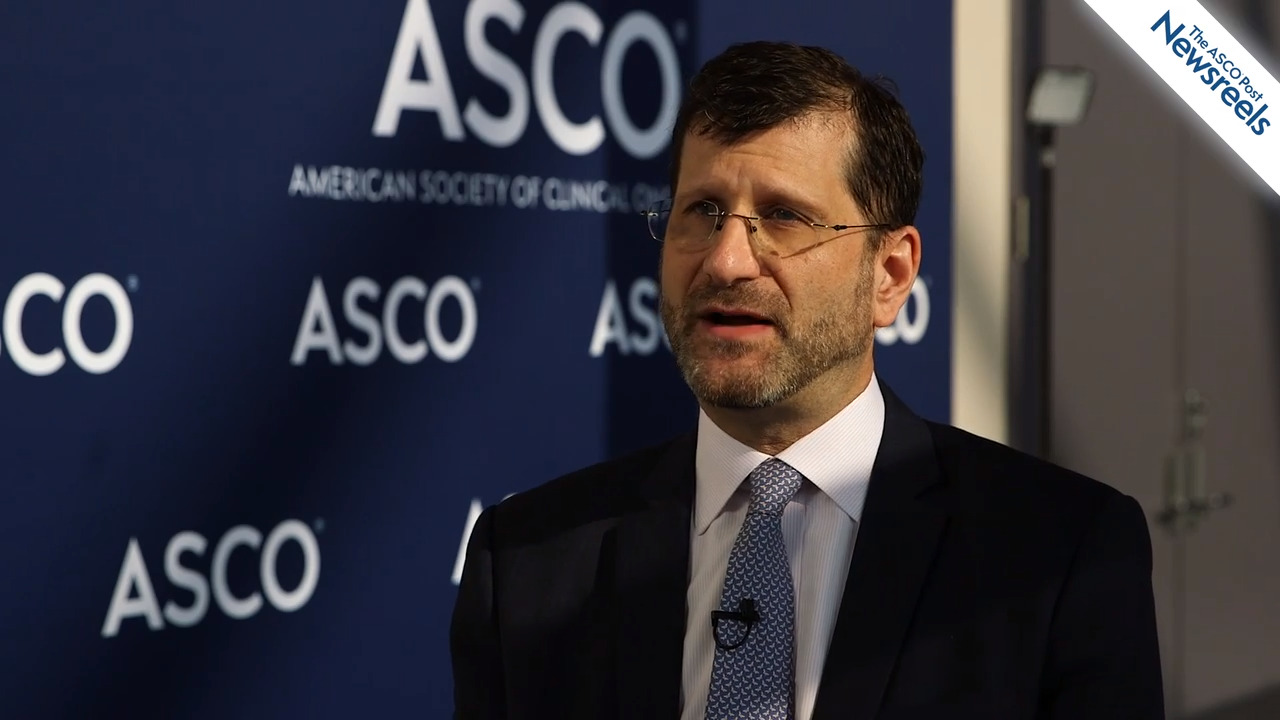
Peter Schmid, MD, PhD, and Hope S. Rugo, MD, on Breast Cancer: Next Steps in Immunotherapy
2019 ASCO Annual Meeting
Hope S. Rugo, MD, of the University of California, San Francisco, and Peter Schmid, MD, PhD, of Barts Cancer Institute, Queen Mary University of London, discuss ongoing trials of immunotherapy for early triple-negative breast cancer; immunotherapy in other disease subtypes such as estrogen receptor–positive and HER2-positive; and checkpoint inhibition in PD-L1–negative disease.
Christopher Sweeney, MBBS, of Dana-Farber Cancer Institute, and Ian D. Davis, MBBS, PhD, of Monash University and Eastern Health, discuss the Australian and New Zealand Urogenital and Prostate Cancer Trials Group, working globally to speed clinical research in and treatment of urogenital cancers.
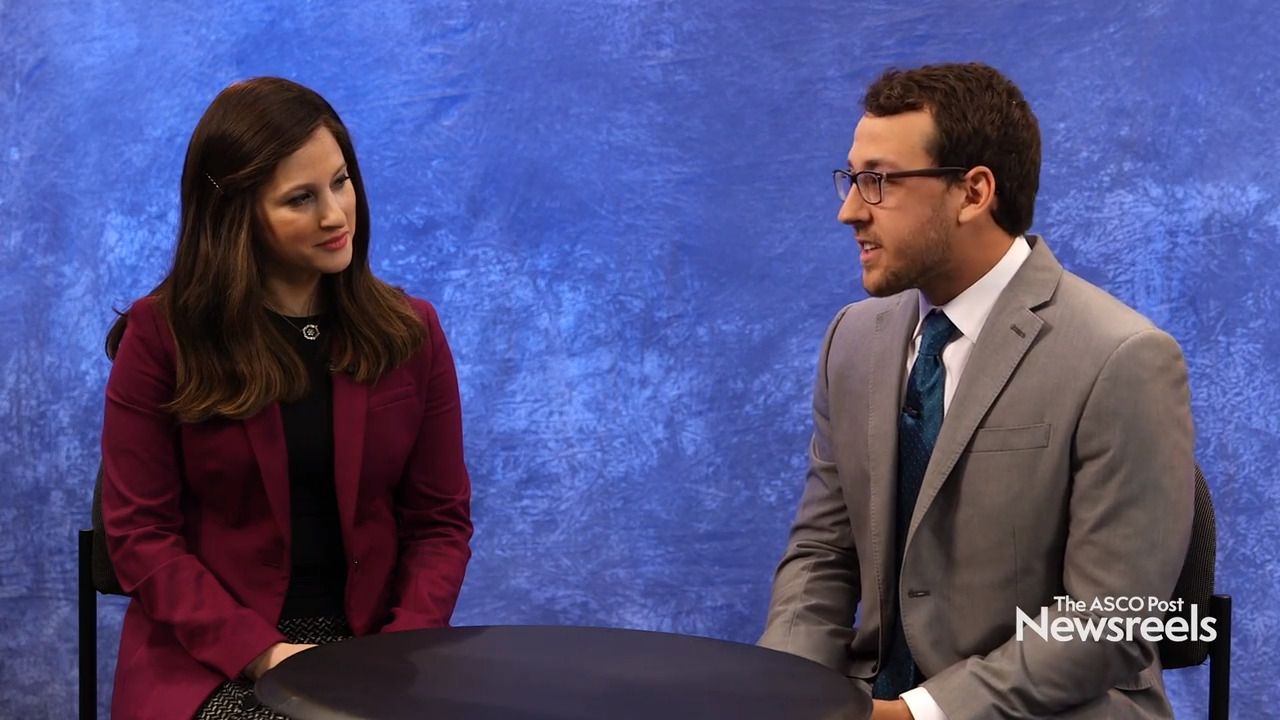
Miriam Knoll, MD, of Hackensack University Medical Center, and Richard J. White, DO, of Allegheny Health Network, discuss improved overall survival among younger female patients with non–small cell lung cancer who have a lower comorbidity score, lower grade, private insurance, and treatment with intensity-modulated radiation therapy (Abstract 9024).
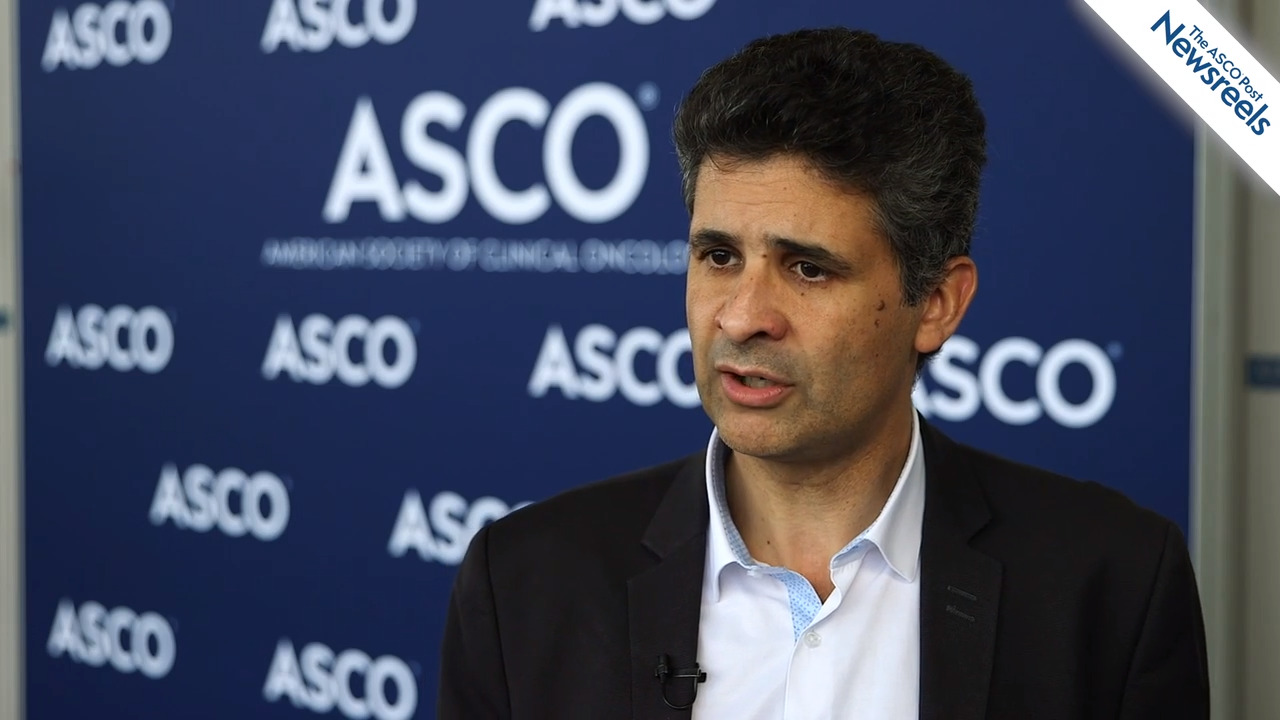
Karim Fizazi, MD, PhD, of the Institut Gustave Roussy, University of Paris-Sud, discusses study findings showing that not only does darolutamide prolong metastasis-free survival, it maintains quality of life as well as delays worsening of pain and disease-related symptoms compared with placebo for patients with nonmetastatic castrate-resistant prostate cancer (Abstract 5000).
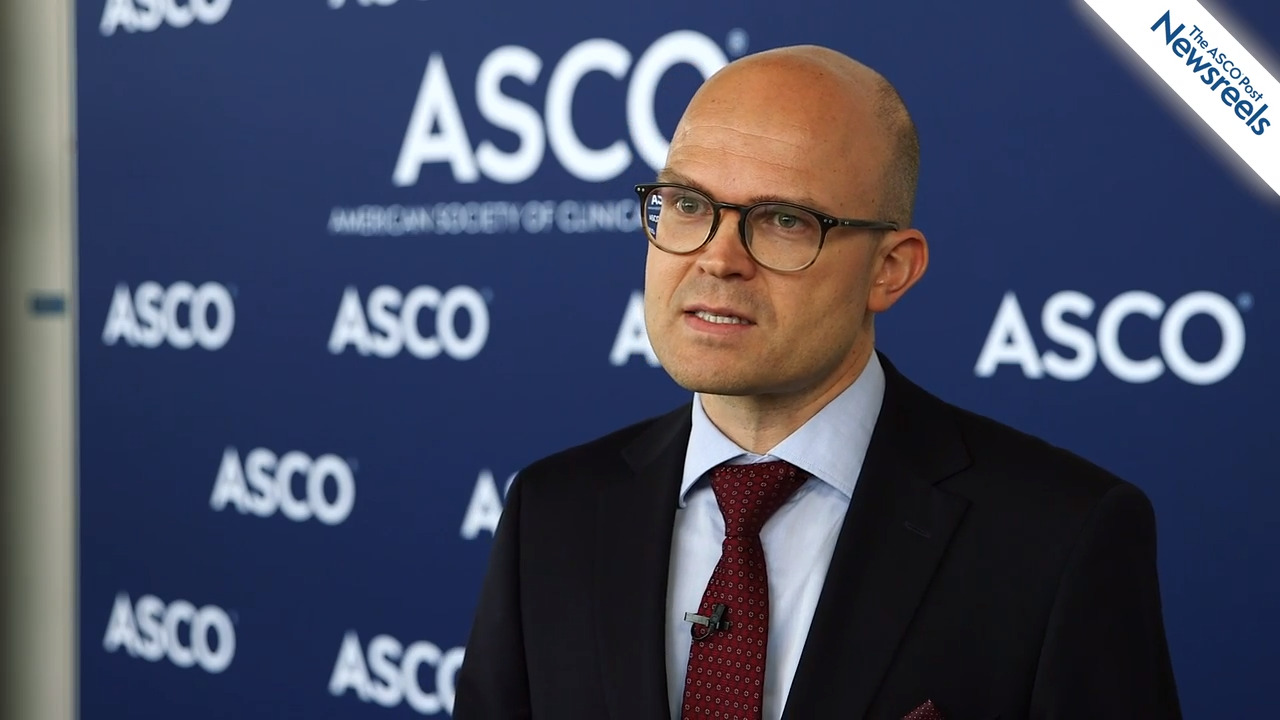
Åsmund A. Fretland, MD, of Oslo University Hospital, discusses clinical trial findings on survival outcomes after laparoscopic vs open resection for colorectal liver metastases. The study he conducted with his team showed that the laparoscopic procedure did not jeopardize long-term survival (Abstract LBA3516).
Michael J. Morris, MD, of Memorial Sloan Kettering Cancer Center, discusses the phase III findings from the Alliance A031201 trial, which showed that adding abiraterone acetate to enzalutamide did not improve survival in men with metastatic castration-resistant prostate cancer (Abstract 5008).