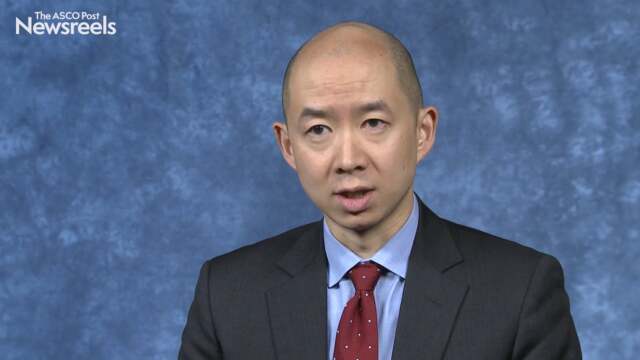
Khaldoun Almhanna, MD, MPH, on Gastric Cancer: Results From the CCOG 1102 Trial
2018 Gastrointestinal Cancers Symposium
Khaldoun Almhanna, MD, MPH, of the H. Lee Moffitt Cancer Center, discusses the long-term outcome of a phase III study that explored the significance of extensive intraoperative peritoneal lavage in addition to standard treatment for ≥ T3 resectable gastric cancer (Abstract 1).
Florian Lordick, MD, of the University Medicine Leipzig, discusses study findings on intraperitoneal immunotherapy with the antibody catumaxomab for patients with peritoneal carcinomatosis from gastric cancer (Abstract 4).
Kyaw L. Aung, MBBS, PhD, of Princess Margaret Cancer Centre, discusses early study findings on genomics-driven precision medicine for advanced pancreatic ductal carcinoma (Abstract 211).
Maria Svensson, MD, PhD Candidate, of Lund University, discusses high expression of PD-1 and PD-L1 in chemotherapy-naive esophageal and gastric adenocarcinomas, the implications for survival, and the link to a deficiency in mismatched repair genes (Abstract 9).
Steven D. Leach, MD, of Dartmouth University’s Norris Cotton Cancer Center, discusses the personalized approach that GI cancers will require to make rational use of immunotherapy—including a subset of pancreatic cancers, which appear to be highly immunogenic and are associated with long-term survival.
Abraham J. Wu, MD, of Memorial Sloan Kettering Cancer Center, discusses his findings that suggest efforts to reduce lung dose, such as shrinking the treatment volumes or using proton therapy, may improve outcomes in esophageal cancer (Abstract 3).