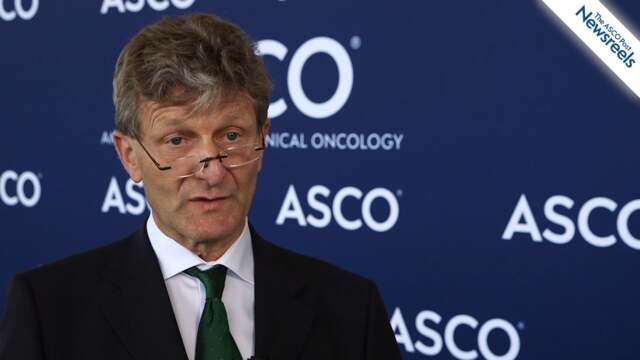
Naoki Furuya, MD, PhD, on NSCLC: Results From the NEJ026 Study
2018 ASCO Annual Meeting
Naoki Furuya, MD, PhD, of the St. Marianna University School of Medicine, discusses phase III study findings on a comparison of bevacizumab plus erlotinib to erlotinib in patients with untreated non–small cell lung cancer with activating EGFR mutations (Abstract 9006).
Peter Hillmen, MB, ChB, of St James’s University Hospital, discusses phase III study findings on minimal residual disease negativity with venetoclax plus rituximab in relapsed or refractory chronic lymphocytic leukemia (Abstract 7508).
Howard S. Hochster, MD, of Rutgers-Cancer Institute of New Jersey, discusses study findings on irinotecan and cetuximab vs irinotecan, cetuximab, and ramucirumab as second-line therapy of advanced colorectal cancer following oxaliplatin and bevacizumab-based therapy (Abstract 3504).
Manisha H. Shah, MD, of The Ohio State University Comprehensive Cancer Center, summarizes a session she chaired on progress in tailored treatments for medullary and anaplastic thyroid cancers as well as salivary gland cancer.
Julie M. Vose, MD, MBA, of the University of Nebraska Medical Center, and William G. Wierda, MD, PhD, of The University of Texas MD Anderson Cancer Center, discuss phase II findings on ibrutinib plus venetoclax in first-line treatment of chronic lymphocytic leukemia (Abstract 7502).
Geertjan Van Tienhoven, MD, PhD, of the Dutch Pancreatic Cancer Group, discusses phase III study findings on preoperative chemoradiotherapy vs immediate surgery for resectable and borderline resectable pancreatic cancer (Abstract LBA4002).