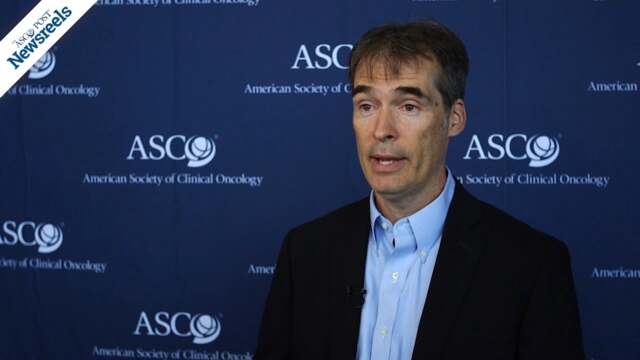
Nicholas D. James, MBBS, PhD, on Prostate Cancer: Results From the STAMPEDE Trial
2017 ASCO Annual Meeting
Nicholas D. James, MBBS, PhD, of Queen Elizabeth Hospital, discusses study findings on adding abiraterone for men with high-risk prostate cancer starting long-term androgen-deprivation therapy (Abstract LBA5003).
Sumanta K. Pal, MD, of City of Hope, and Toni K. Choueiri, MD, of the Dana-Farber Cancer Institute, exchange views on the key papers in renal cell carcinoma presented at ASCO’s 2017 nonprostate GU oral abstract session. (Abstracts 4504, 4505, 4506, 4507, 4508)
Maura L. Gillison, MD, PhD, of The University of Texas MD Anderson Cancer Center, discusses her findings on the impact of prophylactic human papillomavirus vaccination on oral HPV infections among young adults in the United States. (Abstract 6003)
Elizabeth R. Plimack, MD, of Fox Chase Cancer Center, discusses highlights of three important abstracts on advanced and metastatic urothelial cancer presented at the 2017 ASCO Annual Meeting. (Abstracts 4501, 4503, 106)
Eric Jonasch, MD, of The University of Texas MD Anderson Cancer Center, discusses the largest prospective VHL disease-specific therapeutic trial performed to date, and the data that show pazopanib resulted in significant and sustained disease control for the majority of patients enrolled on the study. (Abstract 4516)
Ronald J. Buckanovich, MD, PhD, of the University of Michigan, discusses study findings on chemotherapy and cediranib in relapsed ovarian cancer. (Abstract 5506)