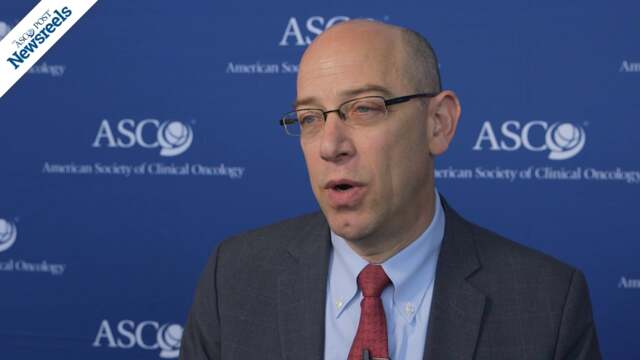
Luis G. Paz-Ares, MD, PhD, on NSCLC: Results from the SQUIRE Trial (Spanish Language Version) 
2016 ASCO Annual Meeting
Luis G. Paz-Ares, MD, PhD, of the Hospital Universitario 12 De Octubre, discusses in Spanish study findings on adding necitumumab to gemcitabine and cisplatin chemotherapy in the first-line treatment of patients with stage IV squamous non–small cell lung cancer.

To see the English language version of this video, please
click here.
A. Oliver Sartor, MD, of Tulane University, and Celestia S. Higano, MD, of the University of Washington, discuss findings from this phase III study on cabazitaxel vs docetaxel in chemotherapy-naive patients with metastatic castration-resistant prostate cancer (Abstract 5006).
Celestia S. Higano, MD, of the University of Washington, and Chris Parker, MD, of the Royal Marsden Hospital, discuss findings from this confirmatory study evaluating the accuracy of MRI and TRUS biopsy in men with an elevated PSA (Abstract 5000).
Anthony J. Olszanski, RPh, MD, of Fox Chase Cancer Center, and Michael A. Postow, MD, of Memorial Sloan Kettering Cancer Center, discuss findings from this phase III trial of nivolumab combined with ipilimumab in treatment-naive patients with advanced disease (Abstract 9505).
Eric Roeland, MD, of the University of California, San Diego, and Jennifer S. Temel, MD, of Massachusetts General Hospital, discuss findings that showed the benefits of offering palliative care integrated with oncology care (Abstracts 10003 and 10131).
Charles M. Rudin, MD, PhD, of Memorial Sloan Kettering Cancer Center, reports on the encouraging anti-tumor activity of this antibody drug conjugate against one of the most deadly malignancies: recurrent or refractory small cell lung cancer (Abstract LBA8505).